The World Happiness Report 2024: Happiness Among the Elderly
The World Happiness Report 2024 reveals significant variations in happiness levels across different age groups, particularly highlighting the disparity between the happiness of older adults (aged 60 and above) and younger populations. This report underscores the importance of examining happiness indices by age groups, as overall country rankings can obscure these critical differences.
Why This Matters
Understanding how happiness varies among different age groups within a country is essential for policymakers and social planners. The happiness index for the elderly population can serve as a crucial indicator of overall well-being, reflecting the effectiveness of social support systems, healthcare, and community engagement for older adults. Conversely, the lower ranks for younger populations in certain countries might point to issues such as economic instability, lack of job opportunities, or social unrest.
Global Happiness Rankings for the Elderly
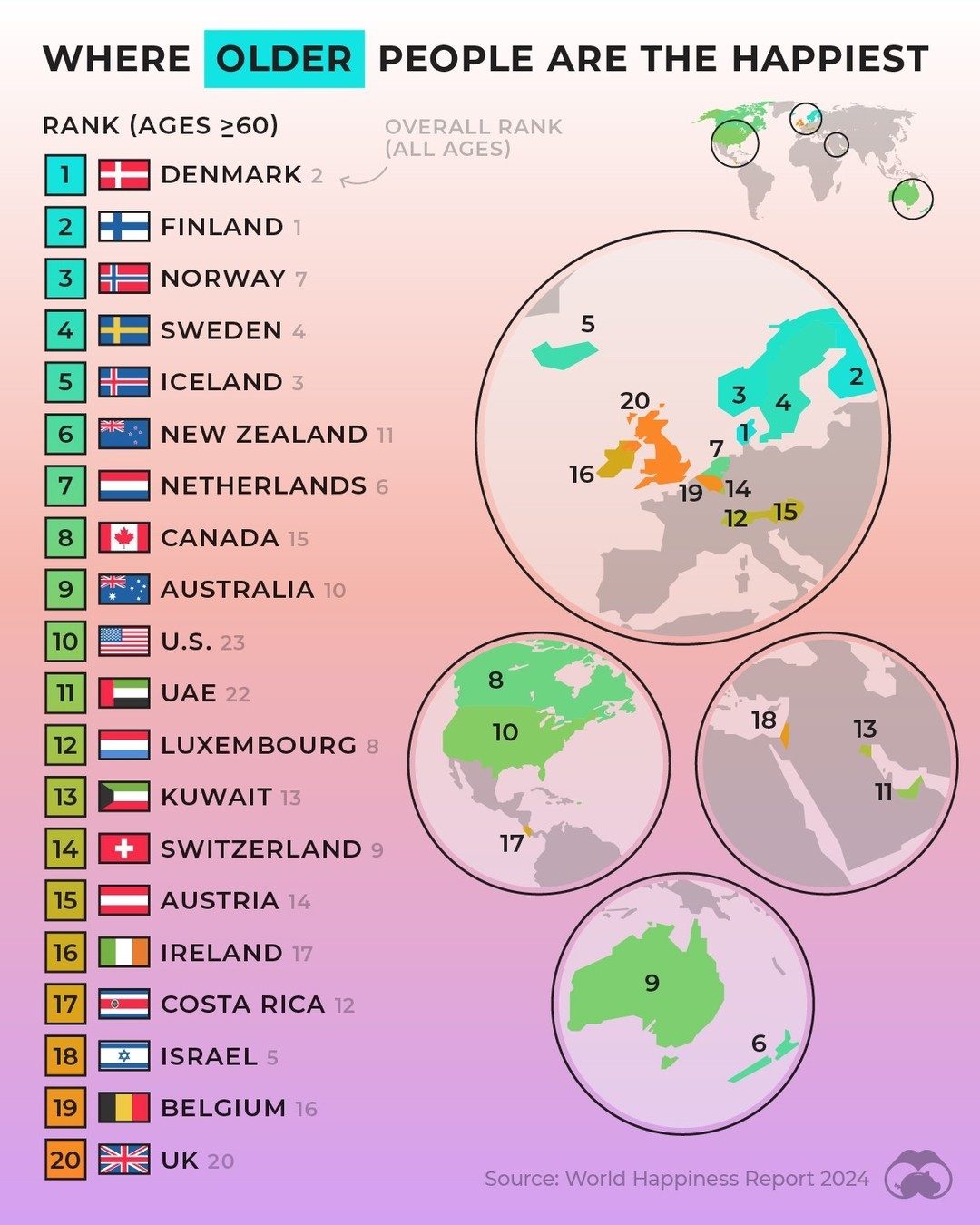
The World Happiness Report 2024 ranks countries based on the happiness of their older populations. Here are some of the top countries where older people report the highest levels of happiness:
Top Countries for Elderly Happiness
- Finland: Tops the list, showcasing a robust social safety net and high standards of living.
- Denmark: Ranks second, known for its comprehensive welfare system and strong sense of community.
- Iceland: Comes in third, benefiting from a strong social support structure and a high quality of life.
- Sweden and Norway: Both rank within the top 10, reflecting their advanced healthcare systems and social policies.
- Netherlands and Luxembourg: Also in the top 10, with strong economic stability and well-developed community services.
Notable Mention
- New Zealand: Ranked 11th, New Zealand is often praised for its inclusive policies and natural beauty, contributing to a high quality of life for its elderly population.
- Israel: Comes in fifth, with a strong emphasis on family and community, which significantly contributes to the happiness of its older adults.
The United States: A Case Study
The United States presents an intriguing case. It ranks 10th when considering the happiness of its elderly population, indicating a relatively high quality of life for older adults. However, this ranking contrasts sharply with its position outside the top 50 for younger populations. This disparity highlights the need for targeted interventions to address the specific challenges faced by younger Americans, such as economic instability and mental health issues.
Practical Tips for Enhancing Happiness in Older Adults
Improving the happiness of older adults is a multifaceted challenge that requires a comprehensive approach. Here are some practical tips for enhancing the well-being of the elderly:
Foster Community Engagement
Encourage older adults to participate in community activities, volunteer work, and social clubs. This not only provides a sense of purpose but also helps in building a strong social network, which is crucial for mental well-being.
Improve Healthcare Access
Ensure that older adults have access to quality healthcare services. This includes regular check-ups, preventive care, and mental health support. Telemedicine can be particularly beneficial for those with mobility issues.
Promote Financial Security
Economic stability is a significant factor in happiness. Policies that provide financial security, such as pension plans and retirement savings, can greatly enhance the quality of life for older adults.
Encourage Physical Activity
Regular physical activity can improve both physical and mental health. Encourage older adults to engage in activities they enjoy, such as walking, swimming, or yoga, which can help maintain their physical fitness and overall well-being.
Utilize Technology
Technology can play a vital role in enhancing the lives of older adults. For instance, smartphones and tablets can help them stay connected with loved ones, access online services, and participate in virtual communities. Assistive technologies can also improve their mobility and independence.
Important Takeaways
The World Happiness Report 2024 highlights the importance of age-specific analysis in understanding happiness indices. This report underscores the need for targeted policies and interventions to address the unique challenges faced by different age groups. By focusing on community engagement, healthcare, financial security, physical activity, and technology, governments and communities can improve the well-being of their elderly population.
Conclusion
The World Happiness Report 2024 provides valuable insights into the happiness of older adults across the globe. It underscores the importance of considering age-specific factors in understanding overall happiness and well-being. By addressing the unique challenges faced by older adults and implementing targeted policies, societies can enhance the quality of life for their elderly population. This approach not only ensures a happier and healthier older generation but also lays the groundwork for a more inclusive and supportive society overall.
Watch the Reel
Questions readers ask
What is the main finding of the World Happiness Report 2024 regarding age differences?
The main finding is a notable happiness gap between older adults (60+) and younger generations, indicating that overall country rankings may not fully capture the nuanced happiness experiences of different age groups.
Why is it important to look at happiness indices by age groups?
Examining happiness by age groups provides a more comprehensive understanding of societal well-being. It helps identify specific needs and challenges faced by different generations, which can inform targeted policies and interventions.
Which age group tends to have higher happiness levels according to the 2024 report?
The report suggests that older adults generally report higher happiness levels compared to younger generations. However, this can vary significantly by country and region.
How can understanding age-specific happiness indices benefit policymakers?
By understanding age-specific happiness indices, policymakers can better assess the effectiveness of social support systems, healthcare services, and community engagement initiatives tailored to different age groups.
Are there countries with significant happiness differences by age?
Yes, some countries show stark differences in happiness rankings across age groups. This highlights the importance of considering age-specific data when analyzing global happiness trends.
What factors might contribute to the happiness gap between older adults and younger generations?
Several factors could contribute to this gap, including differences in life satisfaction, health status, social connections, and economic security between age groups. These factors can vary significantly based on cultural and societal contexts.
What does the 2024 World Happiness Report say about global happiness trends across ages?
The report indicates that global happiness trends are not uniform across age groups. Some countries have older adults who are happier than their younger counterparts, while others show the opposite pattern. Therefore it’s crucial to look at happiness rankings by age for a complete picture.
Related deep dives
Similar reads based on topic and creator.




Recent articles
Fresh deep dives from the latest Reels we unpacked.




Comments
Be the first to comment.