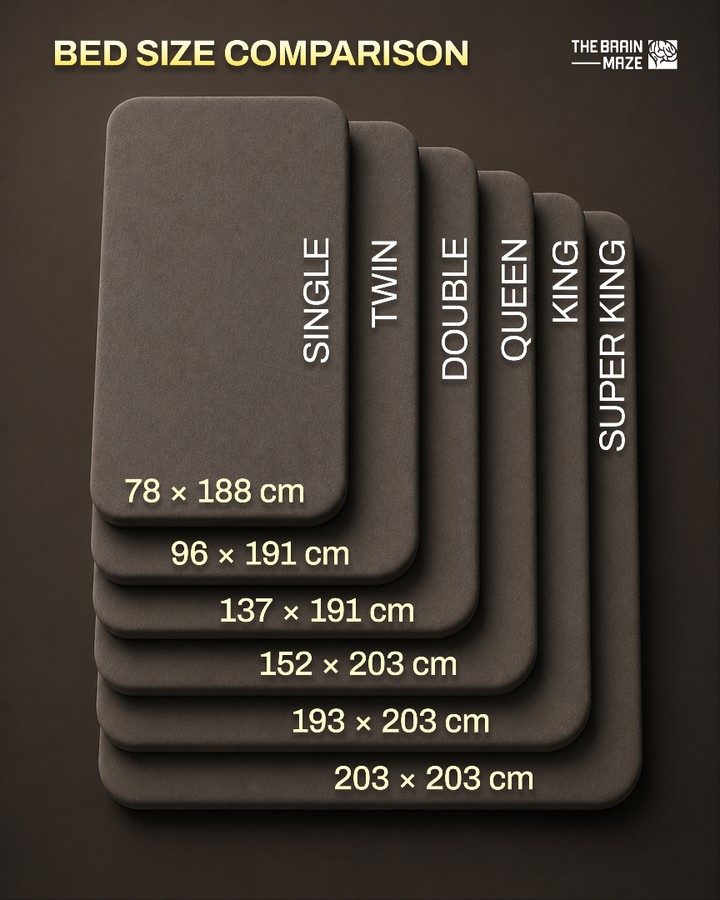
Bed Size Comparison: A Complete Guide
When choosing a new bed, the size can significantly affect comfort and sleep quality. Understanding the different bed sizes and their dimensions is crucial for making an informed decision. This guide offers a comprehensive comparison of seven common bed sizes, from single to super king, helping you find the perfect fit for your needs.
Context: Why Choosing the Right Bed Size Matters
Selecting the right bed size is more than just about fitting it into your room. It directly impacts your comfort, especially if you share the bed with a partner or have specific space requirements. A bed that is too small can lead to discomfort and poor sleep, while one that is too large might not fit well in your room. Understanding the dimensions and differences between bed sizes can help you find the perfect balance.
Bed Sizes: A Detailed Comparison
Single
Single beds are typically the smallest standard size, measuring 78 x 188 cm. These beds are ideal for small rooms, especially children's bedrooms, or for a single adult. There's a reason why these beds are popular for bunk beds, as well. If you're looking for a compact solution, a single bed is a good option. However, they may not offer enough space for two adults or for someone who likes to stretch out.
Dimensions:
- Width: 78 cm
- Length: 188 cm
Twin
Twin beds, also known as single XL, are slightly larger than standard singles, measuring 96 x 191 cm. They provide a bit more room to stretch out, which can be helpful for taller individuals or those who prefer a larger sleeping area. Twin beds are often used in small bedrooms or guest rooms where space is limited. They are also a popular choice for bunk beds, especially when designed for growing kids or teens.
Dimensions:
- Width: 96 cm
- Length: 191 cm
Double
Double beds, also referred to as full beds, are a great choice for couples or individuals who need a bit more space to move around. They measure 137 x 191 cm. These beds offer a good balance between size and space efficiency, making them suitable for average-sized bedrooms. They are typically roomier than twin beds but not excessively large, making them a versatile option for various room sizes.
Dimensions:
- Width: 137 cm
- Length: 191 cm
Queen
Queen beds are a popular choice for couples and families, measuring 152 x 203 cm. Their generously-sized dimensions make them ideal for larger bedrooms, where space is not a constraint. Queen beds offer ample room for two adults to sleep comfortably, and they are a good option for those who like to have extra space to stretch out or move around.
Dimensions:
- Width: 152 cm
- Length: 203 cm
King
King beds are the ultimate in luxury and space, measuring 193 x 203 cm. These beds are perfect for those who prioritize comfort and have a larger bedroom. King beds provide enough room for couples to sleep comfortably, and often include a considerable amount of legroom, which is ideal for taller individuals. They are an excellent choice for master bedrooms or for those who value a spacious sleeping area.
Dimensions:
- Width: 193 cm
- Length: 203 cm
Super King
Super King beds (also sometimes referred to as "Imperial") offer the most luxurious sleeping experience. With a width of 203 cm, they provide enough room for couches and a significant amount of space for two people to move around. This bed size is ideal for those who want the ultimate in comfort and have a large bedroom to accommodate it. These beds are rare and not commonly found in typical bedrooms, but are perfect for someone who wants the ultimate in comfort and space.
Dimensions:
- Width: 203 cm
- Length: 203 cm
Practical Tips for Choosing the Right Bed Size
Measure Your Space
Before selecting a bed size, it's essential to measure your room and consider the layout. Ensure that the bed will fit comfortably within the space, allowing for enough room to move around and accommodate other furniture. A good rule of thumb is to leave at least 76 cm of space on all sides of the bed for ease of movement.
Consider Your Needs
Think about your personal needs and preferences. If you share the bed with a partner, a larger size like a Queen or King might be more suitable. If you prefer to sleep alone or have limited space, a Single or Twin bed could be a better fit. Additionally, consider your height and mobility, as taller individuals might need a longer bed for comfort.
Think About the Future
If you plan to use the bed for an extended period, consider your future needs. For example, if you are currently single but might have a partner or children in the future, a larger bed size could be a worthwhile investment. Similarly, if you anticipate growing in height, opting for a longer bed like a Queen or King might be more beneficial.
Comfort and Sleep Quality
Remember that the right bed size can significantly enhance your comfort and sleep quality. Choosing a bed that is too small can lead to discomfort and poor sleep, affecting your overall well-being. Ensure that the bed size you select provides enough room for you to sleep comfortably and move around as needed.
Important Takeaways
Choosing the right bed size is crucial for ensuring comfort and sleep quality. The dimensions and differences between Single, Twin, Double, Queen, King, and Super King beds can help you make an informed decision based on your specific needs. Whether you're furnishing a small room, sharing a bed with a partner, or looking for extra space to stretch out, understanding these sizes can help you find the perfect fit.
Conclusion
When it comes to selecting a bed, size matters. By understanding the dimensions and differences between the various bed sizes, you can make an informed decision that caters to your specific needs. From Single to Super King, each bed size offers unique advantages, depending on your room size, personal preferences, and future plans. Take the time to measure your space, consider your needs, and think about the future to ensure you choose the right bed size for a comfortable and restful sleep.
Watch the Reel
Questions readers ask
What are the standard dimensions for a single bed?
A single bed, also known as a twin bed, typically measures 38 inches by 75 inches. It is ideal for smaller rooms and for individuals who do not require much space. This size is particularly suitable for children or single adults who prioritize saving room space.
How do I choose the right bed size for a couple?
Choosing the right bed size for a couple involves considering both comfort and space. A double bed, which measures 54 inches by 75 inches, can be a good choice. However, for more generous space, a queen bed (60 inches by 80 inches) is often preferable. A king or super king bed (76 inches by 80 inches, and 72 inches by 84 inches respectively) offers even more room, making it ideal for couples who need plenty of space to sleep comfortably.
What are the dimensions of a king size bed and a super king size bed?
A king size bed typically measures 76 inches by 80 inches, providing ample space for couples or individuals who want a lot of room. A super king size bed, on the other hand, measures 72 inches by 84 inches, offering a bit more length and width. This size is perfect for those who need extra space, such as taller individuals or couples who prefer a more spacious sleeping area.
How do I know which bed size is best for my room?
To determine the best bed size for your room, measure the space where you plan to place the bed. Consider the length and width of the bed size you are interested in, and ensure there is enough room for comfortable movement around the bed. Additionally, think about other furniture in the room and how the bed will fit with the overall layout.
What are the standard dimensions for a double bed and a queen bed?
A double bed, also known as a full bed, measures 54 inches by 75 inches. This size is suitable for single adults or couples who do not need a lot of space. A queen bed, on the other hand, measures 60 inches by 80 inches, offering more space and is better for couples or individuals who want extra room for comfort.
What is the best bed size for a growing child?
For a growing child, a single bed (twin bed) can be an excellent option. Twin beds, measuring 38 inches by 75 inches, provide enough space for a child to sleep comfortably. As your child grows, you might consider a larger bed, such as a double bed, which measures 54 inches by 75 inches, for added comfort and space.
Recent articles
Fresh deep dives from the latest Reels we unpacked.




Comments
Be the first to comment.