Rare Earth Reserves: Greenland's Untapped Potential
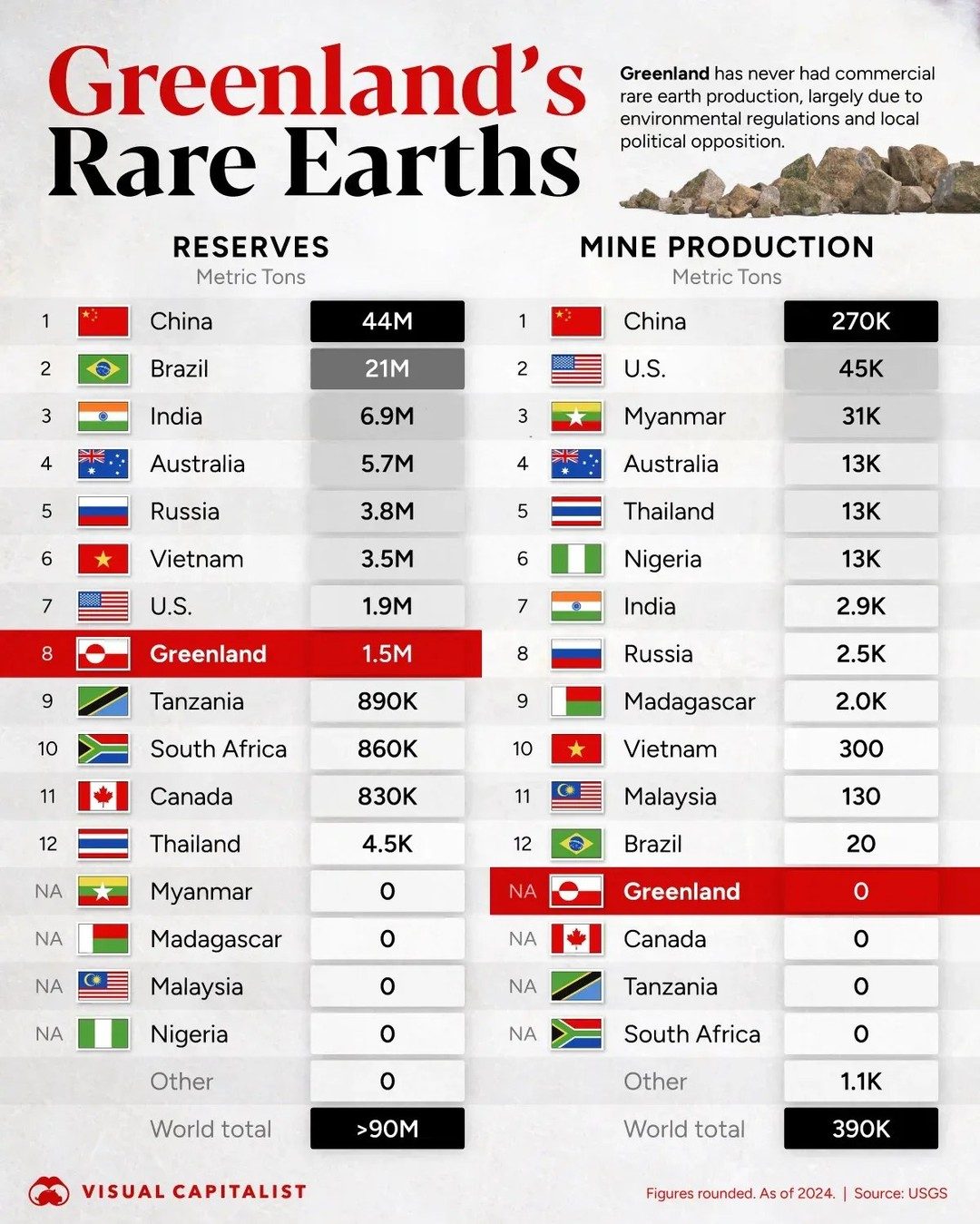
Greenland holds an estimated 1.5 million metric tons of rare earth reserves, making it a significant player in the global mineral landscape. Despite this substantial resource, the country has yet to establish commercial rare earth production. This situation is all the more intriguing given China's dominance in global rare earth mining and the renewed geopolitical attention on Greenland’s mineral potential.
Why This Matters
Rare earth elements (REEs) are a group of 17 chemically similar metallic elements that are crucial for modern technologies, including electronics, clean energy, and defense systems. The global supply of these elements is dominated by a few countries, with China leading the pack. This concentration of resources in a single country raises concerns about supply chain vulnerabilities and geopolitical risks.
Greenland’s vast, untapped reserves present an opportunity to diversify the global supply of rare earth elements. The country's geopolitical position as part of the Kingdom of Denmark adds another layer of complexity, as any commercial mining operations would need to navigate international relations, environmental regulations, and local political opposition.
Global Rare Earth Reserves and Production
China: The Global Leader
China is the undisputed leader in both rare earth reserves and mine production. According to the U.S. Geological Survey (USGS) data for 2024, China holds an estimated 44 million metric tons of rare earth reserves, dwarfing the reserves of other countries. Additionally, China’s mine production of 270,000 metric tons annually underscores its dominant position in the rare earth market.
Brazil and India: Significant Players
Brazil and India are also notable for their significant rare earth reserves. Brazil holds approximately 21 million metric tons, while India has around 6.9 million metric tons. These reserves position both countries as key players in the global rare earth market, although their production levels are currently lower compared to China.
Australia and Russia: Key Producers
Australia and Russia are significant contributors to global rare earth production. Australia has 45,000 metric tons in annual mine production and 3.8 million metric tons in reserves. Russia, with 3.5 million metric tons in reserves, adds to the global supply. These figures highlight the importance of these countries in the rare earth industry.
Other Notable Countries
Several other countries also play a role in the global rare earth market. These include:
- Myanmar: Known for its significant reserves and production, Myanmar's role in the rare earth market is notable despite political and environmental challenges.
- Thailand and Vietnam: Both countries have substantial reserves and contribute to global production.
- Malaysia and Madagascar: These countries have modest reserves and production levels but are part of the global rare earth landscape.
- South Africa: With 860,000 metric tons in reserves, South Africa is a significant player in the African context.
- Canada: Known for its rich natural resources, Canada has 830,000 metric tons in reserves, contributing to the global supply.
Greenland's Unique Position
Greenland’s 1.5 million metric tons of rare earth reserves are significant, but the country faces unique challenges in developing a commercial mining industry. Environmental regulations and local political opposition have hindered progress. The lack of commercial production means that Greenland’s mineral potential remains largely untapped, but it presents an opportunity for future development.
Environmental and Political Challenges
Greenland’s environmental regulations are stringent, designed to protect the delicate Arctic ecosystem. These regulations, along with local political opposition, have thus far prevented the establishment of commercial rare earth mining operations. Balancing economic development with environmental sustainability will be a key challenge for Greenland as it considers tapping into its rare earth reserves.
Practical Tips for Investors and Stakeholders
For investors and stakeholders interested in Greenland’s rare earth potential, several practical considerations are essential:
- Evaluate Environmental Regulations: Understanding the regulatory framework in Greenland is crucial. Engaging with local authorities and environmental experts can provide insights into navigating these regulations.
- Conduct Thorough Geographic Studies: Greenland’s unique geography and climate present logistical challenges. Comprehensive studies are necessary to assess the feasibility of mining operations.
- Engage with Local Communities: Building strong relationships with local communities is essential for gaining support and navigating political opposition. Community engagement can help address concerns and foster a collaborative approach to development.
- Explore Partnerships: Partnering with experienced mining companies can provide the necessary expertise and resources to overcome the challenges associated with rare earth mining in Greenland.
Important Takeaways
- Greenland holds 1.5 million metric tons of rare earth reserves, making it a significant player in the global market despite having no commercial production.
- China dominates global rare earth mining, holding 44 million metric tons in reserves and producing 270,000 metric tons annually.
- Other countries, such as Brazil, India, Australia, and Russia, also play crucial roles in the global rare earth supply.
- Greenland faces challenges in developing its mining industry due to environmental regulations and local political opposition.
- Investors and stakeholders should conduct thorough studies, engage with local communities, and explore partnerships to navigate these challenges.
Conclusion
Greenland’s untapped rare earth reserves present a unique opportunity in the global mineral landscape. While the country faces significant challenges, its vast reserves and strategic position make it a key player in the future of rare earth mining. Balancing economic development with environmental sustainability will be crucial as Greenland explores its mineral potential. By understanding the global context and the unique obstacles Greenland faces, stakeholders can play a pivotal role in shaping the future of the rare earth industry.
Watch the Reel
Questions readers ask
How much of the global rare earth reserves does Greenland hold?
Greenland possesses approximately 1.5 million metric tons of rare earth reserves, which is significant but not yet commercially developed. This makes up a substantial portion of the global reserves, but the exact percentage can vary depending on global reserve estimates.
What are the key challenges facing rare earth production in Greenland?
Greenland faces several challenges in establishing rare earth production, including environmental concerns, infrastructure limitations, and the need for significant investment. Additionally, navigating the complex geopolitical landscape and managing the environmental impact of mining are crucial considerations.
Why is Greenland's rare earth potential important for geopolitics?
Greenland's rare earth potential is important for geopolitics because it could diversify the global supply chain, which is currently dominated by China. This diversification could reduce reliance on a single supplier, enhancing global security and economic stability.
What are the main uses of rare earth elements in technology and defense?
Rare earth elements are essential for various technologies, including electronics, clean energy, and defense systems. They are used in components like magnets, catalysts, and alloys, which are crucial for the performance of modern devices and military equipment.
How does Greenland's rare earth resource compare to other countries?
Greenland's 1.5 million metric tons of rare earth reserves make it a significant player in the global mineral landscape. While not as large as some other countries, such as China, Greenland's reserves are substantial and could play a key role in diversifying the global supply chain.
What steps is Greenland taking to develop its rare earth mining industry?
Greenland is actively exploring its rare earth mining potential through partnerships with international companies and research initiatives. The country is also working on addressing environmental concerns and infrastructure needs to support commercial rare earth production.
How might Greenland's rare earth exports impact global markets?
If Greenland successfully establishes commercial rare earth production, it could significantly impact global markets by increasing supply and reducing reliance on a single source. This could lead to more stable prices and a more diversified supply chain, benefiting both producers and consumers worldwide.
Recent articles
Fresh deep dives from the latest Reels we unpacked.




Comments
Be the first to comment.