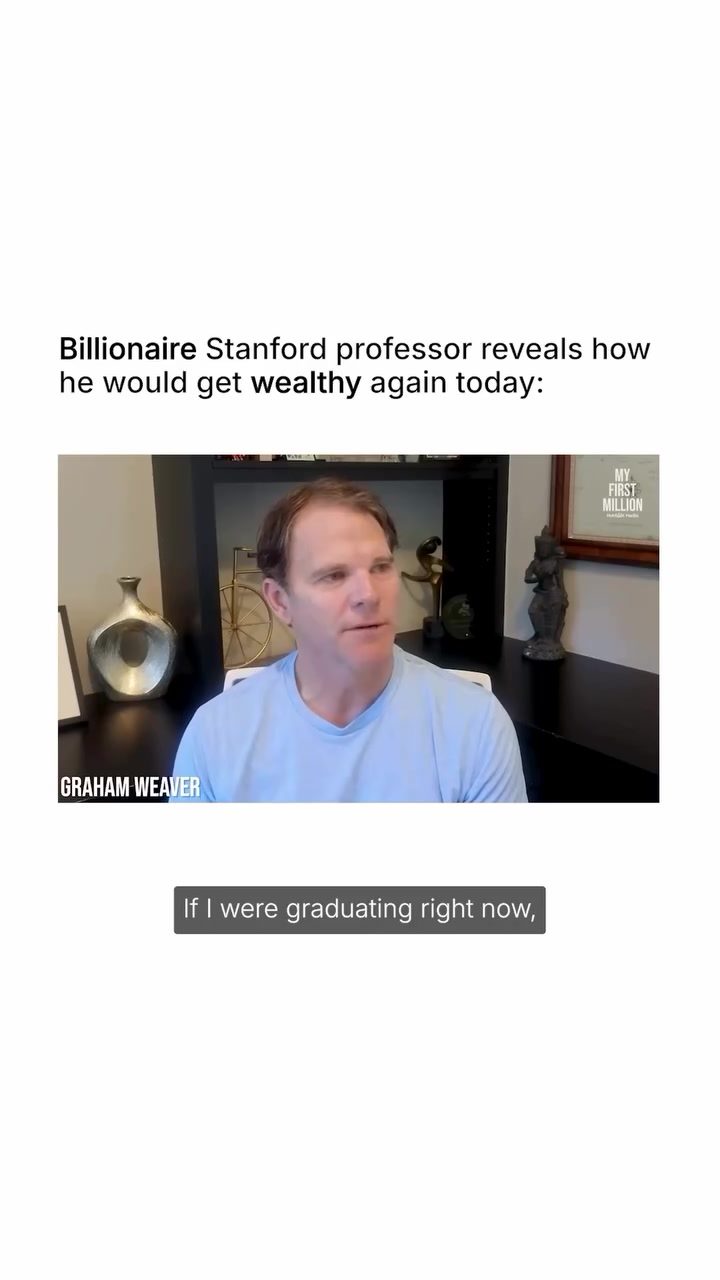
Wealth Strategies: The Service Roll-Up
Context / Why This Matters
In an era where technology and artificial intelligence (AI) are rapidly changing the business landscape, understanding where to place your bets is crucial. Graham Weaver, a prominent figure in finance, offers an alternative perspective to the current AI hype by focusing on the "services roll-up" strategy. This approach shies away from the app layer that dominates Silicon Valley, focusing instead on service-based industries where human relationships provide a durable competitive advantage.
Main Discussion
The Limitations of AI
The allure of AI is undeniable, but Weaver argues that investing in AI-driven applications is risky. These "apps" often lack a proprietary moat, which is essential for long-term success. Weaver suggests that the AI models themselves will eventually absorb the functionality of these apps, rendering them obsolete. This makes them vulnerable to commoditization, where the underlying technology can be replicated easily, making it difficult to sustain a competitive edge.
The Service Roll-Up Strategy
So, what does Weaver propose as a more stable investment strategy? He advocates for a "services roll-up," which involves acquiring service-based businesses and professionalizing them with top-tier talent. These businesses may not seem glamorous—think HVAC, plumbing, or wealth management—but they offer a unique advantage. The service provider's "product" is trust, which is developed through deep, high-stakes relationships with clients. This relationship moat is something that AI cannot easily disrupt.
Building Trust and Relationships
Building trust in service-based industries is crucial. Consider wealth management as an example. When you're dealing with your life savings, do you want an LLM (Large Language Model) or a human leader you can trust? The latter is what clients seek in high-stakes situations. By helping clients with a wide range of services—from buying stocks to estate planning—wealth managers build strong, enduring relationships. These relationships are the moat that will protect against AI's encroachment.
Practical Tips
Identifying the Right Opportunities
When looking for businesses to acquire, focus on those where technology enhances efficiency but does not replace the human touch. Industries like HVAC, plumbing, and wealth management fit this model well. The technology serves as a tool, but the real value comes from the trust and relationships built over time.
Professionalizing the Business
Once you've identified the right businesses, the next step is professionalizing them. This involves installing top-tier talent to manage and run the operations. These professionals can elevate the service quality, build deeper relationships with clients, and ensure that the business is resilient against technological disruptions.
Leveraging AI as a Tailwind
While AI may pose a threat to certain business models, it can also be a powerful tool. Think of AI as a tailwind that can boost your service-based business. Use AI to streamline operations, gather data, and improve customer service. However, always remember that AI should enhance the human relationships that drive your business, not replace them.
Important Takeaways
The "services roll-up" strategy is a viable alternative to the AI-focused approach dominating Silicon Valley. By focusing on building deep, high-stakes relationships with clients, you can create a durable competitive advantage that AI cannot easily disrupt. Remember that the key to success in this strategy is professionalizing the business with top-tier talent and leveraging AI as a tool to enhance operations, not as a replacement for human interaction.
Conclusion
In a world driven by AI, it's easy to overlook the enduring value of human relationships. However, as Graham Weaver illustrates, these relationships are the core of a resilient and successful service-based business. By focusing on industries where trust and relationships are paramount, and by professionalizing these businesses with top-tier talent, you can build a competitive moat that stands against the tide of technological change. This approach may not be as glamorous as the latest AI-driven app, but it offers a more sustainable path to long-term wealth.
Watch the Reel
Questions readers ask
What is the service roll-up strategy advocated by Graham Weaver?
The service roll-up strategy involves acquiring multiple service-based businesses to create a larger, more resilient entity. This approach leverages the trust and long-term client relationships that are difficult for AI to replicate, providing a durable competitive advantage.
Why does Graham Weaver believe AI-driven applications are risky investments?
Graham Weaver points out that AI-driven applications often lack a proprietary moat, making them vulnerable to competition. This lack of a unique competitive advantage can lead to difficulties in maintaining long-term profitability and sustainability.
How do long-term client relationships provide a competitive edge over AI?
Long-term client relationships are built on trust and personalized service, which are difficult for AI to replicate. These relationships create a durable competitive advantage, as clients are more likely to remain loyal to businesses that understand and cater to their specific needs.
What types of businesses does the service roll-up strategy focus on?
The service roll-up strategy focuses on service-based industries where human relationships are crucial. These can include sectors such as consulting, healthcare, legal services, and other fields where personal interaction and trust are essential for success.
Why is acquiring service-based businesses a resilient strategy for building wealth?
Acquiring service-based businesses is a resilient strategy because these businesses can build a unique competitive moat. They focus on acquiring and nurturing clients who value human relationships over AI-driven interactions.
Recent articles
Fresh deep dives from the latest Reels we unpacked.




Comments
Be the first to comment.