Gold Trading: Central Banks and Emerging Markets
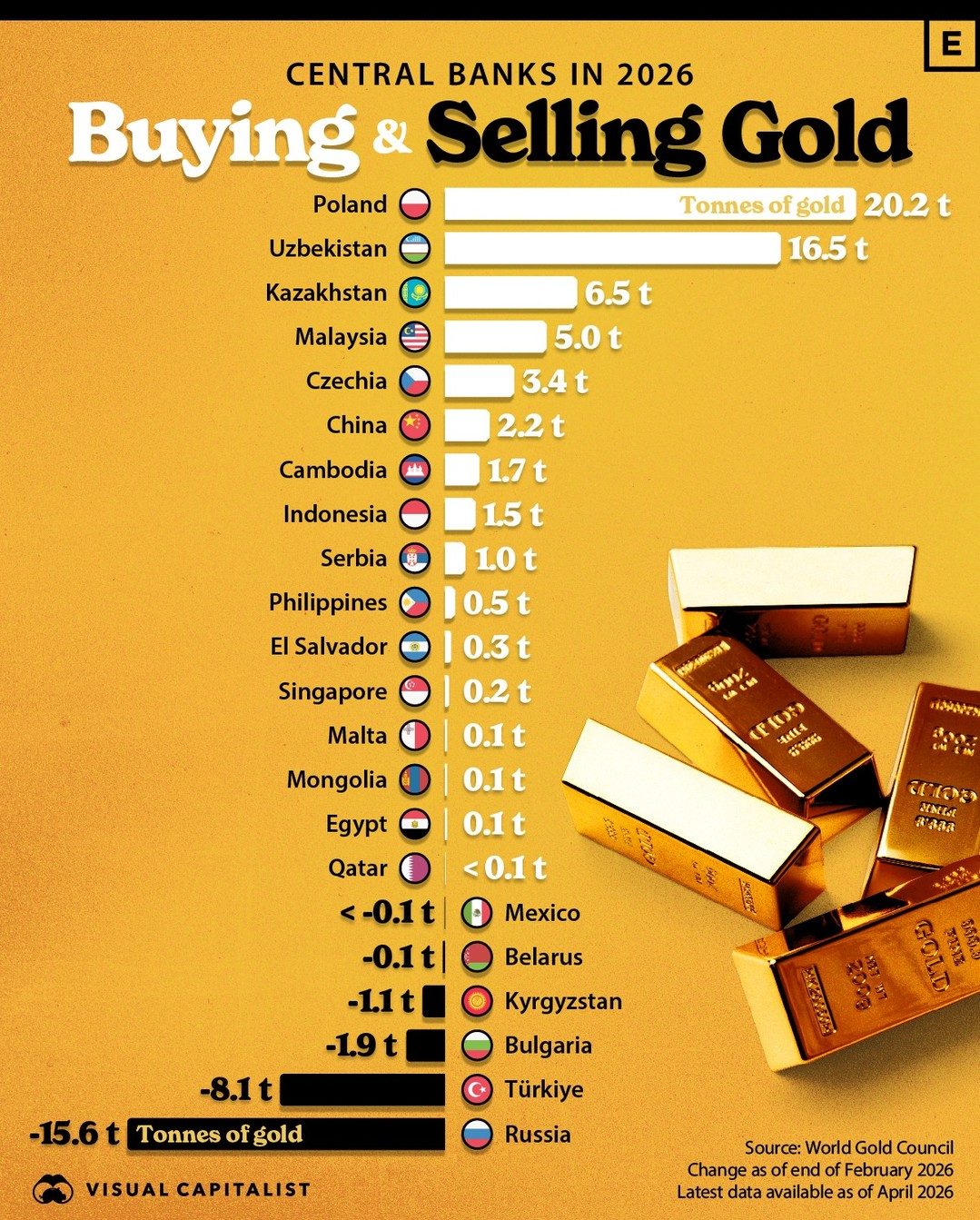
Central banks around the world are actively engaged in the trading of gold, with notable variations in their strategies. As of February 2026, data from the World Gold Council reveals a significant trend among emerging market central banks, which continue to accumulate gold to hedge against geopolitical risks. Concurrently, other central banks, particularly those in Russia and Türkiye, are leading global gold sales.
Why This Matters
Understanding the dynamics of gold trading among central banks can provide valuable insights into global economic stability, geopolitical risks, and future trends in the gold market. As central banks navigate an increasingly complex financial landscape, their buying and selling decisions can influence market prices and shape international trade policies.
Recent Trends in Gold Trading
Central Banks Buying Gold
Emerging markets have been particularly active in accumulating gold reserves. Countries like Kazakhstan, Uzbekistan, and Mongolia lead the way in buying gold. For instance, Kazakhstan’s central bank has purchased 20.2 tonnes of gold, making it one of the most significant buyers. This trend reflects a broader strategy among these nations to increase their reserves as a safeguard against economic uncertainties and geopolitical tensions.
Central Banks Selling Gold
On the other end of the spectrum, some central banks are selling off their gold reserves. Russia and Türkiye are notable examples, with Russia leading the global gold sales. As of February 2026, Russia has sold -15.6 tonnes of gold. This move is indicative of broader economic strategies, such as diversifying reserves or addressing immediate financial needs. Other countries, including Poland, have also engaged in selling gold, albeit to a lesser extent.
Gold Accumulation by Emerging Economies
The accumulation of gold by emerging economies highlights a strategic approach to managing financial risks. Countries like Kazakhstan, Uzbekistan, and Mongolia are actively increasing their gold reserves. This trend underscores the significance of gold as a stable and reliable asset in times of economic uncertainty. Emerging economies view gold as a hedge against geopolitical risks and potential currency fluctuations.
Global Gold Sales
Russia and Türkiye’s leadership in global gold sales indicates a shift in economic strategies. Russia's significant gold sales may be driven by various factors, including economic sanctions and the need to diversify its reserve assets. Türkiye’s sales reflect a similar pattern, driven by its economic policies and financial regulations. These trends suggest that while some countries are reducing their gold holdings, others are actively increasing their reserves.
Detailed Country Insights
Poland has sold 6.5 tonnes of gold, indicating a strategic move to diversify its reserves or address specific financial needs. Uzbekistan continues to buy gold, accumulating 5.0 tonnes, reflecting its commitment to strengthening its financial stability. Malaysia has bought 3.4 tonnes, furthering its strategy to build a robust reserve.
Other notable buyers include:
- Cambodia: 2.2 tonnes
- Czechia: 1.7 tonnes
- China: 1.5 tonnes
- Indonesia: 1.0 tonnes
- Philippines: 0.5 tonnes
- El Salvador: 0.3 tonnes
- Singapore: 0.2 tonnes
- Egypt: 0.1 tonnes
- Qatar: 0.1 tonnes
- Mexico: 0.1 tonnes
- Belarus: 0.1 tonnes
- Bulgaria: 0.1 tonnes
Countries selling gold, apart from Russia and Türkiye, include:
- Kyrgyzstan: -0.1 tonnes
- Poland: -1.56 tonnes
Practical Tips for Navigating the Gold Market
For those interested in gold trading, understanding the motivations behind central banks' buying and selling decisions can provide valuable insights. Here are some practical tips:
1. Monitor Economic Indicators
Keep an eye on economic indicators from countries actively trading gold. Understanding the economic policies and geopolitical risks of these nations can help predict market trends.
2. Diversify Your Portfolio
Gold remains a stable asset, but diversification is key. Consider spreading your investments across various assets to mitigate risks.
3. Stay Updated with Data
Rely on reputable sources like the World Gold Council for accurate and up-to-date information. This data can offer insights into broader market trends and help make informed decisions.
4. Understand Global Dynamics
Recognize the global dynamics driving gold trading. Central banks’ decisions are influenced by a multitude of factors, including economic stability, geopolitical risks, and financial regulations.
5. Engage with Financial Experts
Consulting with financial advisors who specialize in commodities can provide deeper insights and personalized strategies for navigating the gold market.
Important Takeaways
- Emerging market central banks are actively buying gold to hedge against geopolitical risks.
- Russia and Türkiye are leading global gold sales, indicating strategic shifts in their reserve management.
- Kazakhstan, Uzbekistan, and Mongolia are among the top buyers, highlighting gold’s role as a stable asset.
- Poland, Uzbekistan, and Malaysia offer contrasting strategies, reflecting their unique economic needs.
- Staying informed about central bank activities and global economic trends can provide valuable insights into the gold market.
Conclusion
The dynamics of gold trading among central banks reveal a complex interplay of economic strategies and geopolitical considerations. As emerging market central banks continue to accumulate gold, and others like Russia and Türkiye sell off their reserves, understanding these trends can offer valuable insights into the global economy. By staying informed and leveraging the right data, investors can navigate the gold market with greater confidence and make strategic decisions.
Watch the Reel
Questions readers ask
Which emerging markets are increasing their gold reserves in 2026?
In 2026, emerging markets like Kazakhstan and Uzbekistan are notably increasing their gold reserves. This trend is driven by these countries' efforts to fortify their economies against geopolitical risks and market volatility.
Which countries are leading in selling gold among central banks in 2026?
Russia and Türkiye are the leading countries in selling gold as part of their central bank strategies in 2026. These sales are part of broader economic maneuvers that reflect their specific economic objectives and policies.
What data source provides insights into central bank gold trading trends in 2026?
The World Gold Council is a primary source for understanding central bank gold trading trends in 2026. It offers comprehensive data that sheds light on the buying and selling activities of central banks globally.
Why are emerging market central banks accumulating gold in 2026?
Emerging market central banks are accumulating gold to mitigate geopolitical risks and safeguard their financial systems. This accumulation serves as a safeguard against economic uncertainties and potential market disruptions.
How does the gold trading strategy of Russia differ from that of Türkiye in 2026?
Both Russia and Türkiye are among the leading central banks selling gold in 2026. However, their specific strategies and the underlying economic motivations may differ. Russia's economic strategy involves diversifying its reserves, while Türkiye's strategy could be influenced by broader economic goals and policies.
What are the benefits of central banks buying gold in 2026?
Central banks buying gold in 2026 can enhance economic security by providing a stable asset to back their currencies. This can also help in managing inflation and protecting against currency depreciation, making it a vital part of monetary policy.
How do central bank gold trading trends reflect on global economic stability?
Central bank gold trading trends in 2026 offer critical indicators of global economic stability. Significant buying or selling activities can signal shifts in economic policies, geopolitical risks, and overall market confidence, influencing gold prices and broader financial trends.
Recent articles
Fresh deep dives from the latest Reels we unpacked.




Comments
Be the first to comment.