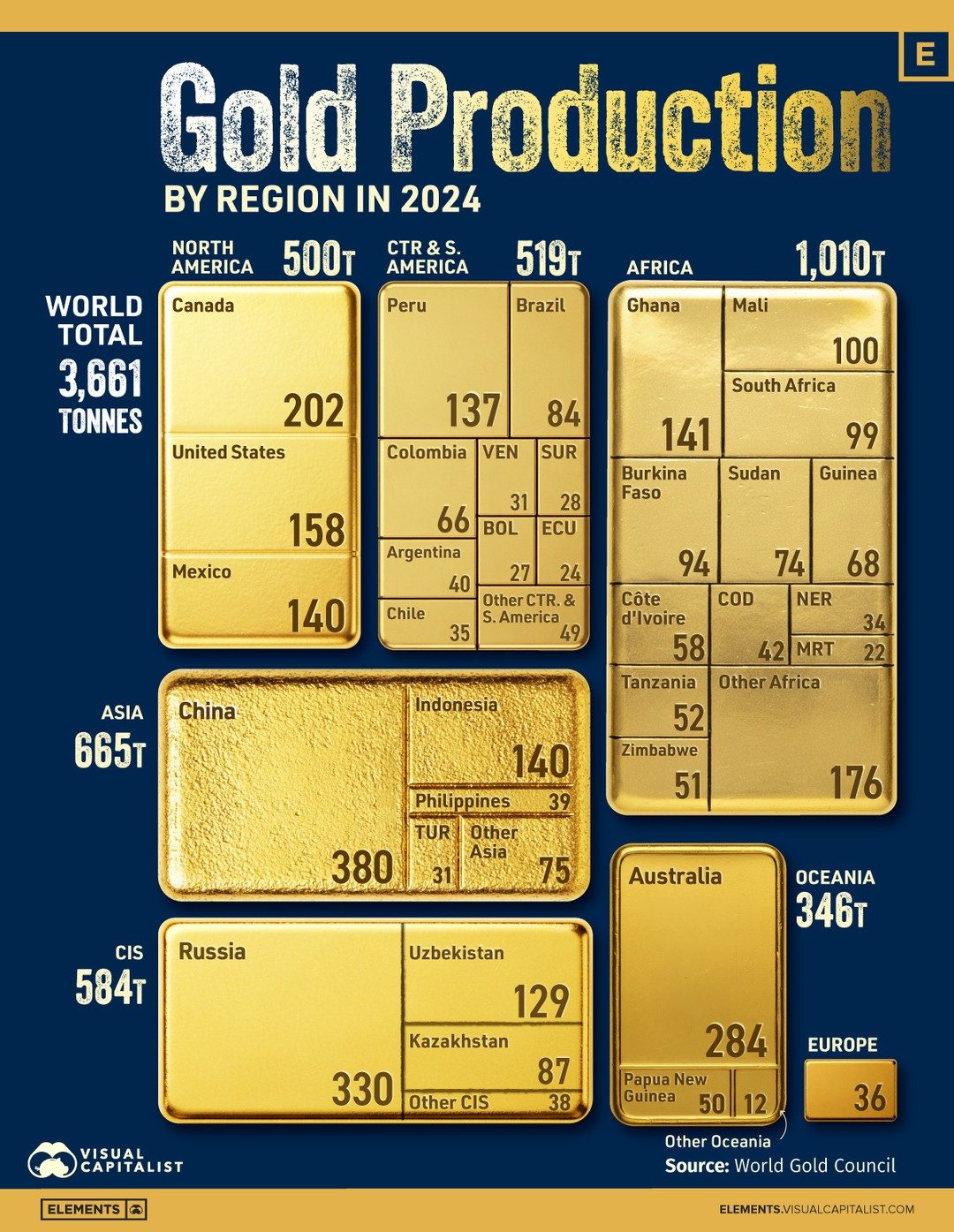
Gold Production by Region
Gold, a precious metal with immense historical and economic significance, is a vital component of global commerce. Understanding where and how much gold is produced is crucial for investors, economists, and those interested in the commodities market. This article delves into the regional distribution of gold production, highlighting the key players and their contributions to the global gold supply.
Context / Why this matters
Gold production is a critical indicator of economic activity and resource availability. It influences global markets, drives investment decisions, and reflects the geopolitical landscape. By examining gold production by region, we can gain insights into the strengths and weaknesses of different economies and the strategic importance of various regions. Whether you are an investor, a policymaker, or simply curious about the world's gold supply, understanding the dynamics of gold production is essential.
Main discussion
Overview of Global Gold Production
In 2024, the world produced a total of 3,661 tonnes of gold. This staggering figure is a testament to the extensive mining operations and technological advancements that support the global gold industry.
Africa: The Powerhouse of Global Gold Production
Africa leads the global gold production with a significant contribution of 1,010 tonnes. This region is powered by key countries such as Ghana, Mali, and South Africa.
Ghana
Ghana is a significant contributor to Africa's gold production, with 141 tonnes produced in 2024. The country's mineral-rich soil and well-established mining infrastructure make it a hotspot for gold mining.
Mali
Mali follows closely, producing 100 tonnes. The country's gold reserves and favorable mining policies have attracted significant investment, boosting its production capabilities.
South Africa
South Africa, historically known for its gold mining, continues to be a major player. In 2024, it produced 99 tonnes, showcasing its enduring significance in the global gold market.
Asia: Dominated by China and Russia
Asia is the second-largest producer of gold, with China leading the way. China produced 380 tonnes, solidifying its position as the world's largest national producer.
Russia
Russia, with 330 tonnes, is the second-largest producer in the region. Russia's vast mineral resources and robust mining industry contribute significantly to global gold supply.
North America
North America, with 500 tonnes, is another key region in gold production. Canada and the United States are the primary contributors.
Canada
Canada produced a substantial amount of gold, contributing significantly to the North American total. The country's advanced mining technologies and vast mineral reserves make it a major player.
United States
The United States, with extensive mining operations, also plays a crucial role in North American gold production. The country's diverse mining regions and well-established industry contribute to its high output.
Central & South America
Central and South America produced 409 tonnes of gold. Key countries in this region include Peru, Colombia, and Brazil.
Peru
Peru is a significant gold producer in the region, with 137 tonnes in 2024. The country's rich mineral resources and favorable mining policies make it a key player.
Colombia
Colombia produced 84 tonnes, reflecting its growing role in the global gold market. The country's mining industry is expanding, driven by investment and technological advancements.
Brazil
Brazil, with 66 tonnes, is another notable producer in the region. The country's vast mineral reserves and diverse mining operations contribute to its production.
Oceania: Australia's Dominance
Oceania produced 346 tonnes, with Australia being the primary contributor. Australia is known for its extensive gold mining operations and robust industry.
The CIS Region
The Commonwealth of Independent States (CIS) produced 557 tonnes. Russia and Kazakhstan are the key players in this region.
Kazakhstan
Kazakhstan, with 129 tonnes, is a significant contributor to the CIS region's gold production. The country's rich mineral resources and well-developed mining industry support its high output.
Europe
Europe produced 36 tonnes of gold, primarily from other European countries. While not a major producer, Europe's contribution to the global gold market is still notable.
Practical tips
Understanding regional gold production can provide valuable insights for investors and industry stakeholders. Here are some practical tips for navigating the gold market:
- Stay Updated on Global Trends: Regularly monitor updates and reports from the World Gold Council and other reliable sources to stay informed about global trends and shifts in production.
- Focus on Key Regions: Pay close attention to regions like Africa, Asia, and North America, which are major contributors to global gold production. Monitoring these regions can provide early insights into potential market changes.
- Country-Specific Analysis: Dive deeper into specific countries, such as Ghana, China, and South Africa, to understand the factors driving their production and any potential disruptions.
- Investment Opportunities: Consider investing in mining companies in regions with high production rates. This can provide exposure to the gold market and potential investment returns.
- Risk Management: Be aware of the geopolitical and environmental risks associated with gold mining. Diversifying your investments across different regions can help mitigate these risks.
Important takeaways
- Global Gold Production: The world produced 3,661 tonnes of gold in 2024, with significant contributions from Africa, Asia, and North America.
- Regional Leaders: Africa, led by Ghana, Mali, and South Africa, and Asia, dominated by China and Russia, are key regions in global gold production. North America, with contributions from Canada and the United States, is also significant.
- Diverse Contributors: Central and South America, Oceania, and the CIS region also contribute to the global gold supply, each with its own set of key producers.
- Market Dynamics: Understanding the regional dynamics of gold production can provide valuable insights for investors and industry stakeholders, helping them make informed decisions and manage risks effectively.
Conclusion
The regional distribution of gold production highlights the diverse and complex nature of the global gold market. From the powerhouse regions of Africa and Asia to the significant contributions from North America and Oceania, each region plays a crucial role in shaping the global gold supply. By staying informed about these dynamics and understanding the key players, investors, and stakeholders can navigate the gold market more effectively. Whether you are an investor, a policymaker, or simply curious about the world's gold supply, recognizing the regional nuances of gold production is essential for a comprehensive understanding of this valuable commodity.
Watch the Reel
Questions readers ask
Which countries in Africa are expected to lead in gold production in 2024, and what is the projected total gold output for the continent?
In 2024, Ghana, Mali, and South Africa are anticipated to be the top gold producers in Africa. Collectively, Africa is projected to produce 1,010 tonnes of gold, making it a dominant force in global gold mining. These countries are crucial for understanding the global gold mining economy, with each contributing significantly to the continent’s overall output.
What is the estimated global gold output for 2024, and why is it significant?
The world's total gold output in 2024 is expected to reach 3,661 tonnes. This figure underscores the immense economic and geopolitical importance of gold mining. It influences global markets, drives investment decisions, and reflects the strategic importance of gold in the global economy, impacting various sectors including finance, technology, and manufacturing.
How does China contribute to global gold production for 2024, and what makes it a key player?
While the article does not provide specific numbers for China's gold production, it is known for its significant role in global gold mining. China's extensive mining operations and technological advancements make it a key player in the global gold supply chain. Its contributions are essential for maintaining the stability and growth of the global gold mining industry, reflecting its influence in the geopolitical landscape.
What role does South Africa play in Africa's gold production for 2024?
South Africa is one of the leading countries in Africa's gold production for 2024, alongside Ghana and Mali. Its rich mining history and extensive resources make it a pivotal contributor to the continent's gold output. Understanding South Africa's role is crucial for analyzing the broader trends in Africa's gold mining industry and its impact on the global market.
What are the implications of Africa's gold mining activities in 2024 on the global market?
Africa's gold production, totaling 1,010 tonnes in 2024, has significant implications for the global market. It influences gold prices, investment strategies, and geopolitical dynamics. The continent's contributions are vital for maintaining a stable and robust global gold supply, affecting various industries and economies worldwide. Investors and economists closely monitor Africa's gold mining activities to gauge market trends and make informed decisions.
How does Russia contribute to global gold production in 2024?
Russia is a notable contributor to global gold production in 2024. Known for its large gold reserves and mining capabilities, Russia plays a critical role in the global gold output. Its production levels are closely watched as they impact global supply and influence market dynamics. By examining Russia's gold mining activities, we can gain insights into the broader geopolitical and economic significance of gold production.
Why is understanding regional gold production important for investors and economists?
Understanding regional gold production is essential for investors and economists as it provides insights into market trends, economic stability, and geopolitical dynamics. By analyzing gold production by region, stakeholders can make informed decisions about investments, resource allocation, and strategic planning. This knowledge helps in predicting market fluctuations and identifying opportunities in the global gold mining economy.
Recent articles
Fresh deep dives from the latest Reels we unpacked.




Comments
Be the first to comment.