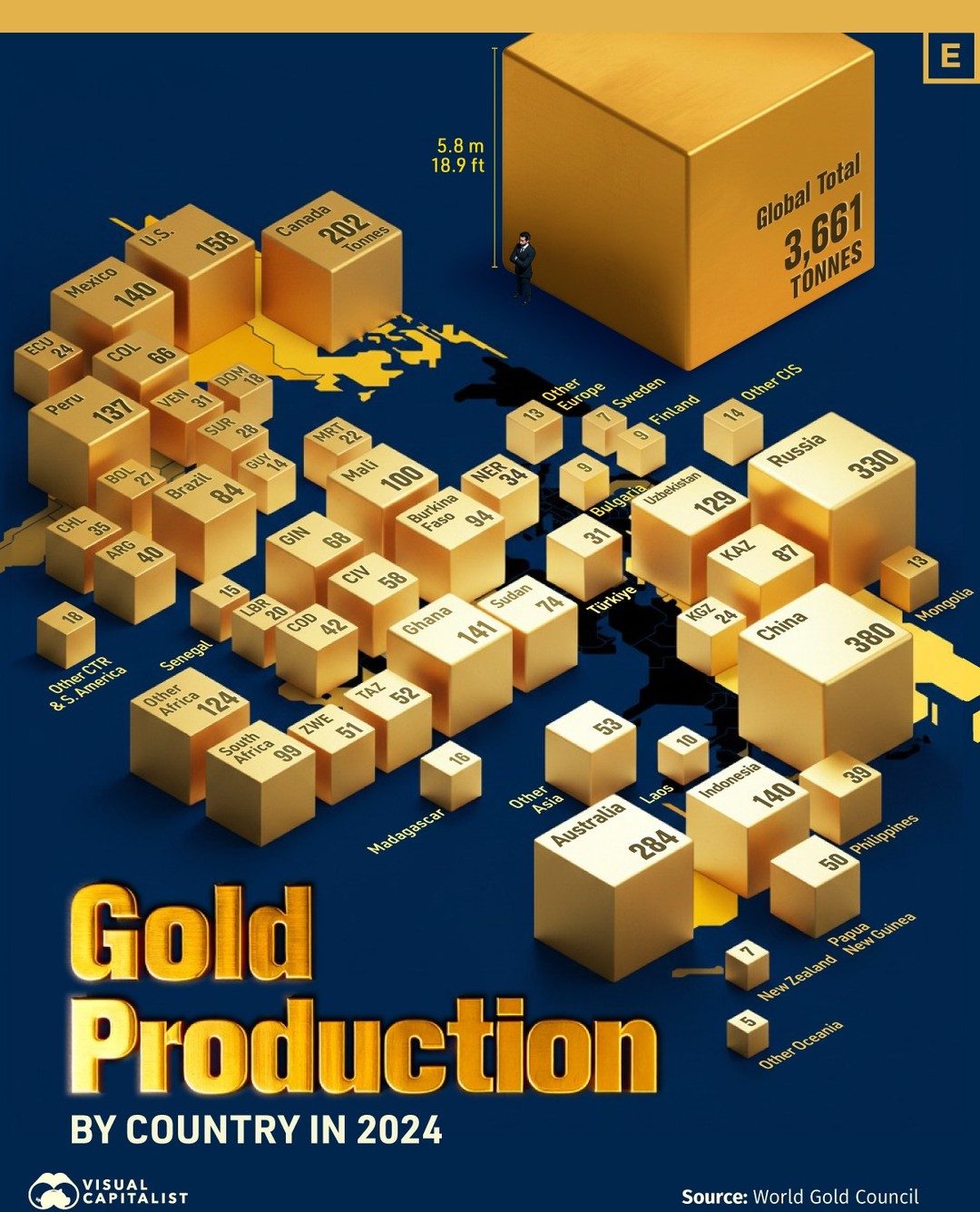
Gold Production by Country in 2024
The global gold production landscape in 2024 is shaped by significant contributions from key countries, with China leading the way. Understanding the dynamics of gold production is crucial given the current economic climate, where gold prices are reaching unprecedented heights due to inflation, geopolitical uncertainties, and increased demand from central banks.
Context: Why This Matters
Gold has long been a safe haven asset, and its production trends are closely watched by investors, economists, and policymakers alike. The fluctuations in gold prices and production levels can provide insights into broader economic trends and geopolitical tensions. With gold prices soaring in 2025, the data from 2024 offers a critical snapshot of the global gold market.
Main Discussion
Global Gold Production Leaders
In 2024, China remains the undisputed leader in gold production, producing an impressive 380 tonnes. This dominance underscores China's robust mining industry and strategic investments in gold extraction. Following closely are Russia and Australia, with 330 tonnes and 284 tonnes respectively. These countries have long been recognized for their substantial gold reserves and efficient mining operations.
Regional Breakdown
Asia
Asia, particularly China, is a powerhouse in gold production. The region's advanced mining technologies and vast reserves contribute significantly to the global gold supply. Beyond China, other Asian countries also play a role, though not as prominently as Russia and Australia.
Oceania
Australia's gold production is a testament to its rich mineral reserves and well-established mining infrastructure. The country's 284 tonnes contribute significantly to the global gold market, making it a key player in the industry. Australia's mining sector is known for its innovation and sustainability efforts, which further enhance its production capabilities.
Europe and Eurasia
Russia's 330 tonnes of gold production highlight the country's vast mineral resources and strategic importance in the global gold market. Russia's mining industry benefits from significant government support and technological advancements, making it a formidable competitor in the global gold production arena.
Practical Tips for Investors and Enthusiasts
Monitoring Production Trends
For investors, monitoring gold production trends is essential for making informed decisions. Keeping an eye on the top-producing countries and their output can provide valuable insights into market supply and demand dynamics.
Understanding Geopolitical Influences
Geopolitical tensions and economic policies can significantly impact gold production and prices. Investors should stay informed about global political developments and how they might affect gold mining operations and commodity prices.
Diversifying Investment Portfolios
Given the volatility of gold prices, diversifying investment portfolios can mitigate risks. Investors can consider various gold-related assets, including mining stocks, exchange-traded funds (ETFs), and physical gold.
Important Takeaways
- China's Dominance: China leads global gold production with 380 tonnes, followed by Russia and Australia.
- Production Influence: Understanding the regional breakdown of gold production can provide insights into global supply and demand.
- Economic Indicators: Gold production trends are influenced by broader economic factors, including inflation and geopolitical tensions.
- Investment Strategies: Diversifying investment portfolios and staying informed about geopolitical developments can help investors navigate the gold market.
Conclusion
The global gold production landscape in 2024 is dynamic, with China, Russia, and Australia leading the way. As gold prices continue to rise in response to economic and geopolitical factors, staying informed about production trends and regional contributions is crucial for investors and enthusiasts. By understanding the nuances of the gold market, individuals can make more informed decisions and navigate the complexities of this precious metal industry.
Watch the Reel
Questions readers ask
Which country is expected to produce the most gold in 2024?
China is projected to be the leading gold producer in 2024, with an estimated output of 380 tonnes. This is due to its substantial gold reserves and well-established mining infrastructure.
How much gold is Russia anticipated to produce in 2024?
Russia is expected to produce 330 tonnes of gold in 2024. This significant output is a testament to its robust mining sector and extensive gold reserves.
What is the forecasted gold production for Australia in 2024?
Australia is projected to produce 284 tonnes of gold in 2024. This places it among the top gold-producing countries, highlighting its strong mining industry and substantial gold reserves.
Why is gold production data from 2024 important for economists?
Gold production data from 2024 is crucial as it offers insight into economic trends, especially given the high gold prices expected in 2025. This data can help economists understand the impact of inflation, geopolitical uncertainties, and increased demand from central banks on economic stability.
What factors contribute to China's leading position in global gold production in 2024?
China's leading position in global gold production in 2024 can be attributed to its extensive gold reserves and a well-developed mining sector. These factors enable China to maintain a high output of 380 tonnes, solidifying its role as a key player in the global gold market.
What insights can be gained from the gold production trends of China, Russia, and Australia in 2024?
The gold production trends of China, Russia, and Australia in 2024 provide valuable insights into the global gold market. These countries' significant contributions to global gold production highlight their economic stability and influence on international gold prices.
Recent articles
Fresh deep dives from the latest Reels we unpacked.




Comments
Be the first to comment.