Goat Milk: A Nutritional Analysis
Goat milk has long been a staple in many diets around the world, but recent studies have shed new light on its nutritional benefits and similarities to human breast milk. This analysis delves into the unique characteristics of goat milk, its nutritional profile, and its potential benefits for health and digestion.
Context / Why This Matters
Understanding the nutritional content and benefits of goat milk can help individuals make informed decisions about their dietary choices. For those with lactose intolerance or digestive issues, goat milk may offer a more comfortable alternative to traditional cow's milk. Additionally, its rich nutritional profile can support overall health and well-being.
Main Discussion
Nutritional Content
Goat milk is often praised for its nutritional content. It is rich in essential nutrients, including calcium, phosphorus, and essential vitamins. These components are crucial for maintaining bone health, muscle function, and overall bodily processes. For instance, calcium is essential for bone formation and maintenance, while phosphorus aids in energy production and cell signaling. Goat milk also contains beneficial minerals such as potassium and magnesium, contributing to a balanced diet.
Digestibility
One of the standout features of goat milk is its digestibility. Unlike cow's milk, goat milk has smaller fat globules and a softer curd formation. This characteristic makes it easier to digest, reducing the likelihood of digestive discomfort and allergies. The smaller fat globules also mean that goat milk is broken down more efficiently in the digestive system, which can be particularly beneficial for individuals with lactose intolerance or sensitive stomachs.
Comparison to Human Breast Milk
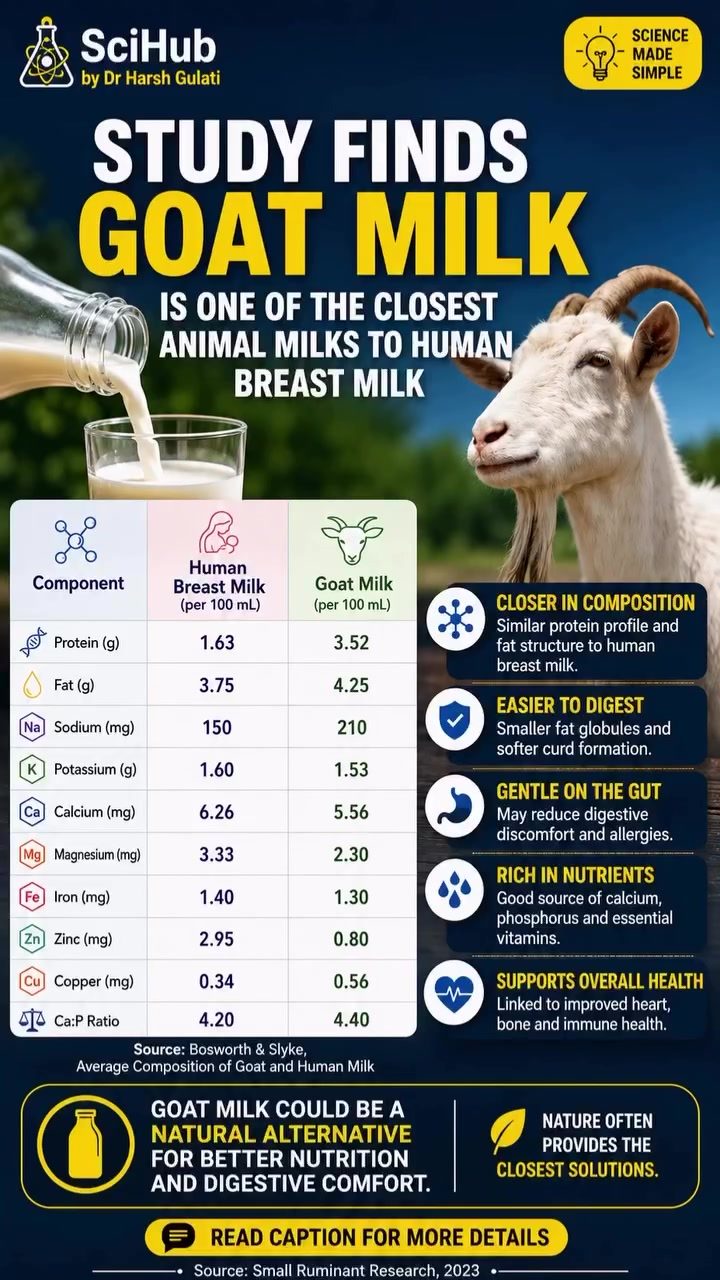
While goat milk is not a replacement for human breast milk, it does share several similarities that make it a natural alternative for certain nutritional needs. Human breast milk contains unique components such as antibodies, immune cells, hormones, enzymes, and human milk oligosaccharides (HMOs), which are specifically designed for infant growth and development. Goat milk, on the other hand, has a similar protein profile and fat structure to human breast milk, making it a closer match to human milk than many other animal milks.
Nutritional Breakdown
A comparative study by Bosworth & Slyke highlights the nutritional breakdown of goat milk versus human breast milk. The key findings include:
- Protein: Goat milk contains 1.63 grams of protein per 100 grams, whereas human breast milk contains 3.52 grams.
- Fat: Goat milk has 3.75 grams of fat, compared to 4.25 grams in human breast milk.
- Calcium: Goat milk is slightly higher in calcium, with 6.26 milligrams compared to 5.56 milligrams in human breast milk.
- Phosphorus: Human breast milk contains 1.30 milligrams of phosphorus, while goat milk contains 1.40 milligrams.
- Zinc and Copper: Goat milk is higher in zinc (2.95 milligrams) and slightly lower in copper (0.34 milligrams) compared to human breast milk (0.80 and 0.56 milligrams, respectively).
These nutritional components, combined with the unique digestibility of goat milk, contribute to its status as a valuable nutritional choice for many people. It is a natural alternative for better nutrition and digestive comfort, particularly for those with specific dietary needs or digestive sensitivities.
Practical Tips
When considering goat milk as a part of your diet, it's important to keep a few practical tips in mind:
Gradual Introduction
If you are new to goat milk, it's advisable to introduce it gradually into your diet. This allows your body to adjust to the new protein and fat profiles, reducing the risk of digestive discomfort.
Combining with Other Foods
Goat milk can be combined with other foods to enhance its nutritional benefits. For example, adding goat milk to smoothies, cereals, or oatmeal can provide a balanced and nutritious meal.
Considerations for Infants and Children
While goat milk can be a nutritious choice for adults and older children, it is not suitable as the sole source of nutrition for infants under 12 months. For infants, it is crucial to use specially formulated infant formulas under medical guidance to ensure they receive the necessary nutrients for growth and development.
Important Takeaways
Goat milk offers several unique benefits, including:
- A nutritional profile rich in essential minerals and vitamins.
- Easier digestibility due to smaller fat globules and softer curd formation.
- A closer match to human breast milk in terms of protein and fat structure.
These characteristics make goat milk a valuable addition to a balanced diet, especially for those with digestive sensitivities or lactose intolerance.
Conclusion
Goat milk stands out as a nutritious and easily digestible alternative to traditional cow's milk. Its similar protein and fat structure to human breast milk, along with its rich nutritional content, makes it a beneficial choice for many individuals. Whether you are looking to improve your digestive health or simply explore a new dairy option, goat milk offers a range of benefits that can support your overall well-being.
Watch the Reel
Questions readers ask
What makes goat milk more digestible than cow milk?
Goat milk is often easier to digest due to the smaller size of its fat molecules, which are easier for the body to break down. Additionally, goat milk contains less lactose and a different type of casein protein, making it a good alternative for those with lactose intolerance or digestive sensitivities to cow's milk.
How does the nutritional content of goat milk compare to cow milk?
Goat milk offers a rich profile of essential nutrients, including vitamins like A, D, and B, as well as higher content of certain minerals such as potassium, niacin, and vitamins B6. It also contains about 33% less calcium than cow milk, but it has a higher digestibility, which can make it easier for the body to absorb and utilize the nutrients.
Why is goat milk sometimes considered a suitable alternative to breast milk?
Goat milk has a similar composition to human breast milk, with closer levels of protein, fat, and certain minerals. This similarity makes it a popular choice for those seeking a more natural alternative for infant nutrition, although it's important to consult with a healthcare provider before making such a switch.
What are the primary health benefits of goat milk?
Goat milk supports bone health due to its calcium content, and it can also contribute to a healthy immune system due to its rich nutritional profile. Its digestibility makes it a good choice for those with digestive issues, and its rich nutritional content can support overall well-being.
Can goat milk benefit those with lactose intolerance?
Yes, goat milk can be a suitable alternative for those with lactose intolerance. It contains about 9% less lactose than cow milk, and the different type of casein protein in goat milk may also help ease digestive discomfort.
How does the protein content in goat milk differ from cow milk?
Goat milk contains about 21% less animal protein than cow milk, which may facilitate digestion. It also has a different type of casein protein, which can be easier to digest for some people.
What vitamins and minerals are abundant in goat milk?
Goat milk is rich in essential vitamins such as A, B, and D, as well as minerals like calcium and potassium. It also contains niacin and vitamin B6, contributing to a well-rounded nutrient profile.
Related deep dives
Similar reads based on topic and creator.

Recent articles
Fresh deep dives from the latest Reels we unpacked.




Comments
Be the first to comment.