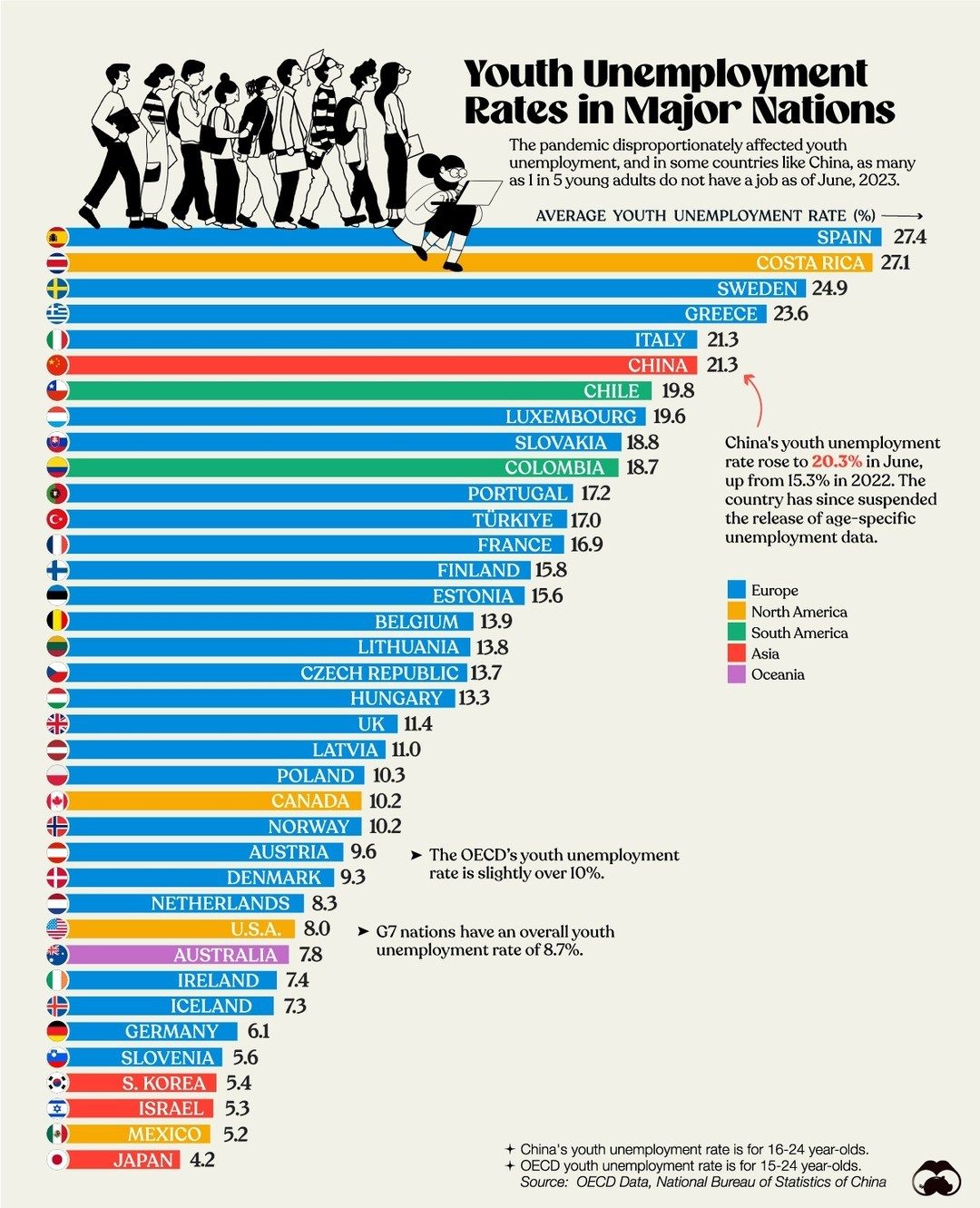
Youth Unemployment Rates Around the World
Youth unemployment is a critical issue that affects nations globally. In nearly every country, the unemployment rate among young people is significantly higher than the general unemployment rate. This disparity has been particularly pronounced since the COVID-19 pandemic, which exacerbated the problem by locking young adults out of entry-level jobs during a crucial stretch of their early careers. This loss of work experience can have long-term impacts on their earning potential.
Context / Why This Matters
The pandemic's impact on youth unemployment cannot be overstated. Young adults, typically aged 16 to 24, were hit hard by the economic downturn. With businesses shutting down and hiring freezes in place, many young people found themselves unable to gain the work experience that is essential for career development. This lack of experience can have lasting effects, making it harder for them to secure meaningful employment in the future.
Current State of Youth Unemployment
Global Trends
Using data from the Organisation for Economic Co-operation and Development (OECD) and the National Bureau of Statistics of China, we can chart out the youth unemployment rates for 37 countries. The OECD's youth unemployment rate is slightly over 10%, but this figure varies widely across different regions. For instance, countries like Italy, Spain, and Costa Rica have youth unemployment rates that are significantly higher, often exceeding 20%.
Regional Disparities
Europe
In Europe, the youth unemployment rate varies widely. Countries like Luxembourg and Sweden boast some of the lowest rates, around 4.2% and 7.1% respectively. On the other hand, Greece and Italy face some of the highest rates, with Greece's youth unemployment rate soaring to 30.3% and Italy's close behind at 27.3%.
Asia
In Asia, the situation is equally diverse. China, for example, has a youth unemployment rate of 20.4% for individuals aged 16 to 24. This high rate is particularly concerning given the large population of young people in the country. In contrast, South Korea and Japan have relatively lower rates, at 8.8% and 6.5% respectively. However, these countries also face significant challenges in integrating young people into the workforce.
The Americas
In the Americas, the youth unemployment rate also varies. The United States has a rate of 7.8%, which is lower compared to many European and Asian countries. However, countries like Mexico face higher rates, with 11.2% of young people out of work. Canada, on the other hand, has a relatively low rate of 8.6%.
Oceania
Australia and New Zealand have some of the lowest youth unemployment rates in the world. Australia's rate is 8.3%, while New Zealand's is 10.9%. These rates are comparatively lower than many other developed countries, indicating a more stable economic environment for young people in these regions.
Practical Tips
For Job Seekers
Young adults seeking employment can take several steps to improve their prospects. First, networking is crucial. Building a strong network of professionals in your desired field can open doors to job opportunities that may not be publicly advertised. Attending industry conferences, joining professional organizations, and leveraging social media platforms like LinkedIn can all help in expanding your network.
Additionally, gaining relevant skills and certifications can make you a more attractive candidate. Many industries offer certifications that can be completed online, providing a flexible way to enhance your qualifications. Websites like Coursera, Udemy, and LinkedIn Learning offer a wide range of courses that can help you develop new skills or deepen your understanding of existing ones.
For Employers
Employers can play a significant role in reducing youth unemployment by offering more entry-level positions and internships. These opportunities provide young people with the experience they need to build their careers. Additionally, employers can invest in training programs that help young employees develop the skills they need to succeed in the workplace.
Important Takeaways
Youth unemployment is a complex issue that requires a multifaceted approach. Governments, employers, and young people themselves all have a role to play in addressing this challenge. By providing more job opportunities, investing in training, and offering support to young job seekers, we can work towards reducing youth unemployment and ensuring that young people have the opportunities they need to build successful careers.
Conclusion
Youth unemployment is a pressing issue that affects nations around the world. The pandemic has exacerbated the problem, but by understanding the current trends and taking practical steps, we can work towards a more equitable future for young people. Whether you are a young job seeker or an employer, there are actions you can take to make a difference. By focusing on solutions and practical steps, we can help young people navigate the challenges of today's job market and build the careers they deserve.
Watch the Reel
Questions readers ask
Why have global youth unemployment rates increased post-pandemic?
The pandemic caused widespread business closures and hiring freezes, making it difficult for young adults to secure entry-level jobs. This has led to a significant increase in youth unemployment rates, which are now higher than the general unemployment rates in many countries.
Which countries have been most affected by youth unemployment post-pandemic?
While the impact is global, countries like Italy and Spain have seen notably high youth unemployment rates, often exceeding 30%. In China, the youth unemployment rate has also been high, with young adults struggling to find jobs. OECD countries, as a whole, have also experienced a significant rise in youth unemployment.
What are the long-term effects of early career job loss on young adults?
The loss of crucial early career work experience can have lasting effects on a young adult's earning potential. This period is typically when individuals gain valuable skills and build professional networks, so a disruption can lead to lower wages and less job security in the future.
Why is youth unemployment higher than the general unemployment rate?
Young adults often face tougher competition for jobs due to their lack of work experience. This, coupled with the pandemic's impact on the job market, has made it even more challenging for young people to find work, resulting in higher youth unemployment rates.
How has the pandemic affected the youth job market trends?
The pandemic has resulted in a dramatic shift in the youth job market, with many industries scaling back or halting hiring. This has left young adults struggling to find entry-level positions, particularly in sectors like hospitality, retail, and services that traditionally employ many young people.
What can be done to combat worldwide youth unemployment rates?
Governments and organizations can implement policies and programs to support job creation for young adults, such as apprenticeships, training initiatives, and incentives for businesses to hire youth. Providing financial support and mental health resources to young job seekers can also be beneficial.
Recent articles
Fresh deep dives from the latest Reels we unpacked.




Comments
Be the first to comment.