Global Wealth Distribution
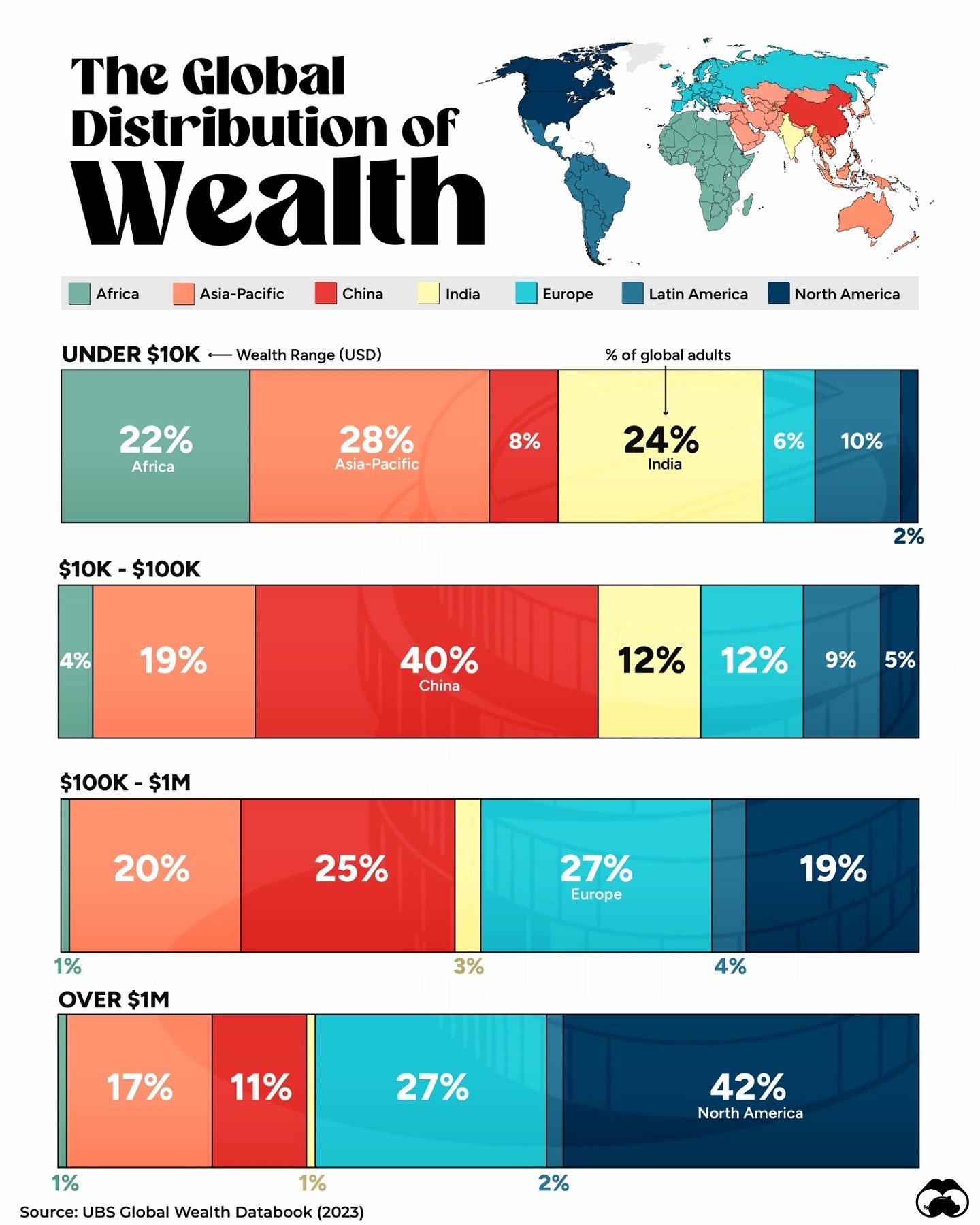
Understanding the global distribution of wealth is crucial for grasping the economic landscape of our world. Since the 1980s, wealth inequality both within and between countries has risen. However, despite this disparity, global median wealth has surged fivefold since 2000, largely due to China's economic expansion, which has significantly boosted the global median wealth level. This article delves into the distribution of wealth across different regions, providing insights based on data from UBS.
Why This Matters
Global wealth distribution sheds light on economic disparities and opportunities. It helps policymakers, economists, and individuals understand the economic dynamics at play and make informed decisions. This understanding can drive efforts to reduce inequality and promote inclusive economic growth.
Main Discussion
Regional Wealth Breakdown
Africa
Africa has a significant portion of its population in the lower wealth brackets. Approximately 22% of global adults in Africa fall under the $10,000 wealth range. This highlights the economic challenges faced by many in the region. However, there is also a notable presence in the $100,000 to $1,000,000 range, with 25% of adults falling into this category. This indicates a growing middle class and potential for economic growth.
Asia-Pacific
Asia-Pacific is a region of contrasts. A substantial 28% of global adults in this region have wealth under $10,000, indicating widespread economic struggles. However, 20% of adults are in the $100,000 to $1,000,000 range, and 27% have over $1,000,000 in wealth. This mix shows both the challenges and opportunities present in the region.
China
China stands out with a significant portion of adults in the $100,000 to $1,000,000 wealth range, accounting for 40% of global adults in this category. This is a testament to China's rapid economic growth and urbanization. Additionally, 11% of adults have over $1,000,000 in wealth, reflecting the emergence of a wealthy elite class.
India
In India, 24% of global adults fall under the $10,000 wealth range, indicating substantial economic challenges. However, India also has a significant presence in the $100,000 to $1,000,000 range, with 27% of adults in this category. This mix highlights both the economic disparities and potential for growth in India.
Europe
Europe shows a more balanced wealth distribution. Approximately 19% of global adults in Europe fall into the $100,000 to $1,000,000 range, and 1% have over $1,000,000 in wealth. This distribution suggests a more stable economic environment with a lower percentage of extreme wealth disparities.
Latin America
Latin America has 6% of global adults in the $100,000 to $1,000,000 wealth range, and 1% have over $1,000,000. This indicates a growing middle class and a smaller but significant wealthy elite. However, a significant portion, 10%, falls into the $10,000 to $100,000 range, highlighting economic challenges and opportunities.
North America
North America leads in wealth distribution, with 42% of global adults having over $1,000,000 in wealth. This region also has a substantial presence in the $100,000 to $1,000,000 range, with 27% of adults. This distribution reflects the high economic standard and significant wealth disparities in North America.
Wealth Ranges
The wealth ranges provide a clear picture of global economic status.
Under $10,000
This category includes the majority of the world's poorest individuals, primarily from Africa and Asia-Pacific. Economic instability, lack of access to resources, and limited job opportunities contribute to this wealth disparity.
$10,000 to $100,000
This range includes many middle-class individuals, primarily from Africa, India, and Latin America. These individuals have access to basic necessities but face economic challenges and limited opportunities for wealth accumulation.
$100,000 to $1,000,000
This range represents a growing middle to upper-middle class, primarily from China, Europe, and North America. These individuals have substantial wealth, access to resources, and opportunities for economic growth.
Over $1,000,000
This category includes the wealthiest individuals, primarily from China and North America. These individuals have significant wealth, financial stability, and access to resources.
Key Insights
The data highlights several key insights:
- Global Disparities: While global median wealth has increased, wealth disparities persist, particularly in Africa and Asia-Pacific.
- Economic Growth: China's economic expansion has significantly impacted global wealth distribution, contributing to a higher global median wealth level.
- Regional Variations: Each region has unique economic dynamics, with varying degrees of wealth disparities and opportunities for growth.
Practical Tips
For Individuals
Understanding global wealth distribution can help individuals make informed decisions about their financial future. Here are some practical tips:
- Invest Wisely: Consider investing in regions with high economic growth potential, such as China and Latin America.
- Diversify Your Portfolio: Diversifying your investments across different regions and wealth ranges can help mitigate risks and maximize returns.
- Stay Informed: Keep up-to-date with economic trends and news to make informed financial decisions.
For Policymakers
Policymakers can use this information to drive economic policies that promote inclusive growth and reduce wealth disparities. Some practical steps include:
- Invest in Education and Training: Investing in education and training programs can help individuals acquire the skills needed to participate in the economy and accumulate wealth.
- Promote Economic Opportunities: Creating job opportunities and supporting small businesses can help reduce wealth disparities and promote economic growth.
- Implement Progressive Tax Policies: Progressive tax policies can help redistribute wealth and promote economic equality.
Important Takeaways
Economic Disparities Persist
Despite the increase in global median wealth, economic disparities persist, particularly in regions like Africa and Asia-Pacific. Addressing these disparities requires targeted policies and investments.
Economic Growth and Wealth Accumulation
Economic growth, as seen in China, can significantly impact global wealth distribution. Promoting economic growth and opportunities for wealth accumulation can help reduce disparities and promote inclusive growth.
Regional Variations
Each region has unique economic dynamics, and understanding these variations can help individuals and policymakers make informed decisions. For example, investing in regions with high growth potential can offer significant returns, while supporting small businesses can create jobs and reduce economic disparities.
Promoting Inclusive Economic Growth
Promoting inclusive economic growth requires a multi-faceted approach. This includes investing in education and training, creating job opportunities, and implementing progressive tax policies. By addressing economic disparities and promoting inclusive growth, we can create a more equitable and prosperous world.
Conclusion
Global wealth distribution provides valuable insights into the economic dynamics of our world. By understanding the disparities and opportunities in different regions and wealth ranges, individuals and policymakers can make informed decisions to promote economic growth and reduce wealth disparities. Through targeted policies, investments, and informed decision-making, we can create a more prosperous and equitable world.
Watch the Reel
Questions readers ask
How has China's wealth growth impacted global median wealth?
China's economic growth since the 2000s has significantly boosted global median wealth. The country's expansion has been a major factor in the fivefold increase in global median wealth, elevating the worldwide distribution of wealth.
What are the implications of China's wealth rise on economic disparities?
China's wealth growth has complex implications for economic disparities. While it has lifted millions out of poverty and contributed to global wealth, it has also exacerbated wealth inequality within China and influenced the global wealth distribution.
How does China's economic influence affect global wealth distribution?
China's economic influence has reshaped the world's wealth distribution in multiple ways. Its growth has driven up global median wealth, altering the global wealth distribution. As China continues to expand, its impact on global wealth dynamics will be increasingly important.
Why is understanding global wealth distribution important for policymaking?
Understanding global wealth distribution is vital for policymaking as it provides insights into economic disparities and opportunities. This knowledge helps policymakers make informed decisions, shape policies, and address wealth inequalities that may hinder economic growth.
How has wealth distribution in China changed over the years?
Wealth distribution in China has evolved rapidly since the 2000s. China's economic growth has led to a significant rise in wealth, but it has also resulted in wealth disparities within the country. The top 1% of Chinese households own a substantial portion of the country's wealth.
What role do wealth shifts play in China's global economic influence?
Wealth shifts in China are pivotal to its global economic influence. As China's wealth continues to grow, it exerts a powerful influence on global wealth distribution. This shift has significant implications for international economic dynamics, driving changes in global wealth distribution.
How has the global wealth distribution changed since the 1980s?
Since the 1980s, global wealth distribution has seen significant changes. While wealth inequality has risen both within and between countries, global median wealth has surged fivefold since 2000. This shift is largely attributed to China's economic expansion.
Recent articles
Fresh deep dives from the latest Reels we unpacked.




Comments
Be the first to comment.