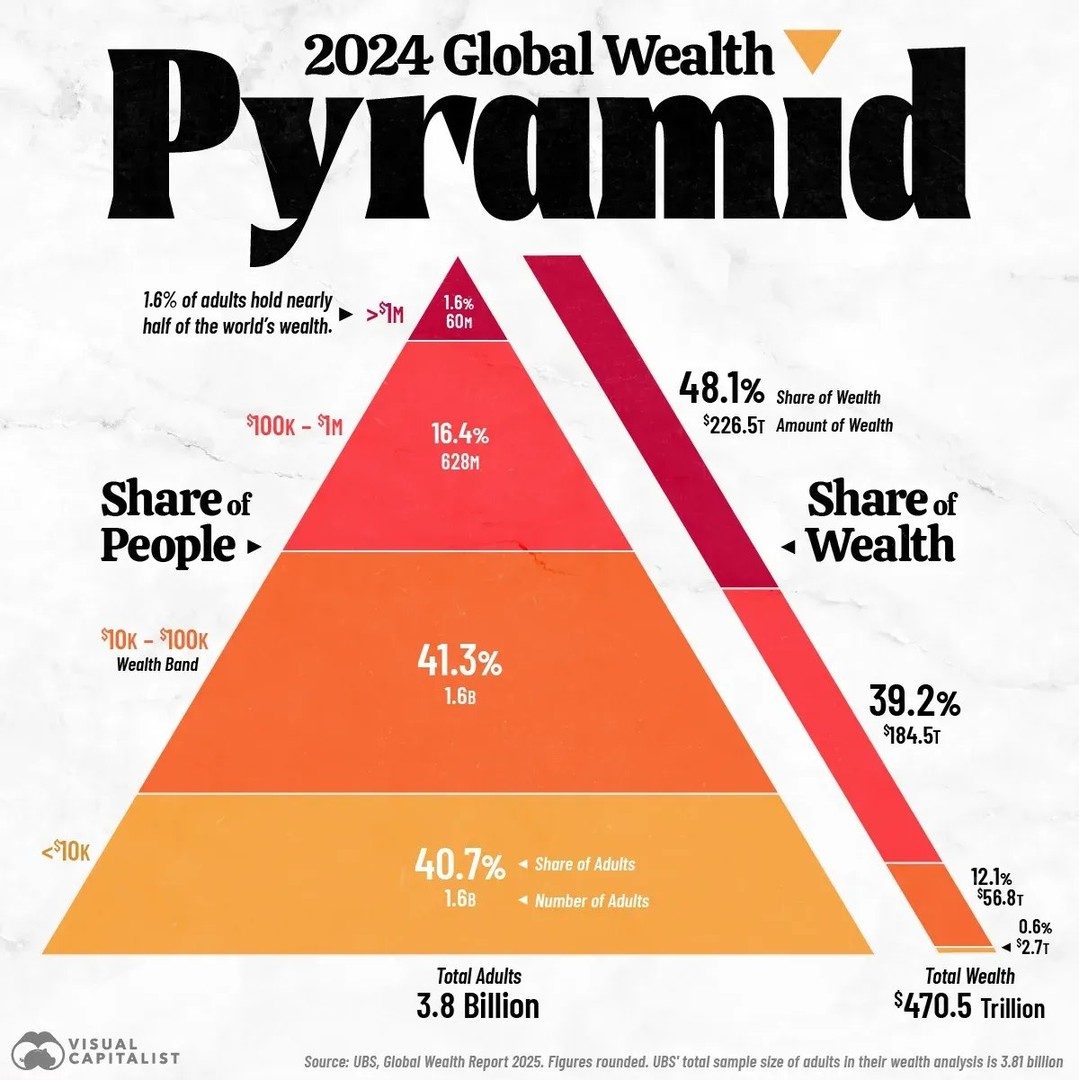
The wealth pyramid is a stark illustration of global wealth distribution. It shows how wealth is concentrated among a tiny fraction of the world's adult population, while the majority holds a much smaller share. By 2025, just 1.6% of adults worldwide will hold nearly 48% of global wealth, according to the UBS Global Wealth Report 2025 (also showing infographic in a post by Visual Capitalist). This means that a small group of individuals controls a significant portion of the world's total wealth.
Context / Why This Matters
Understanding the wealth pyramid is crucial for grasping the broader economic landscape and the disparities that exist within it.
Wealth concentration affects economic stability, social mobility, and political power. It influences policy decisions, access to opportunities, and the overall well-being of societies. For instance, a highly concentrated wealth distribution can lead to economic inequality, where a large portion of the population struggles to meet basic needs while a small elite enjoys abundant resources.
Main Discussion
The Top Tier: The Wealthiest 1.6%
At the pinnacle of the wealth pyramid, 1.6% of adults hold more than $1 million each. This elite group controls a staggering 48.1% of the world's total wealth, amounting to approximately $226.5 trillion. Despite representing a minuscule fraction of the global adult population, their financial influence is immense.
This top tier includes individuals with significant assets, such as stock portfolios, real estate, and high-value investments. Their wealth often comes from inherited fortunes, entrepreneurial ventures, or high-paying professions. Their financial decisions can have ripple effects across global markets, affecting everything from stock prices to economic policies.
The Middle Tiers: The Affluent and Comfortable
The next segment of the wealth pyramid includes adults with assets ranging from $100,000 to $1 million. This group makes up 16.4% of the total adult population, holding 39.2% of the world's total wealth, or $184.5 trillion. While not as wealthy as the top tier, these individuals still enjoy a comfortable standard of living and have significant financial resources.
Below this tier are adults with assets valued between $10,000 and $100,000. This segment represents 40.7% of the global adult population and holds 12.1% of the total wealth, or $56.8 trillion. They have enough wealth to meet their basic needs and may even have some savings, but they are not as financially secure as those in the higher tiers.
The Base: The Majority
At the base of the wealth pyramid are the 82% of the world’s adult population who control just 12.7% of the total wealth. These individuals have limited assets, often living paycheck to paycheck. Many in this group struggle with financial stability, facing challenges such as debt, unemployment, and inadequate access to essential services.
This vast majority includes a significant portion of the world's workforce, many of whom are employed in low-wage jobs. Their financial struggles can lead to a cycle of poverty, limiting their opportunities for upward mobility and economic advancement.
Practical Tips
Understanding the wealth pyramid can help individuals and policymakers take steps to address wealth disparities. Here are some practical tips:
For Individuals
-
Financial Literacy: Educate yourself about financial management, investing, and savings strategies. Knowledge is power, and understanding how to grow and protect your wealth can make a significant difference.
-
Diversify Investments: Spread your investments across various asset classes to mitigate risk. This can include stocks, bonds, real estate, and other financial instruments.
-
Seek Professional Advice: Consult with financial advisors or planners who can provide personalized strategies tailored to your financial goals and circumstances.
-
Build an Emergency Fund: Aim to save at least three to six months' worth of living expenses. This can provide a financial cushion in case of unexpected events, such as job loss or medical emergencies.
-
Invest in Education and Skills: Continuously develop your skills and knowledge. This can enhance your earning potential and open up new opportunities for career advancement.
For Policymakers
-
Progressive Taxation: Implement tax policies that redistribute wealth from the top tiers to lower-income groups. This can help reduce income inequality and ensure more equitable resource allocation.
-
Access to Education and Healthcare: Invest in public education and healthcare systems to provide equal opportunities for all individuals. Education and healthcare are crucial for economic mobility and well-being.
-
Support Small Businesses: Encourage economic policies that foster the growth of small and medium-sized enterprises. These businesses often create jobs and stimulate local economies.
-
Promote Social Safety Nets: Implement social safety nets, such as unemployment benefits, social security, and minimum wage laws, to protect vulnerable populations from financial instability.
-
Encourage Financial Inclusion: Ensure that all individuals have access to affordable financial services, such as banking, credit, and insurance. This can help them build wealth and manage financial risks.
Important Takeaways
The global wealth pyramid highlights the stark disparities in wealth distribution. Key takeaways include:
- Concentration of Wealth: A small fraction of the world's population holds a disproportionate amount of wealth.
- Economic Inequality: The wealth gap can lead to economic instability, social unrest, and limited opportunities for upward mobility.
- Policy Implications: Addressing wealth disparities requires comprehensive policies that promote financial inclusion, education, and economic growth.
- Individual Actions: Personal financial management, investment, and skill development are crucial for building wealth and achieving financial security.
Conclusion
The global wealth pyramid offers a visual representation of the vast disparities in wealth distribution. By understanding the dynamics of wealth concentration, individuals and policymakers can take informed actions to address these inequalities. Whether through personal financial management, policy reforms, or social interventions, addressing the wealth gap is essential for creating a more equitable and prosperous world.
Watch the Reel
Questions readers ask
Why is the global wealth pyramid significant in understanding world economics?
The global wealth pyramid provides a clear visualization of how wealth is distributed among the world's adult population. It highlights the concentration of wealth among a small percentage of individuals, which is crucial for understanding economic stability, social mobility, and political power dynamics.
What percentage of the world's wealth will the wealthiest 1.6% of adults hold by 2025?
According to the UBS Global Wealth Report 2025, the wealthiest 1.6% of adults will hold nearly 48% of the world's total wealth by 2025. This shows a significant concentration of assets among a tiny fraction of the global population.
What is the UBS Global Wealth Report 2025 and why is it important?
The UBS Global Wealth Report 2025 is a comprehensive study that provides detailed insights into the distribution of wealth worldwide. It is important as it offers data-driven perspectives on global wealth trends, helping to inform discussions about economic policies and social issues.
How does wealth concentration affect economic stability?
Wealth concentration can lead to economic instability by limiting the spending power of the majority, which can slow down economic growth. It also means fewer people control a large portion of financial assets, which can lead to increased economic volatility.
What are the implications of wealth inequality for social mobility?
High levels of wealth inequality can hinder social mobility by making it harder for individuals from lower-income backgrounds to access opportunities for advancement. This can perpetuate cycles of poverty and limit the potential for upward economic movement.
Related deep dives
Similar reads based on topic and creator.


Recent articles
Fresh deep dives from the latest Reels we unpacked.




Comments
Be the first to comment.