Global Wealth Distribution
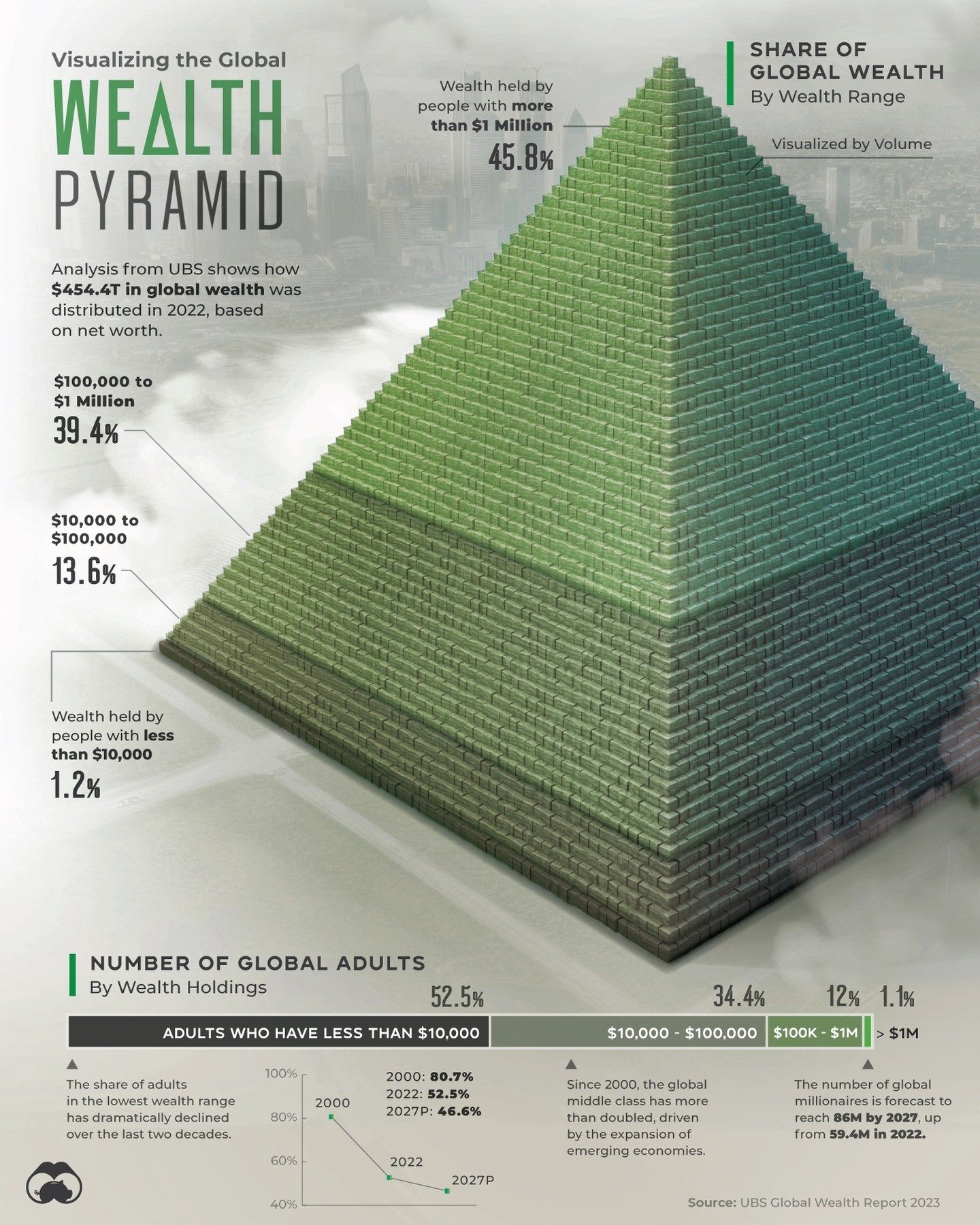
The global wealth pyramid in 2022 illustrates a stark disparity in household wealth distribution, with millionaires controlling nearly half of the net household wealth. While a surge in interest rates slightly reduced these fortunes, the wealthy still maintain a substantial share of global wealth. Let’s delve into the key insights from the 2023 UBS Global Wealth Report, which provides a detailed breakdown of this distribution.
Why This Matters
Understanding the global wealth distribution is crucial for grasping the economic landscape and how wealth is concentrated among different segments of the population. This knowledge can influence policy decisions, economic planning, and societal discussions about wealth inequality.
Main Discussion
Global Wealth by Range
The UBS report highlights that global wealth reached $454.4 trillion in 2022. Breaking down this wealth by range shows significant disparities:
- $100,000 to $1 Million: This group holds 39.4% of global wealth. They represent a significant portion of the affluent population, but not the wealthiest.
- $10,000 to $100,000: This middle-class group holds 13.6% of global wealth. While not as affluent as the previous group, they still contribute substantially to the overall wealth distribution.
- Less than $10,000: Surprisingly, this group holds only 1.2% of global wealth, illustrating the vast wealth gap between the rich and the poor.
Number of Global Adults by Wealth Category
The distribution of global adults across different wealth categories further underscores the wealth disparity:
- Less than $10,000: 52.5% of global adults fall into this category, highlighting the large segment of the population with limited wealth.
- $10,000 to $100,000: 34.4% of adults fall into this range, representing a significant portion of the global middle class.
- $100,000 to $1 Million: 12% of adults are in this category, indicating a smaller but still notable segment of the affluent population.
- More than $1 Million: Only 1.1% of global adults fall into this category, showcasing the elite who control a disproportionate amount of wealth.
Trends and Forecasts
The global middle class has more than doubled since 2000, largely driven by the expansion of emerging economies. This trend is expected to continue, with the global middle class projected to grow further.
In terms of millionaires, the number is forecast to reach 86 million by 2027, up from 59.4 million in 2022. This growth highlights the increasing concentration of wealth at the top tier of the global wealth pyramid.
Practical Tips
For those interested in understanding and navigating the global wealth landscape, here are some practical tips:
-
Stay Informed: Keep up with the latest reports and analyses on global wealth distribution to stay informed about current trends and future projections. The UBS Global Wealth Report is a valuable resource for this.
-
Invest Wisely: Understand the different wealth ranges and how they impact investment opportunities. For instance, investing in emerging economies can be beneficial as they drive the growth of the global middle class.
-
Diversify Your Portfolio: Diversification is key to managing risk. Consider spreading your investments across different wealth categories and regions to balance your portfolio.
-
Plan for the Future: Use forecasts and trends to plan your financial strategies. For example, the projected increase in the number of millionaires may present new investment opportunities.
Important Takeaways
- Wealth Concentration: The wealthiest segment of the population controls a substantial portion of global wealth, illustrating the concentration of wealth at the top.
- Middle Class Growth: The global middle class has seen significant growth, particularly in emerging economies, and this trend is expected to continue.
- Millionaire Population: The number of millionaires is projected to grow, further concentrating wealth at the top of the pyramid.
- Economic Impact: Understanding wealth distribution can help inform economic policies, investment strategies, and societal initiatives aimed at addressing wealth inequality.
Conclusion
The global wealth pyramid offers a clear view of how wealth is distributed across different segments of the population. With millionaires holding nearly half of the net household wealth, the concentration of wealth at the top is evident. However, the growth of the global middle class and the increasing number of millionaires present both challenges and opportunities. By staying informed and adapting to these trends, individuals and economies can better navigate the complexities of global wealth distribution.
Watch the Reel
Questions readers ask
What are the main findings of the 2023 UBS Global Wealth Report regarding millionaires?
The 2023 UBS report indicates that millionaires hold approximately 40% of the total global household wealth, which amounts to $454.4 trillion. This highlights a significant concentration of wealth among the affluent, despite a slight reduction in their fortunes due to rising interest rates.
How does the UBS wealth pyramid illustrate global wealth distribution?
The UBS wealth pyramid categorizes wealth by range, clearly showing the disparity between the affluent and those with less than $10,000. This segmentation helps illustrate how wealth is concentrated among different segments of the population, with millionaires at the top holding a substantial share of net household wealth.
Why is understanding the global wealth distribution important?
Understanding the global wealth distribution is vital for comprehending the economic landscape and how wealth is concentrated. This knowledge can influence policy decisions, economic planning, and societal discussions about wealth inequality, ensuring that initiatives are targeted effectively to address disparities.
What is the significance of the wealth distribution gap highlighted in the 2023 UBS report?
The wealth distribution gap highlighted in the 2023 UBS report underscores the significant disparity in wealth between millionaires and those with less than $10,000. This gap is crucial for policymakers and economists to address, as it impacts various aspects of society, including access to financial resources and economic opportunities.
How has the surge in interest rates affected millionaire wealth according to the 2023 UBS report?
The surge in interest rates has slightly reduced the fortunes of millionaires, but they still maintain a substantial share of global wealth. The report notes that despite this reduction, millionaires continue to hold a significant portion of the net household wealth, emphasizing their dominant position in the global wealth distribution.
What are the different wealth categories identified in the 2023 UBS wealth report?
The 2023 UBS wealth report categorizes wealth into various ranges, including those with less than $10,000, and millionaires who hold significant shares of the global wealth. This categorization helps in understanding the distribution of wealth across different segments of the population, highlighting the disparity between the affluent and those with limited financial resources.
Recent articles
Fresh deep dives from the latest Reels we unpacked.




Comments
Be the first to comment.