Steel Production in 2023
The global steel industry is a cornerstone of modern infrastructure, and understanding the dynamics of raw steel production is crucial for various sectors, from construction to manufacturing. In 2023, China maintained its position as the world's leading producer and consumer of steel, with significant contributions from other major economies.
Why This Matters
Steel is a fundamental material in construction, automotive, and manufacturing industries. The production and consumption figures provide insights into economic trends, industrial capacities, and future market directions. The data helps companies, governments, and investors make informed decisions about infrastructure projects, industrial investments, and supply chain management.
Global Steel Production Landscape
China: The Dominant Player
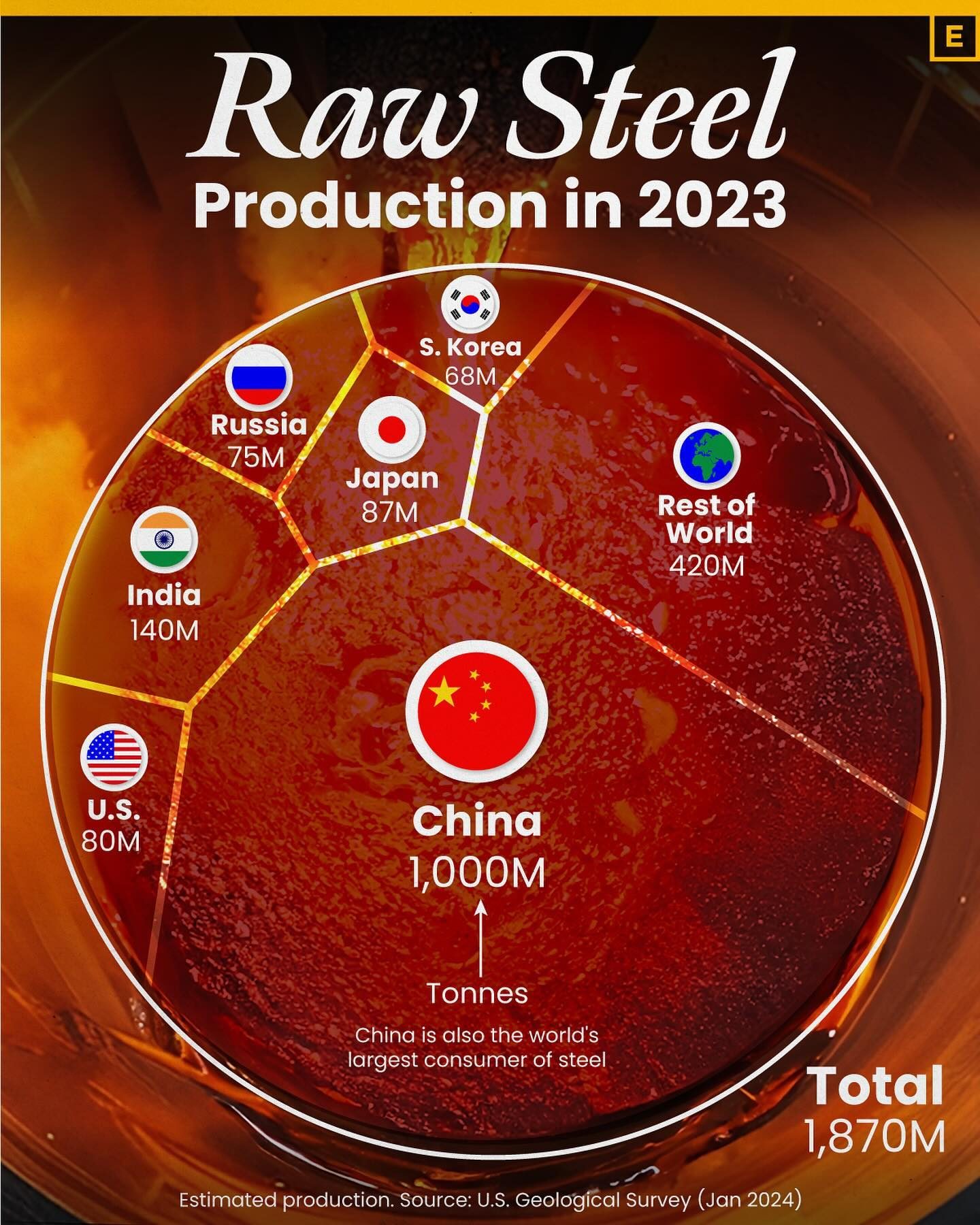
China produced 1,000 million tonnes of raw steel in 2023, a staggering figure that highlights the country's dominant role in the global steel market. This production surpasses the rest of the world's output, contributing to significant market influence and economic leverage. China's massive production capacity is driven by its enormous domestic demand for infrastructure and construction projects, including highways, bridges, and skyscrapers.
India and Japan: Close Contenders
Following China, India and Japan are the next largest producers. India produced 140 million tonnes, while Japan produced 87 million tonnes. Both countries play significant roles in the global steel market, with India's production driven by rapid urbanization and industrialization, and Japan's by its advanced manufacturing sector.
Other Key Producers
South Korea and Russia
South Korea produced 68 million tonnes, and Russia produced 75 million tonnes. These countries are known for their robust industrial sectors and significant contributions to the global steel supply.
The United States
The United States produced 80 million tonnes, reflecting its mature industrial base and ongoing need for steel in various sectors, including automotive, aerospace, and construction.
The Rest of the World
The remaining 420 million tonnes of raw steel production came from other countries globally. This category includes numerous nations with varying levels of industrial development, contributing to the global steel supply chain.
Global Production Overview
Globally, the total raw steel production in 2023 was estimated at 1,870 million tonnes. This figure is based on data from the U.S. Geological Survey as of January 2024. The production figures highlight the significant roles of major producers and the collective efforts of the global steel industry in meeting worldwide demand.
Practical Tips for Industry Players
Stay Informed on Market Trends
Understanding the production and consumption patterns of key steel-producing countries can help companies anticipate market shifts and adjust their strategies accordingly. Regularly monitoring industry reports and data from reliable sources like the U.S. Geological Survey can provide valuable insights.
Diversify Supply Chains
Given the dominance of China in the steel market, it is essential for companies to diversify their supply chains. This approach can mitigate risks associated with market fluctuations and geopolitical factors, ensuring a steady supply of raw materials.
Invest in Sustainable Practices
The steel industry has a significant environmental impact. Investing in sustainable practices, such as recycling and using renewable energy sources, can help companies reduce their carbon footprint and comply with evolving environmental regulations.
Build Strategic Partnerships
Collaborating with key producers and consumers can foster mutual growth and stability. Strategic partnerships can lead to joint ventures, technology sharing, and market access, benefiting all parties involved.
Important Takeaways
China's Dominance
China's dominance in steel production underscores its pivotal role in the global market. The country's massive production capacity and consumption highlight the importance of tracking its industrial policies and economic trends.
Regional Production Dynamics
The production figures for India, Japan, South Korea, Russia, and the United States reflect the diverse industrial landscapes and economic strategies of these countries. Understanding these dynamics can provide insights into global market trends and future developments.
Global Production Trends
The total global steel production of 1,870 million tonnes in 2023 highlights the collective efforts of the industry to meet worldwide demand. The data underscores the interconnectedness of the global steel market and the importance of collaboration and innovation.
Conclusion
The steel production figures for 2023 offer a comprehensive view of the global steel industry, highlighting the dominance of China and the significant contributions of other major economies. By staying informed about market trends, diversifying supply chains, investing in sustainable practices, and building strategic partnerships, industry players can navigate the complexities of the global steel market and capitalize on emerging opportunities.
Watch the Reel
Questions readers ask
Which country produced the most steel in 2023?
China was the leading producer in 2023, with an output of 1,000 million tonnes, making it a dominant player in the global steel market.
How much steel did India and Japan produce in 2023?
India produced 140 million tonnes and Japan produced 87 million tonnes in 2023.
Which countries are the top steel producers in 2023, besides China?
Countries such as India, Japan, South Korea, Russia, and the United States made the most significant contributions to global steel production in 2023, after China.
What is the importance of understanding global steel production trends?
Monitoring global steel production trends offers insights into economic trends, industrial strength, and future market directions, guiding companies and investors in infrastructure projects, industrial investments, and supply chain management.
What sectors are most influenced by global steel output?
The construction, automotive, and manufacturing industries are most influenced by global steel output, as steel is a fundamental material in these sectors.
How does steel production data help in forecasting future market directions?
By analyzing steel production data, companies and governments can identify patterns and make predictions about future market demands, helping them to prepare for changes in supply and demand.
Related deep dives
Similar reads based on topic and creator.

Recent articles
Fresh deep dives from the latest Reels we unpacked.




Comments
Be the first to comment.