Retirement Age Around the Globe
Retirement age varies widely around the world, influenced by economic policies, cultural norms, and labor market dynamics. Understanding these differences can provide valuable insights into how various countries approach workforce management and social welfare.
Why This Matters
Retirement age is more than just a number; it reflects a country's economic stability, healthcare system, and societal values. For instance, countries with younger retirement ages might be grappling with higher unemployment rates among younger workers, while those with older retirement ages may be addressing demographic challenges like an aging population. Additionally, retirement policies can significantly impact a nation's economic landscape, influencing pension systems, healthcare costs, and overall productivity.
Main Discussion
Global Variations in Retirement Age
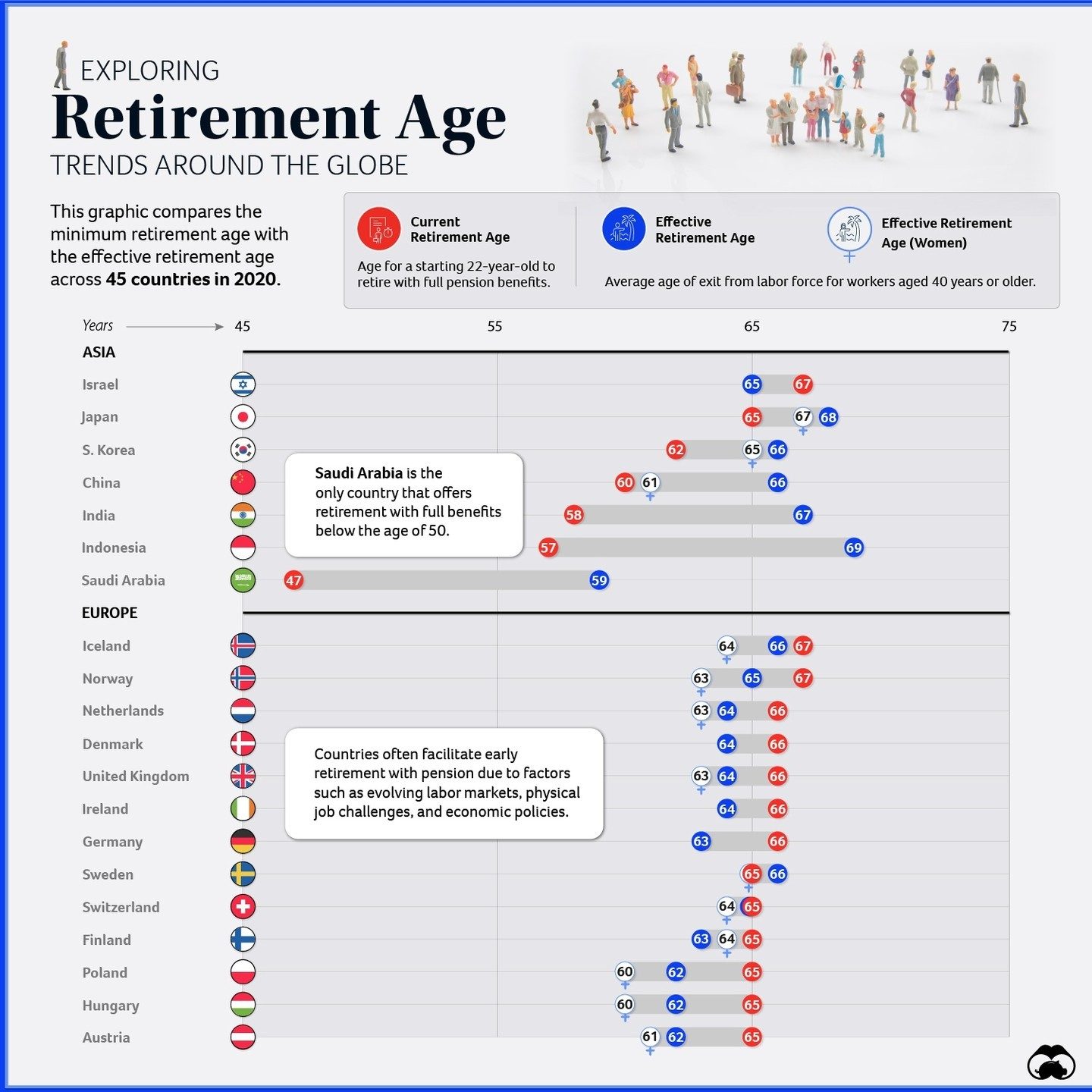
The retirement landscape is diverse, with significant variations across different continents. For example, Saudi Arabia stands out as the only country offering retirement with full benefits below the age of 50. This early retirement policy is unique and can be attributed to cultural and economic factors. Saudi Arabia's labor market is characterized by a high reliance on expatriate workers, which may influence retirement policies to ensure a smooth transition for local citizens. In contrast, countries like Japan and South Korea have higher retirement ages, reflecting their aging populations and the need for longer working lives to sustain pension systems and healthcare costs.
Regional Highlights
Asia
In Asia, the retirement age varies significantly. Japan, South Korea, and Indonesia have relatively high retirement ages, ranging from 65 to 70 years. These countries are dealing with aging populations and the need to maintain economic productivity. On the other hand, Saudi Arabia's retirement policy is notably lower, offering full benefits below the age of 50. This unique policy reflects the country's reliance on expatriate labor and its efforts to support local citizens through early retirement.
Europe
Europe showcases a broad range of retirement ages, influenced by both economic and cultural factors. Iceland, the Netherlands, and Switzerland have higher retirement ages, while countries like France and Poland have lower retirement ages. Notably, France controversially raised its retirement age by two years in 2023, causing widespread strikes. This change highlights the contentious nature of retirement policies and the significant impact they have on society.
North America
In North America, the retirement age is relatively uniform, with the United States and Mexico having similar retirement policies. These countries typically have retirement ages around 65-67 years, reflecting a balance between economic productivity and social welfare considerations. Costa Rica, on the other hand, has a lower retirement age, which may be due to different demographic and economic factors.
Economic and Cultural Influences
Retirement policies are deeply influenced by economic and cultural factors. Countries with robust economies and strong healthcare systems may afford to offer earlier retirement ages, while those with economic constraints or aging populations may extend retirement ages. Cultural values also play a role; societies that prioritize family support or senior care may have different retirement policies compared to those that emphasize individual independence and economic productivity.
Practical Tips
When considering retirement, it's essential to understand the policies and benefits in your country of residence. Here are some practical tips:
- Research Local Policies: Familiarize yourself with the retirement age and benefits in your country. This includes understanding pension systems, healthcare coverage, and any additional support for retirees.
- Plan Financially: Start planning your finances early, taking into account the retirement age and benefits available. Consider investing in retirement savings plans and insurance to ensure financial stability.
- Stay Informed: Keep updated on any changes in retirement policies, as they can significantly impact your financial and social well-being.
Important Takeaways
- Diversity in Retirement Policies: Retirement age varies widely across the globe, influenced by economic, cultural, and demographic factors. Understanding these variations can provide insights into how different countries approach retirement.
- Impact on Economy and Society: Retirement policies have a profound impact on a country's economy and society, influencing pension systems, healthcare costs, and overall productivity.
- Early Planning: Early financial planning and staying informed about local policies are crucial for a smooth transition into retirement.
Conclusion
The retirement landscape is multifaceted and deeply influenced by economic, cultural, and demographic factors. By understanding the variations in retirement age around the globe, individuals can better navigate their retirement planning and prepare for a secure future. Whether you're considering retirement in a country with early retirement benefits or one with extended working years, being informed and proactive can make all the difference.
Watch the Reel
Questions readers ask
Which countries have the earliest retirement ages?
Countries with the earliest retirement ages often include those in the Middle East and North Africa, such as Saudi Arabia, where employees can retire as early as 50. Other countries with relatively early retirement ages include Albania, which allows workers to retire at 57. These early retirement ages can be indicative of cultural expectations and economic structures that support younger retirement.
Why does Japan have one of the latest retirement ages?
Japan's retirement age is among the highest in the world, with the standard age set at 65, reflecting the country's demographic challenges, such as an aging population and low birth rates. Additionally, Japan's retirement age is influenced by the need to maintain productivity and support a robust social security system. This age is similar to that of other East Asian countries, such as South Korea, which also has a retirement age of 65.
How does the retirement age in the USA compare to other countries?
The USA has a retirement age that is typical of other OECD countries, with the full retirement age for Social Security benefits set at 67 for those born after 1960. This is similar to many European countries, such as Germany, where the retirement age is 67. However, it's important to note that many Americans choose to retire earlier, often at 62, when they can begin receiving reduced Social Security benefits.
What factors influence a country's retirement age?
A country's retirement age is influenced by a variety of factors, including economic stability, healthcare systems, and societal values. Countries with younger retirement ages may be dealing with high unemployment rates among younger workers, while those with older retirement ages might be addressing demographic challenges, such as an aging population. Additionally, cultural norms and pension systems play a significant role in determining a country's retirement age.
How does Africa's retirement age compare to the rest of the world?
Retirement ages in Africa vary, but generally, countries in Sub-Saharan Africa tend to have earlier retirement ages compared to more developed nations. For example, Botswana and Tanzania allow workers to retire at 55, while South Africa allows retirement at 60. However, this is a generalization, and retirement ages can vary based on the country's specific economic policies and workforce management strategies.
What is the OECD average retirement age?
The OECD average retirement age is around 65, with many member countries setting their retirement ages at this point. This age reflects a balance between supporting an aging population and maintaining a productive workforce. Countries within the OECD tend to have similar retirement ages, with slight variations based on their unique economic and demographic challenges. This average provides a useful benchmark for comparing retirement policies around the world.
How do retirement policies impact a nation's economic landscape?
Retirement policies significantly influence a nation's economic landscape by affecting pension systems, healthcare costs, and productivity. Countries with older retirement ages may see a more productive workforce and a smaller pension burden, while those with younger retirement ages might face higher unemployment among younger workers. Understanding these dynamics is crucial for policymakers and individuals planning for their future.
Recent articles
Fresh deep dives from the latest Reels we unpacked.




Comments
Be the first to comment.