Why the U.S. Dollar Dominates Global Reserve Currencies
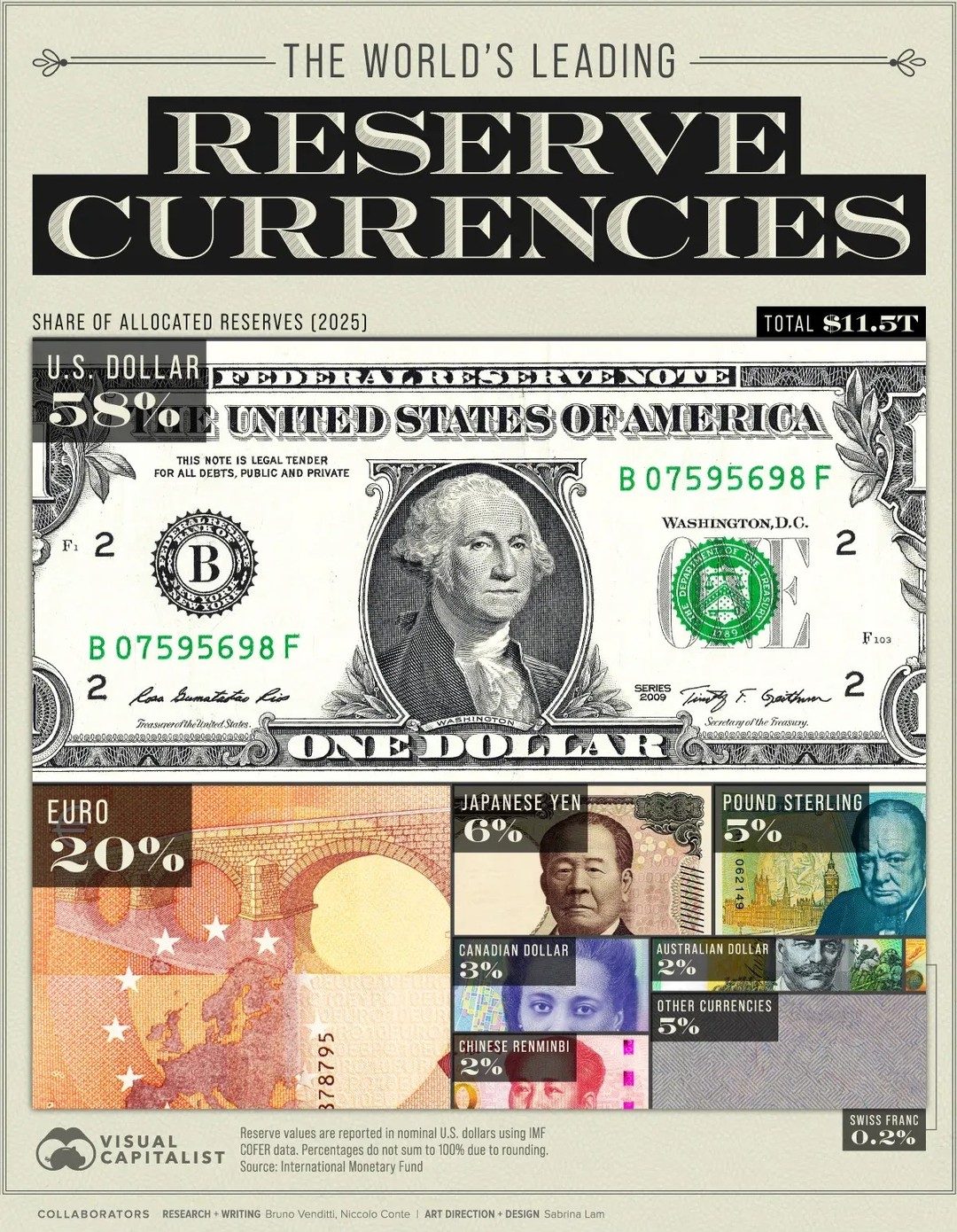
Global reserve currencies play a crucial role in stabilizing economies and facilitating international trade. The U.S. dollar stands out as the most dominant, holding nearly 58% of the world's allocated reserves. This dominance is not without reason, and understanding the dynamics of global reserve currencies provides valuable insight into the global financial landscape.
Why This Matters
The composition of global reserve currencies has significant implications for international trade, financial stability, and economic policy. Central banks and financial institutions hold these currencies to manage liquidity, stabilize their domestic currencies, and ensure they have the means to intervene in financial markets during crises. The U.S. dollar's dominance means it is the go-to currency for these purposes, influencing everything from trade settlements to global financial transactions.
The Dominance of the U.S. Dollar
Historical Context
The U.S. dollar's status as the world's leading reserve currency has deep historical roots. After World War II, the Bretton Woods Agreement established the U.S. dollar as the global standard for currency exchange, pegging other currencies to the dollar, which was convertible to gold. This system ensured widespread acceptance and trust in the U.S. dollar, laying the foundation for its current dominance.
Economic Factors
Several economic factors contribute to the dollar's prominence. The United States has the world's largest economy, making the dollar a natural choice for global transactions. Additionally, the U.S. government's debt instruments, such as Treasury bonds, are considered among the safest and most liquid investments worldwide. This reliability attracts investors and central banks, further solidifying the dollar's reserve status.
Financial Markets
The depth and liquidity of U.S. financial markets are unparalleled. The New York Stock Exchange and other U.S. exchanges are central hubs for global finance, with trillions of dollars traded daily. This liquidity makes the U.S. dollar an attractive option for reserve management, as it can be easily converted into other currencies or assets.
Other Major Reserve Currencies
While the U.S. dollar dominates, other currencies also play significant roles in the global financial system.
The Euro
The Euro represents about 20% of global reserves. As the official currency of the Eurozone, which includes countries like Germany, France, and Italy, the Euro's stability and economic size make it a crucial reserve currency. The Eurozone's economic policies, managed by the European Central Bank, aim to maintain the Euro's value and ensure its stability in global markets.
The Japanese Yen
The Japanese Yen accounts for around 6% of global reserves. Japan's robust economy and significant financial markets contribute to the Yen's reserve status. The Bank of Japan's monetary policies and the Yen's role in trade with other Asian countries further enhance its importance in global finance.
Other Notable Currencies
Other currencies, such as the Canadian Dollar, Australian Dollar, Pound Sterling, Chinese Renminbi, and Swiss Franc, make up the remaining percentages of global reserves. These currencies are chosen for their economic stability, liquidity, and the importance of the issuing countries in global trade and finance.
- The Canadian Dollar (2%) is favored for its close economic ties with the U.S. and stable policy environment.
- The Australian Dollar (3%) benefits from Australia's strong commodity exports and stable financial system.
- The Pound Sterling (5%) retains significance due to the UK's historical role in global finance and its large financial markets.
- The Chinese Renminbi (2%) is increasingly important as China's economy grows and its financial markets open up.
- The Swiss Franc (0.2%) is valued for Switzerland's stable economy, strong financial regulations, and neutrality.
Practical Tips for Understanding Global Reserve Currencies
Understanding the dynamics of global reserve currencies can be complex, but there are practical steps to stay informed and make sense of the data.
Stay Informed
Regularly review reports from the International Monetary Fund (IMF) and other financial institutions. The IMF's Currency Composition of Official Foreign Exchange Reserves (COFER) data is a valuable resource for understanding the distribution of global reserves.
Monitor Economic Indicators
Keep an eye on economic indicators such as GDP growth, inflation rates, and interest rates in major economies. These indicators can signal shifts in the global financial landscape and potential changes in reserve currency allocations.
Follow Financial News
Stay updated with financial news from reputable sources. This will help you understand the broader economic context and the factors influencing the value and stability of different currencies.
Analyze Central Bank Policies
The policies of central banks, such as the Federal Reserve, European Central Bank, and Bank of Japan, play a crucial role in shaping the value and stability of their respective currencies. Monitoring these policies can provide insights into future trends in global reserve currencies.
Consider Diversification
For investors, diversifying across multiple reserve currencies can help mitigate risks associated with any single currency. This strategy can provide stability and potential gains in a changing global financial landscape.
Important Takeaways
- The U.S. dollar remains the dominant global reserve currency, holding nearly 58% of allocated reserves.
- The Euro, Japanese Yen, and other currencies like the Canadian Dollar, Australian Dollar, Pound Sterling, Chinese Renminbi, and Swiss Franc also play significant roles.
- Economic stability, liquidity, and the size of the issuing country's financial markets are key factors in determining a currency's reserve status.
- Staying informed through reliable sources and monitoring economic indicators can help in understanding the dynamics of global reserve currencies.
Conclusion
The U.S. dollar's dominance as the world's leading reserve currency is a result of historical factors, economic stability, and the depth of U.S. financial markets. While other currencies, such as the Euro and Japanese Yen, also play crucial roles, the dollar's position remains unchallenged. Understanding the dynamics of global reserve currencies is essential for navigating the complexities of international finance and making informed decisions in a globalized world.
Watch the Reel
Questions readers ask
What are global reserve currencies and why are they important?
Global reserve currencies are foreign currencies held by central banks and financial institutions to manage liquidity, stabilize domestic currencies, and ensure intervention capabilities during financial crises. They are important for facilitating international trade and maintaining financial stability. The primary currencies are the U.S. dollar, Euro, Japanese yen, British pound, and Chinese yuan.
How is the U.S. dollar's dominance in global reserve currencies calculated?
The U.S. dollar's dominance is calculated based on its share of global foreign exchange reserves. According to the IMF's Currency Composition of Official Foreign Exchange Reserves (CofER) data, the U.S. dollar holds approximately 58% of the world's allocated reserves.
What factors contribute to the U.S. dollar's status as a leading reserve currency?
The U.S. dollar's leading status is attributed to several factors, including the economic power and stability of the United States, the dollar's historical significance as a global currency, and its status as a safe-haven asset for investors during times of uncertainty.
What are the implications of the U.S. dollar's dominance in global reserve currencies?
The U.S. dollar's dominance has significant implications for international trade, as it facilitates transactions and reduces currency exchange risks. It also influences monetary policy, as central banks with large dollar reserves can intervene in financial markets during crises. Additionally, it affects the global economy, as the U.S. dollar's movements can influence other currencies and economies.
How does the U.S. dollar's reserve share compare to other currencies?
The U.S. dollar's reserve share is significantly higher than that of other currencies. The Euro is the second most held reserve currency, with around 20% of the world's allocated reserves, followed by the Japanese yen at 5%, the British pound at 5%, and the Chinese yuan at 2%.
How might the U.S. dollar's reserve share change in the coming years?
The U.S. dollar's reserve share could change due to various factors, such as shifts in global economic power, changes in trade patterns, and geopolitical developments. Some experts predict that the U.S. dollar's share may decrease slightly, while others believe it will remain dominant. The global financial reserves may also experience an increase in diversification, with more currencies being held as reserves.
Recent articles
Fresh deep dives from the latest Reels we unpacked.




Comments
Be the first to comment.