Nuclear Weapons Stockpile Analysis
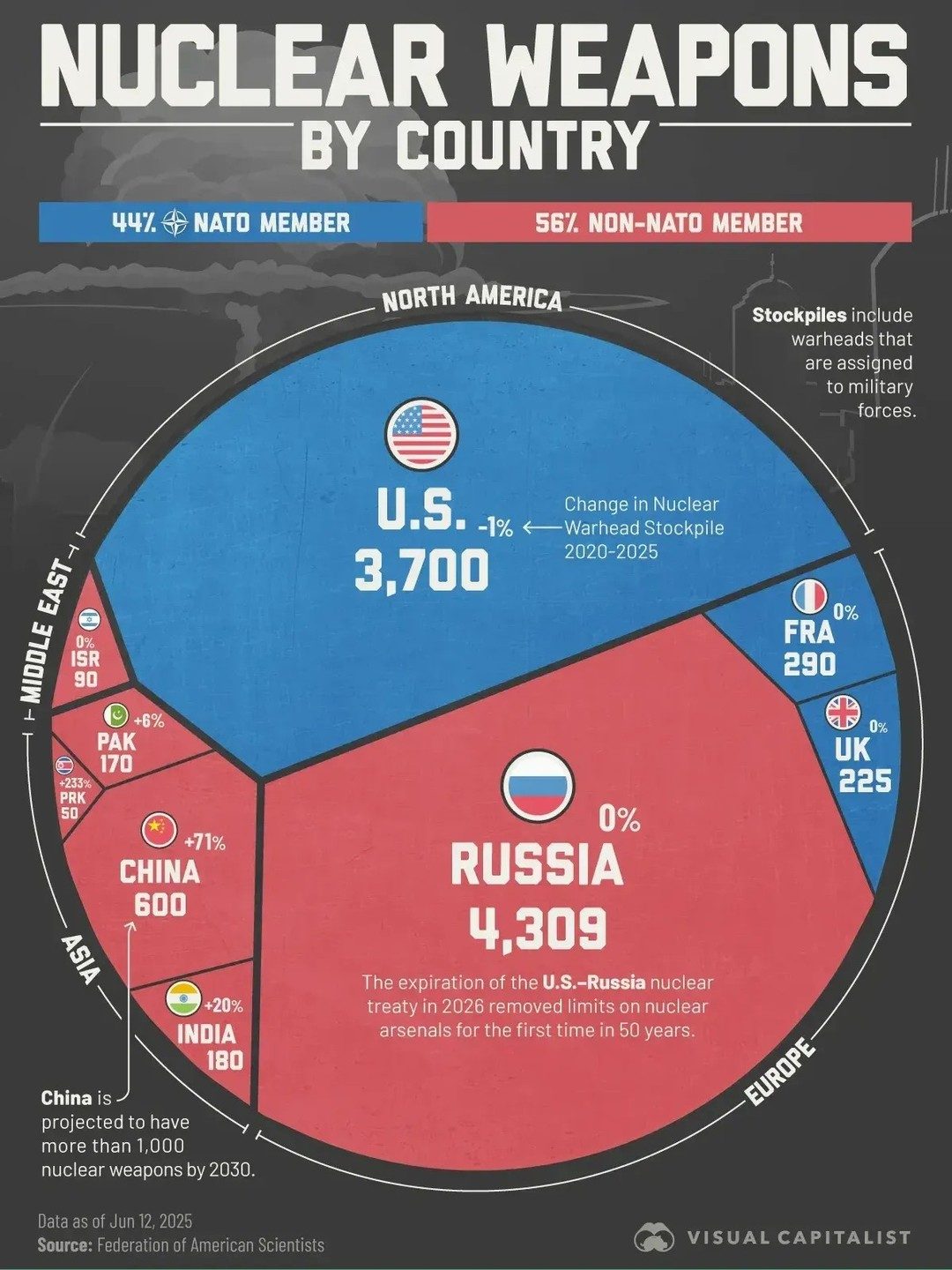
The world's operational nuclear warhead stockpile stands at 9,614, a figure that holds significant geopolitical implications. This total represents a critical juncture as treaty limits between the U.S. and Russia are set to expire for the first time in over 50 years. China's arsenal, in particular, has seen substantial growth since 2020, rising from 350 to 600 warheads, with projections estimating 1,000 by 2030. These developments intensify debates over future arms control agreements.
Why This Matters
The distribution and growth of nuclear arsenals have profound effects on global security and diplomacy. Understanding the current state of nuclear stockpiles is essential for assessing the strategic balance of power and the potential for future conflicts. The expiration of the U.S.-Russia nuclear treaty in 2026 marks a pivotal moment, as it removes limits on nuclear arsenals that have been in place for decades. This shift could reshape geopolitical dynamics and influence international relations.
Global Nuclear Stockpiles by Region
North America
The United States maintains the largest nuclear stockpile in the world, with 3,700 operational warheads. This figure represents a slight decrease from previous years but underscores the U.S.'s continued military dominance. The stockpile includes warheads assigned to military forces, ensuring readiness for potential deployment. With 3,700 nuclear warheads, the U.S. holds a significant portion of the world's nuclear arsenal, influencing global security policies and military strategies.
Russia
Russia follows closely with 4,309 nuclear warheads, making it the second-largest nuclear power. The rapid growth of the Russian stockpile has been a major concern for global security, as it maintains a balance of power with the U.S. The expiration of the U.S.-Russia nuclear treaty in 2026 removes limits on nuclear arsenals for the first time in 50 years, potentially leading to further expansion of both countries' stockpiles.
Asia
Asia is home to several significant nuclear powers, each with distinct geopolitical motivations. China's arsenal has grown significantly, from 350 to 600 warheads since 2020, with projections reaching 1,000 by 2030. This rapid expansion reflects China's strategic ambitions and its desire to assert regional dominance. Pakistan and India have also expanded their arsenals, with Pakistan increasing by 6% to 170 warheads and India by 20% to 180 warheads. The political tensions between these nuclear powers add to the complexity of the region.
Middle East
Israel and Iran are notable nuclear actors in the Middle East, though Israel's stockpile is not publicly disclosed. It is estimated that Israel has no operational warheads, which adds to the mystery surrounding their nuclear capabilities. The Middle East remains a hotspot for nuclear tensions, with the potential for conflict always present. Though not as large as those of North America and Russia, the Middle East's nuclear capabilities remain a significant factor in global security.
Europe
Europe, particularly NATO members, holds a substantial portion of the world's nuclear stockpiles. The UK's stockpile of 225 warheads is a notable contribution to NATO's overall nuclear deterrent. France also contributes to NATO's nuclear arsenal, with 0% of the stockpiles belonging to NATO members. The distribution of nuclear weapons among NATO and non-NATO members reflects the strategic alliances and military pacts that underpin global security.
The Expiration of the U.S.-Russia Nuclear Treaty
The 2026 expiration of the U.S.-Russia nuclear treaty, which has been in place since 1972, marks a critical turning point in global security. The treaty, formally known as the Strategic Arms Reduction Treaty, was pivotal in limiting the number of nuclear warheads held by the U.S. and Russia. With its expiration, both countries are free to increase their stockpiles without the constraints of the treaty. This development has significant implications for global security, as it could lead to a new arms race and escalate tensions between the two superpowers.
The expiration of the treaty also raises questions about the future of arms control agreements. The lack of a successor treaty has left a void in international nuclear diplomacy, potentially leading to increased proliferation and instability. The global community must find a way to reinstate some form of arms control to maintain a balance of power and prevent a nuclear arms race.
Practical Tips for Understanding Nuclear Stockpiles
To better understand the global nuclear landscape, consider the following points:
- Stay Informed: Keep track of developments in nuclear policy and treaty negotiations. Understanding the current state of nuclear diplomacy is crucial for assessing global security.
- Analyze Geographic Trends: Pay attention to regional conflicts and alliances. The distribution of nuclear weapons often reflects political tensions and strategic partnerships.
- Monitor Technological Advances: Keep an eye on advancements in nuclear technology. New developments can significantly impact the balance of power and global security.
- Engage in Public Discourse: Participate in discussions about nuclear policy and arms control. Public awareness and engagement can influence policy decisions and international agreements.
Important Takeaways
- Global Stockpiles: The world's operational nuclear warhead stockpile stands at 9,614, with the U.S. and Russia holding the largest arsenals. China's arsenal has grown significantly, while India and Pakistan have also expanded their stockpiles.
- Treaty Expiration: The 2026 expiration of the U.S.-Russia nuclear treaty removes limits on nuclear arsenals, potentially leading to a new arms race and increased tensions.
- Regional Dynamics: The distribution of nuclear weapons reflects regional conflicts and strategic alliances, with Asia and the Middle East being particularly noteworthy.
Conclusion
The global nuclear stockpile is a complex and dynamic landscape, shaped by strategic alignments, political tensions, and treaty negotiations. The expiration of the U.S.-Russia nuclear treaty in 2026, combined with the rapid growth of China's arsenal, underscores the need for renewed arms control efforts. Understanding the distribution of nuclear weapons is essential for navigating the challenges of geopolitical security and maintaining a stable global order.
Watch the Reel
Questions readers ask
Which countries possess the largest nuclear arsenals?
The United States and Russia maintain the largest nuclear arsenals, each possessing thousands of warheads. Together, they account for the majority of the global nuclear stockpile of 9,614 warheads. China, while significantly smaller, has been rapidly expanding its arsenal, now possessing over 600 warheads.
What is the significance of the treaty limits expiring between the U.S. and Russia?
The expiration of treaty limits between the U.S. and Russia marks a pivotal moment as it is the first time in over 50 years that such restrictions are set to end. This could potentially lead to an increase in nuclear stockpiles and a shift in the global nuclear balance, making future arms control agreements even more critical.
How has China's nuclear arsenal evolved in recent years?
China's nuclear arsenal has grown significantly since 2020, increasing from 350 to 600 warheads. Experts predict that this trend will continue, with projections suggesting China could have 1,000 warheads by 2030. This growth is a key factor in the evolving global nuclear security landscape.
What are the implications of the current global nuclear stockpile on international relations?
The current global nuclear stockpile of 9,614 warheads influences international relations by affecting the strategic balance of power and diplomatic efforts. The distribution and growth of nuclear arsenals can lead to heightened tensions or encourage disarmament efforts, making it a crucial factor in global security dynamics.
What role does the Non-Proliferation Treaty (NPT) play in managing global nuclear stockpiles?
The NPT is a cornerstone of global nuclear governance, aiming to prevent the spread of nuclear weapons and promote disarmament. However, with key treaties between the U.S. and Russia expiring, the NPT's role in managing nuclear stockpiles and fostering diplomatic efforts becomes even more crucial.
Recent articles
Fresh deep dives from the latest Reels we unpacked.




Comments
Be the first to comment.