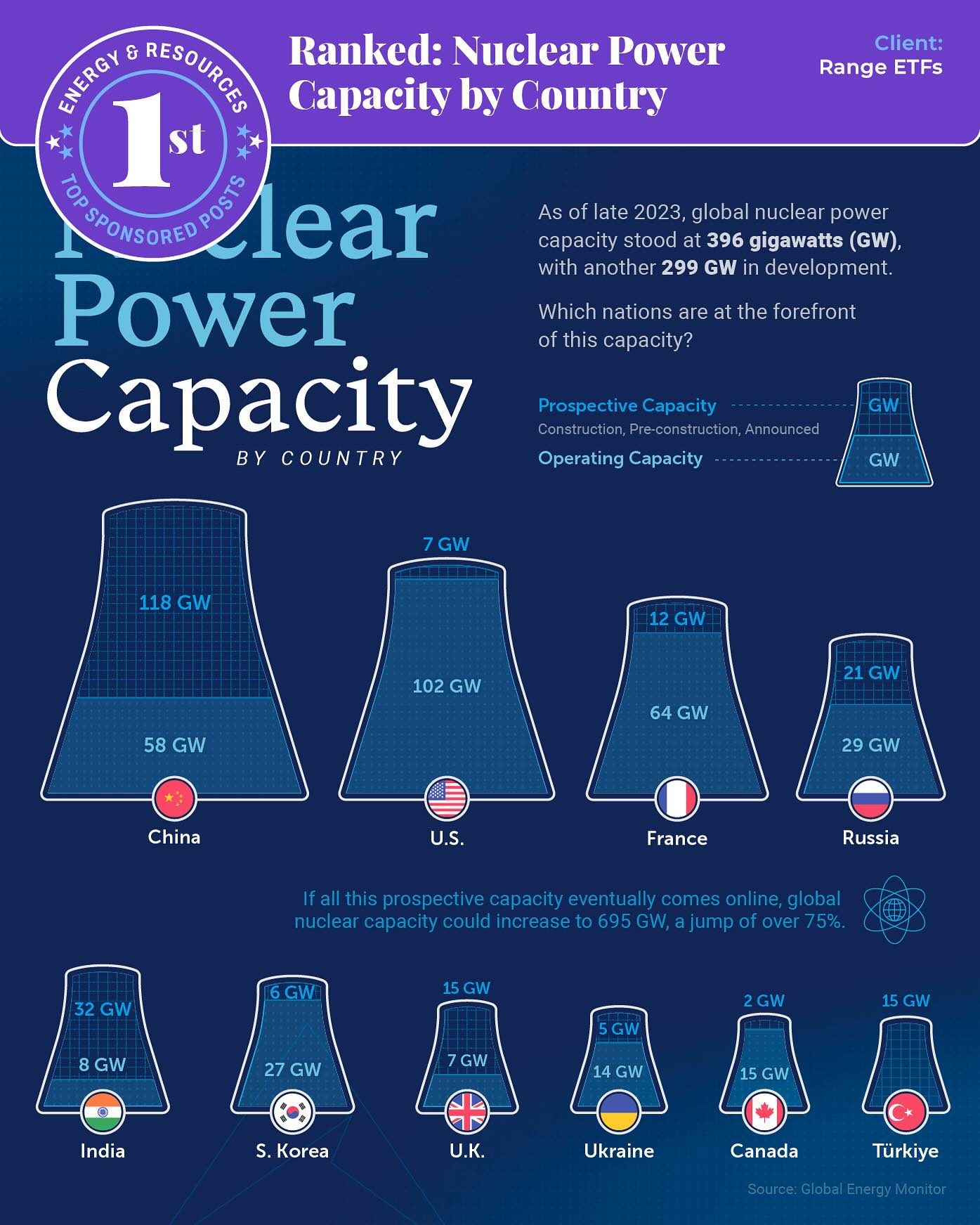
Global Nuclear Power Capacity
Nuclear power has gained significant traction as a high-performing topic in recent years, with a nation-by-nation visualization of nuclear power capacity being a notable highlight. This visualization, created in partnership with Range ETFs, has shed light on the global landscape of nuclear energy, attracting nearly 200,000 views. The visualization provides a comprehensive view of nuclear power capacity by country, highlighting which nations are leading the way in this critical energy sector.
Why This Matters
Nuclear power is a controversial yet pivotal source of energy. Understanding the global capacity and prospects for nuclear power is essential for policymakers, investors, and energy experts. It offers insights into energy security, sustainability, and economic growth. The data presented in the infographic helps stakeholders make informed decisions about investments and policy directions.
Key Insights into Global Nuclear Power Capacity
Current Global Nuclear Power Capacity
As of late 2023, the global nuclear power capacity stood at an impressive 396 gigawatts (GW). This figure represents the cumulative capacity of all operational nuclear power plants worldwide. This capacity is crucial for meeting the growing energy demands of various nations while also contributing to lower greenhouse gas emissions compared to fossil fuels.
Prospective Nuclear Power Capacity
In addition to the existing capacity, there is a substantial amount of nuclear power capacity in development. Approximately 299 GW of nuclear power is currently under construction, in the pre-construction phase, or in the planning stages. This prospective capacity indicates the ongoing investment and interest in nuclear power as a reliable and efficient energy source.
Leading Nations in Nuclear Power Capacity
The visualization highlights several countries that are at the forefront of nuclear power capacity. These nations include:
- China: With a significant amount of prospective capacity, China is poised to become a major player in the global nuclear energy market. The country's focus on energy security and sustainability is driving its investment in nuclear power.
- United States: The U.S. has a robust nuclear power infrastructure, with a considerable amount of both operating and prospective capacity. The country's investments in nuclear energy are driven by its commitment to reducing carbon emissions and ensuring energy independence.
- France: Known for its heavy reliance on nuclear power, France continues to invest in expanding its nuclear capacity. The country's nuclear program is a key component of its energy strategy, providing a significant portion of its electricity needs.
- Russia: Russia has a substantial nuclear power capacity, both operational and in development. The country's expertise in nuclear technology and its strategic interests in energy security are driving its investments in this sector.
Other Notable Countries
Beyond the top four, several other countries are making significant strides in nuclear power capacity:
- India: With a substantial amount of prospective capacity, India is investing heavily in nuclear power to meet its growing energy demands and reduce reliance on fossil fuels.
- South Korea: South Korea has a strong nuclear power program, with a focus on both operating and prospective capacity. The country's investments in nuclear energy are driven by its commitment to energy security and sustainability.
- United Kingdom: The UK is expanding its nuclear power capacity to support its decarbonization goals. The country is investing in new nuclear projects to replace aging power plants and ensure a stable energy supply.
- Ukraine: Despite its current challenges, Ukraine is working to maintain and expand its nuclear power capacity, which is crucial for the country's energy security.
- Canada: Canada has a stable nuclear power infrastructure and is exploring opportunities to expand its capacity to meet future energy needs and reduce carbon emissions.
Global Nuclear Power Capacity
If all the prospective capacity comes online, the global nuclear power capacity could increase to 695 GW. This represents a 75% increase from the current capacity, underscoring the significant potential for nuclear power to play a crucial role in the global energy mix.
The Role of Strategic Metals
While nuclear power is a critical component of the global energy landscape, it is also essential to consider the strategic metals that support this industry. The supply chain for these metals is dominated by a few countries, each with varying levels of control over different aspects of the supply chain. For instance, China controls a significant portion of the global lithium mining and processing, while Australia and Chile are major players in lithium reserves.
The dominance of these countries in the strategic metal supply chain has implications for the nuclear industry. Ensuring a stable and secure supply of these metals is crucial for the continued development and operation of nuclear power plants. As the global demand for energy grows, the importance of strategic metals in the nuclear power sector will only increase.
Key Points
- China’s Dominance: China holds a 51% share in global lithium mining, 34% in processing, and 13% in reserves, making it a significant player in the strategic metal supply chain.
- Australia’s Strength: Australia is a key player with 34% of global lithium mining and 65% of processing, making it a crucial supplier in the strategic metal market.
- Chile’s Reserves: Chile holds 65% of global lithium reserves, positioning it as a critical supplier for the global strategic metal market.
Practical Tips for Investors and Policymakers
Understanding the global landscape of nuclear power capacity and the strategic metal supply chain is crucial for making informed decisions. Here are some practical tips:
For Investors:
- Diversify Your Portfolio: Investing in a diverse range of energy sources, including nuclear power, can help mitigate risks and maximize returns. Consider investing in companies involved in nuclear power generation, as well as those in the strategic metal supply chain.
- Stay Informed: Keep up-to-date with the latest developments in nuclear power and strategic metal markets. This will help you identify emerging opportunities and potential challenges.
- Think Long-Term: Nuclear power projects often have long lead times and substantial upfront costs. A long-term investment horizon can help you capitalize on the growth potential of this sector.
For Policymakers:
- Promote Diversified Energy Policies: Develop policies that support a diversified energy mix, including nuclear power. This can help enhance energy security and reduce reliance on fossil fuels.
- Encourage Research and Development: Invest in research and development to advance nuclear technology and improve the efficiency and safety of nuclear power plants.
- Support Strategic Metal Supplies: Ensure a stable and secure supply of strategic metals, which are essential for the nuclear power industry. This can involve fostering domestic production, building strategic reserves, and maintaining strong relationships with key suppliers.
Important Takeaways
- Global nuclear power capacity is substantial and growing, with significant prospects for further expansion.
- Key countries such as China, the United States, France, and Russia are leading the way in nuclear power capacity.
- Other nations, including India, South Korea, the United Kingdom, Ukraine, and Canada, are also making significant investments in nuclear power.
- The strategic metal supply chain is dominated by a few countries, with China, Australia, and Chile playing crucial roles.
- Investing in nuclear power and strategic metals can offer significant opportunities for investors and policymakers, but it requires a long-term perspective and a deep understanding of the global energy landscape.
Conclusion
The global nuclear power capacity and the strategic metal supply chain play a pivotal role in shaping the future of energy. By understanding the key players, current capacities, and prospective developments, investors and policymakers can make informed decisions that support a sustainable and secure energy future. Whether you are an investor looking to diversify your portfolio or a policymaker seeking to enhance energy security, the insights provided in this article offer a comprehensive view of the global nuclear power landscape and the strategic metal supply chain.
Watch the Reel
Questions readers ask
Which countries have the highest nuclear power capacity globally?
As of recent data, the countries with the highest nuclear power capacity include the United States, France, and China. These nations have significantly invested in nuclear infrastructure, making them leaders in nuclear energy production.
How does nuclear power contribute to global energy security?
Nuclear power enhances energy security by providing a stable and substantial baseload power supply. It reduces dependence on fluctuating fuel prices and imports, ensuring a reliable energy source for countries with significant nuclear capacity.
What are the current trends in nuclear power consumption worldwide?
In 2023, nuclear power consumption trends show a mixed picture. While some countries are expanding their nuclear capacity to meet growing energy demands and sustainability goals, others are phasing out nuclear power due to safety concerns and public opposition.
Why is nuclear power important for economic growth in countries?
Nuclear power supports economic growth by providing a cost-effective and reliable energy source, which is crucial for industrial development. It also creates jobs in construction, operation, and maintenance of nuclear facilities, contributing to overall economic activity.
Which regions in the Asia Pacific are seeing significant growth in nuclear power?
In the Asia Pacific region, countries like China, India, and South Korea are at the forefront of nuclear power expansion. These nations are actively investing in new nuclear plants to meet their increasing energy demands and reduce carbon emissions.
What role does nuclear power play in global energy sustainability efforts?
Nuclear power plays a significant role in global energy sustainability efforts by generating large amounts of low-emission electricity. It helps to reduce reliance on fossil fuels, thereby lowering greenhouse gas emissions and mitigating climate change impacts.
Recent articles
Fresh deep dives from the latest Reels we unpacked.




Comments
Be the first to comment.