Global Morality Survey: Perceptions of Citizens' Morality Across Countries
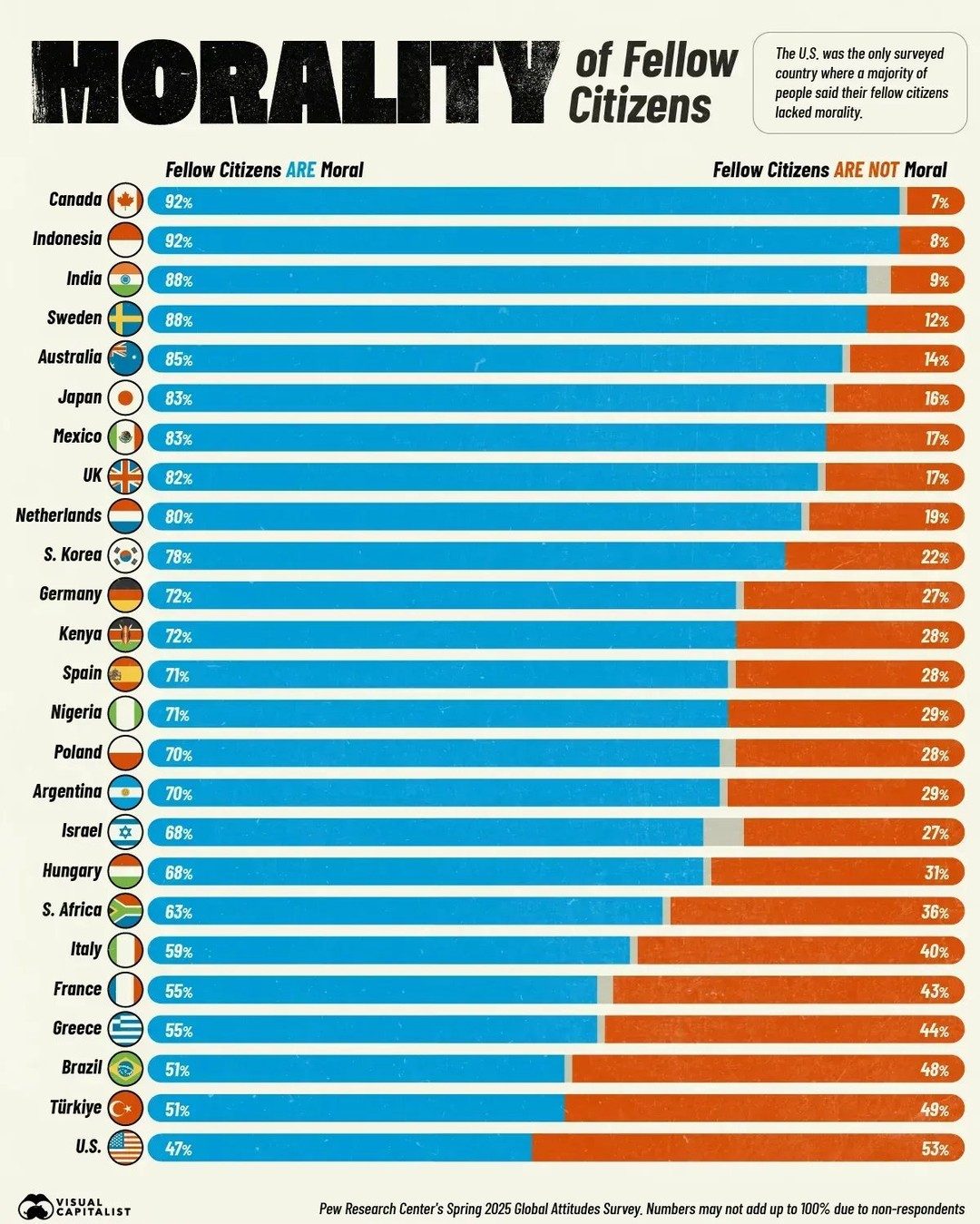
A recent global survey by the Pew Research Center has shed light on how citizens of various countries perceive the morality of their fellow countrymen. The findings reveal intriguing insights into global attitudes towards morality and social values, highlighting both significant consensus and notable outliers.
Why This Matters
Understanding public perceptions of morality within a country can offer valuable insights into social cohesion, trust, and overall societal well-being. These perceptions can influence everything from political decisions to everyday interactions, making them a crucial aspect of social dynamics. The survey provides a snapshot of how people around the world view their fellow citizens, offering a unique perspective on global societal values.
Main Discussion
Canada and Indonesia Lead the Way
Canada and Indonesia emerge as the top countries where citizens hold the most positive views of their fellow citizens' morality, with an impressive 92% of respondents in both nations affirming this perception. This high level of trust and positive regard among citizens in these countries is a testament to the strong social cohesion and mutual respect that characterize their societies.
Global Trends in Perceived Morality
Beyond Canada and Indonesia, a majority of countries surveyed also show a positive view of their fellow citizens' morality. Notable mentions include:
- India and Sweden with 88%
- Australia with 85%
- Japan and Mexico with 83%
- UK with 82%
- Netherlands with 80%
- South Korea with 78%
- Germany and Kenya with 72%
These countries demonstrate a strong sense of shared values and mutual trust among their citizens, reflecting a generally positive outlook within these societies.
Notable Outliers: The United States
The U.S. stands out as the only country where a majority of respondents (53%) do not view their fellow citizens as moral. This stark contrast with other countries highlights potential deeper societal issues that may be influencing public perceptions. The U.S. is the only country in the survey where the majority of people hold a negative view of their fellow citizens' morality.
Countries with Mixed Perceptions
Several countries show a more mixed picture, with percentages ranging from 50-70%:
- Argentina, Poland, and Indonesia each 70%
- Israel and Hungary each 68%
- South Africa 63%
- Italy 59%
- Greece 55%
- Brazil and Turkey 51%
These countries exhibit a more varied perception of morality, suggesting a blend of positive and negative views within their societies.
Practical Tips
If you are interested in understanding the moral landscape of your country or another, consider the following practical tips:
-
Engage with Local Communities: Participate in community activities and engage in conversations with local residents. This can provide firsthand insights into the moral values and perceptions within the community.
-
Read Local News and Reports: Stay informed about local news and reports that discuss social issues. This can give you a broader understanding of the moral climate in your country.
-
Conduct Surveys: If you have the resources, conduct your own surveys to gather data on moral perceptions. This can provide a more personalized and detailed understanding of the issue.
Important Takeaways
Several key takeaways emerge from the survey:
-
High Trust in Some Countries: Canada and Indonesia have remarkably high levels of trust and positive regard among citizens, which can be attributed to strong social cohesion and mutual respect.
-
Global Consensus on Morality: Most countries show a majority of citizens holding positive views of their fellow citizens' morality, indicating a generally positive outlook worldwide.
-
U.S. as an Outlier: The U.S. is the only country where a majority of respondents view their fellow citizens negatively, highlighting unique societal challenges.
-
Mixed Perceptions: Countries with percentages ranging from 50-70% show a more varied perception of morality, suggesting a blend of positive and negative views within their societies.
Conclusion
The Pew Research Center's Spring 2025 Global Attitudes Survey provides a fascinating glimpse into how citizens around the world perceive the morality of their fellow countrymen. The findings highlight both remarkable consensus and notable outliers, offering valuable insights into global societal values. Understanding these perceptions can help shape more informed discussions and policies aimed at fostering positive social dynamics and mutual trust within societies.
Watch the Reel
Questions readers ask
Which organization conducted the global morality survey mentioned in the article?
The Pew Research Center conducted the global morality survey, which assessed citizens' perceptions of their fellow countrymen's morality across various countries.
What were the key findings regarding Canada and Indonesia in the global morality survey?
The survey found that citizens in Canada and Indonesia hold the highest global opinion on the morality of their fellow citizens, indicating a strong sense of trust and shared values within these nations.
How do most countries view the morality of their own citizens according to the survey?
Most countries maintain a positive view of their own citizens' morality. This reflects a high level of trust and shared values within these societies.
What insights can be gained from understanding public perceptions of morality within a country?
Understanding public perceptions of morality within a country can provide insights into social cohesion, trust, and overall societal well-being. These perceptions influence various aspects of social dynamics, from political decisions to everyday interactions.
What is the significance of the global morality survey conducted by the Pew Research Center?
The global morality survey is significant because it offers a snapshot of how people around the world view the morality of their fellow citizens. This data can be crucial for understanding global attitudes towards morality and social values, highlighting both significant consensus and notable outliers.
Are there any notable outliers in the global morality survey results?
Yes, while most countries view their citizens' morality positively, there are notable outliers. These outliers can provide interesting contrasts and deeper insights into the varying levels of trust and shared values across different societies.
Recent articles
Fresh deep dives from the latest Reels we unpacked.




Comments
Be the first to comment.