Minimum Wage Around the World
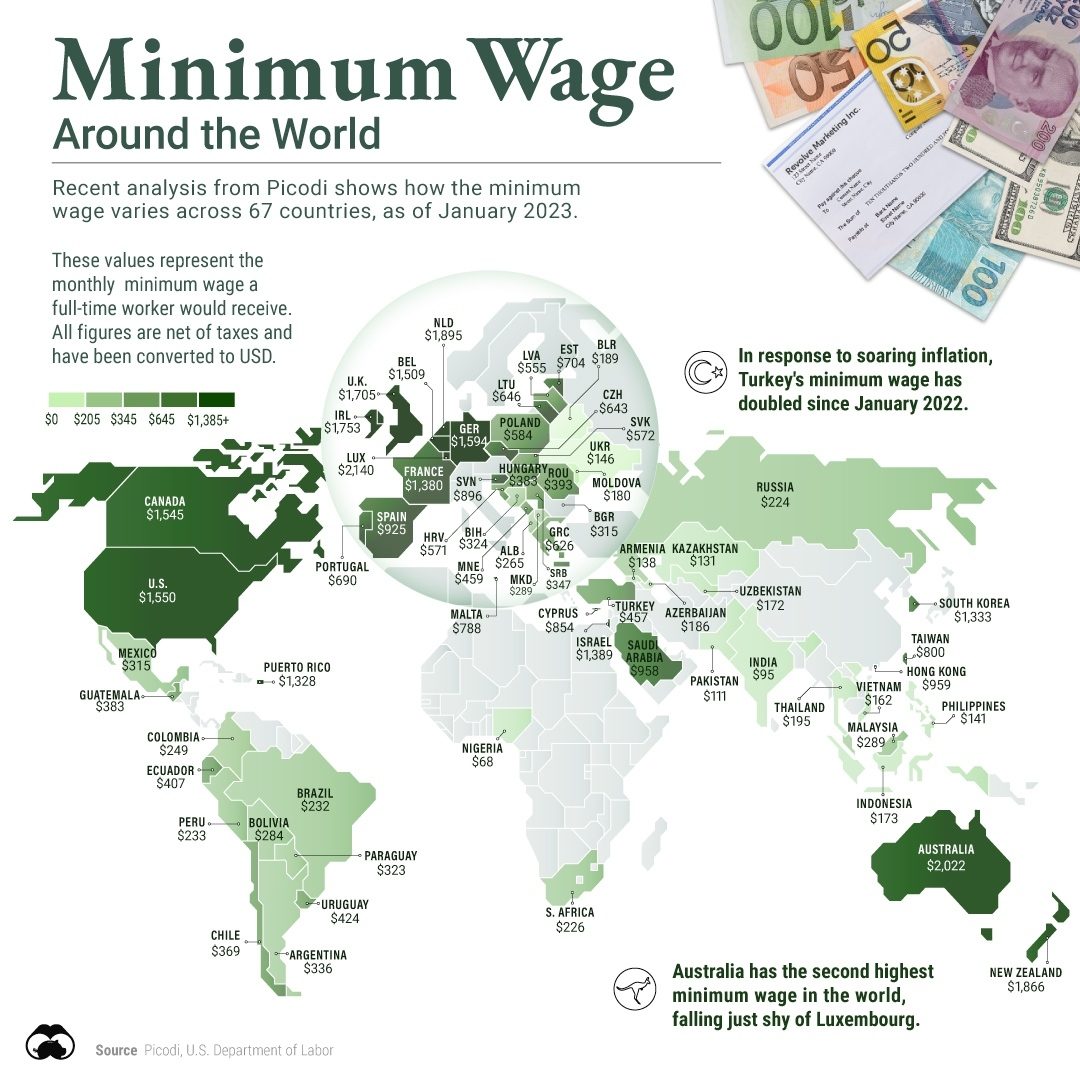
Minimum wage serves as a fundamental benchmark for worker compensation, intended to cover essential living costs. However, its adequacy varies greatly. To understand global disparities, let's explore data from Picodi, which analyzes minimum wages across 67 countries as of January 2023.
Why This Matters
Minimum wage policies directly impact the livelihoods of millions of workers worldwide. They set a baseline for income, influencing economic stability and social welfare. By examining global variations, we can better understand the economic conditions and policy decisions that shape these differences. This knowledge can guide more informed discussions about fair labor practices and economic equity.
Global Minimum Wage Landscape
Regional Variations
The data reveals significant regional disparities in minimum wages. For instance, countries in Europe generally have higher minimum wages compared to those in Asia and Africa. This variation reflects differences in economic development, cost of living, and policy priorities.
Key Countries and Their Minimum Wages
- Luxembourg: Known for its high standard of living, Luxembourg tops the list with one of the highest minimum wages, reflecting its robust economy and social policies.
- United States: The federal minimum wage in the U.S. stands at $7.25 per hour, but many states have set higher rates. This variance highlights the importance of local economic conditions and legislative efforts.
- Turkey: Due to soaring inflation, Turkey's minimum wage has doubled since January 2022, illustrating how economic instability can drive significant changes in minimum wage policies.
Factors Influencing Minimum Wage
Several factors contribute to the variation in minimum wages globally. These include economic conditions, cost of living, and government policies. For example, countries with higher levels of economic development and stringent labor laws tend to have higher minimum wages.
Practical Tips for Understanding Minimum Wage Data
Interpreting the Data
When analyzing minimum wage data, it's important to consider the following:
- Exchange Rates: Minimum wages are often expressed in local currencies. Converting these to a common currency, like USD, helps in making direct comparisons but requires accounting for exchange rate fluctuations.
- Cost of Living: The cost of living varies significantly between countries. A higher minimum wage in one country might not translate to a better standard of living if the cost of housing, food, and other necessities is proportionally high.
- Taxation: The figures provided are net of taxes, meaning they reflect the actual take-home pay. However, understanding the tax policies that affect these wages can offer deeper insights.
Using the Data
For policymakers, researchers, and advocates, this data can serve as a valuable resource for:
- Policy Formulation: Understanding global trends and best practices in setting minimum wages.
- Research: Conducting studies on the impact of minimum wage policies on employment, economic growth, and social welfare.
- Advocacy: Raising awareness about the importance of fair wages and pushing for policy reforms.
Important Takeaways
- Global Disparities: Minimum wages vary significantly across regions and countries, reflecting differences in economic development and policy priorities.
- Influence of Inflation: Economic instability, such as high inflation, can drive significant changes in minimum wage policies, as seen in Turkey.
- Complex Factors: Minimum wage policies are influenced by a multitude of factors, including economic conditions, cost of living, and government policies.
Conclusion
Understanding the global landscape of minimum wages provides valuable insights into economic conditions and policy decisions worldwide. By examining the data from Picodi and considering the various factors at play, we can foster more informed discussions about fair labor practices and economic equity. This knowledge is crucial for advocating for better wages and improved living standards for workers around the world.
Watch the Reel
Questions readers ask
What was the highest minimum wage in 2023?
In 2023, Luxembourg had one of the highest minimum wages globally. The country's robust economy and strong labor policies contribute to this high benchmark for worker compensation. This rate sets a high standard for essential living costs in the region.
How does the minimum wage in Asia compare to global standards?
Many Asian countries have lower minimum wages compared to global standards. This is often due to varying economic development and policy priorities. Countries like India and Indonesia have significantly lower minimum wages, which can impact the cost of living and social welfare for workers in these regions.
What is the significance of minimum wage data from January 2023?
Minimum wage data from January 2023 provides a snapshot of the global economic landscape and policy decisions. This data highlights the disparities in worker compensation and helps inform discussions about fair labor practices and economic equity. It also sheds light on how different countries address the cost of living and social welfare.
How does Turkey's minimum wage compare to other countries in 2023?
Turkey's minimum wage in 2023 falls in the mid-range when compared to global standards. It is significantly higher than many other countries in Asia and Africa, but still lower than many European nations. This positioning reflects Turkey's unique economic conditions and policy choices, which balance the need for worker compensation with economic stability.
Why are minimum wage disparities important to consider?
Minimum wage disparities are crucial to consider because they directly impact the livelihoods of millions of workers worldwide. These disparities influence economic stability, cost of living, and social welfare. Understanding these variations can guide more informed discussions about global labor practices and economic equity, ultimately promoting better living conditions for workers.
Which countries have the lowest minimum wages in 2023?
As of 2023, many countries in Asia and Africa have some of the lowest minimum wages. Countries like India, Indonesia, and several African nations often have minimum wages that are significantly lower. These rates reflect the economic conditions and policies in these regions, which can impact the cost of living and social welfare for workers.
How does minimum wage impact economic stability and social welfare?
Minimum wage plays a pivotal role in economic stability and social welfare. It sets a baseline for income, influencing how workers can meet essential living costs. Higher minimum wages can lead to improved living standards and economic stability, while lower wages may exacerbate economic disparities and social issues. Understanding these impacts is key to promoting fair labor practices and economic equity.
Related deep dives
Similar reads based on topic and creator.


Recent articles
Fresh deep dives from the latest Reels we unpacked.




Comments
Be the first to comment.