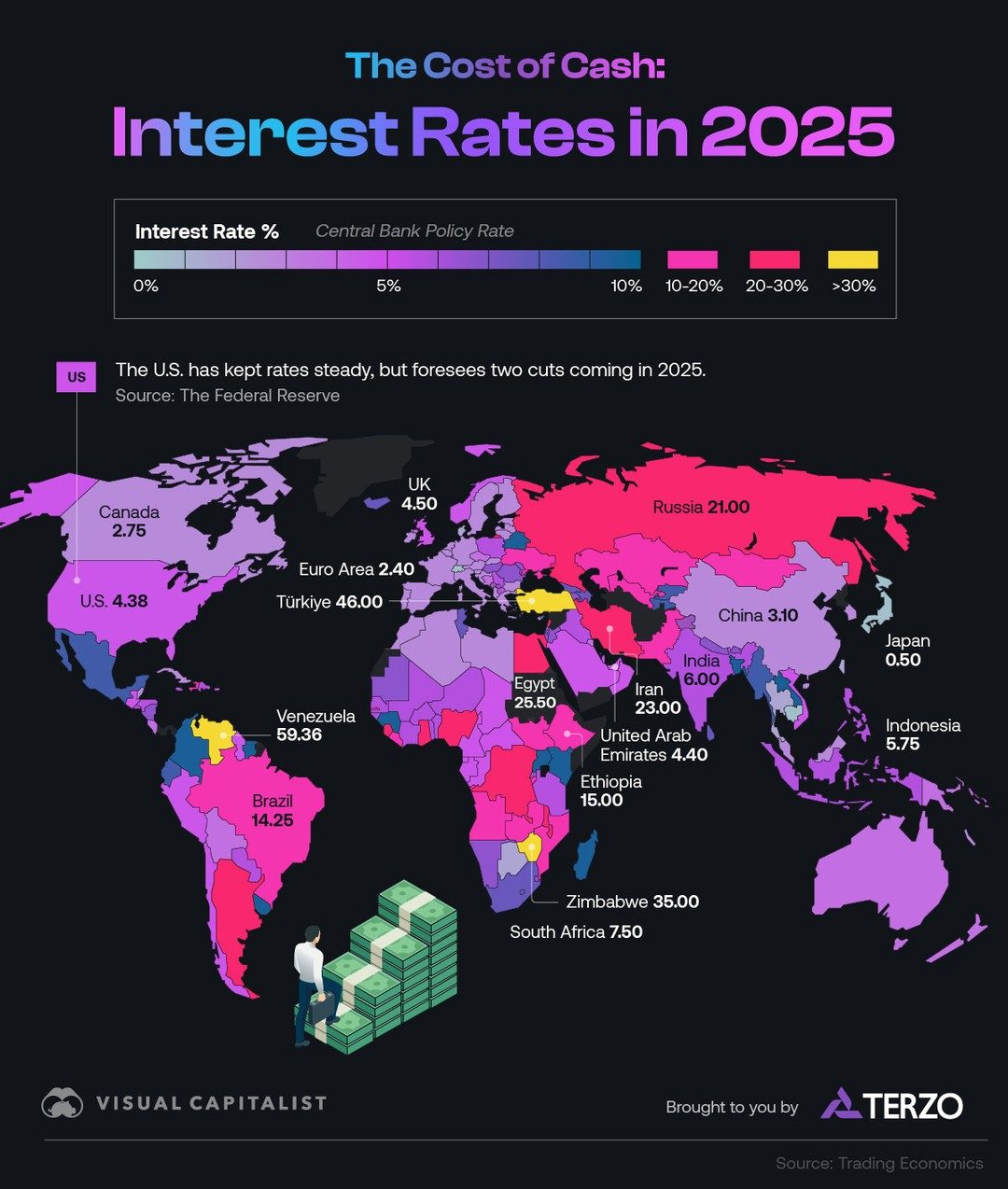
Interest rates around the globe are a critical factor influencing economic policy and stability. In 2025, the landscape of interest rates across various countries is expected to be diverse and dynamic. Understanding these rates and their implications can provide valuable insights into the global economy.
Context / Why this matters
Interest rates are a fundamental tool used by central banks to manage inflation, stimulate economic growth, and maintain financial stability. By setting the interest rate, central banks influence borrowing costs, savings rates, and overall economic activity. In 2025, countries around the world will continue to navigate the challenges of economic recovery, inflation, and monetary policy, all of which will be reflected in their respective interest rates.
Main discussion
Global Variation in Interest Rates
Interest rates in 2025 will vary significantly across different countries. Venezuela has one of the highest interest rates, at 59.36%. This extreme rate reflects the country's long-standing economic turmoil and high inflation. In contrast, the U.S. has a much more stable rate of 4.38%.
The U.S. Interest Rate Outlook
The U.S. Federal Reserve has kept interest rates steady, but it foresees two cuts coming in 2025. These anticipated cuts suggest a cautious approach to monetary policy, balancing the need for economic growth with the risks of inflation. The Federal Reserve's decisions will have a ripple effect on global markets, given the U.S. dollar's status as the world's reserve currency.
High Interest Rates in Other Countries
Zimbabwe also has a high interest rate of 35.00%, reflecting its own economic struggles, including hyperinflation and currency devaluation. Other countries with notable interest rates include:
- Turkey: Facing economic volatility, Turkey's central bank has implemented tight monetary policies.
- Brazil and South Africa: Both countries are dealing with economic recovery and inflation, leading to higher interest rates.
- Russia and the Euro Area: These regions have somewhat moderate interest rates, reflecting a balance between economic growth and inflation control.
Moderate and Low Interest Rates
Japan and China, on the other hand, have relatively low interest rates. Japan's rate is influenced by its long-term efforts to combat deflation and stimulate economic growth. China's rate reflects its focus on maintaining economic stability and supporting its domestic market.
Economic Policy and Interest Rates
Interest rates are a key component of a country's monetary policy and reflect broader economic conditions. The central bank policy rate, for example, influences lending rates, savings rates, and overall economic activity. Countries with high interest rates often aim to curb inflation, while those with low rates seek to boost economic growth.
Practical tips
Monitoring Interest Rates
For investors and economists, monitoring interest rates is crucial. Changes in interest rates can impact stock markets, bond yields, and currency values. Keeping an eye on central bank announcements and economic indicators can help in making informed decisions.
Understanding Central Bank Policies
Central banks play a pivotal role in setting interest rates. Their policies can have far-reaching effects on the economy. Keeping up-to-date with central bank communications and economic reports can provide valuable insights into future rate changes.
Global Economic Trends
Interest rates are influenced by global economic trends. Factors such as trade policies, global inflation, and economic growth rates can all affect interest rate decisions. Staying informed about these broader trends can help in understanding the rationale behind interest rate changes.
Strategic Investment
Investors should consider the impact of interest rates on their portfolios. For example, high interest rates can make bonds more attractive, while low rates might favor stock investments. Understanding the interest rate environment can help in making strategic investment decisions.
Important takeaways
- Global Variation: Interest rates vary significantly across countries, reflecting diverse economic conditions and policy objectives.
- U.S. Outlook: The U.S. Federal Reserve is expected to implement two rate cuts in 2025, indicating a cautious approach to monetary policy.
- Economic Policy: Interest rates are a key component of a country's monetary policy and reflect broader economic conditions.
- Investment Considerations: Understanding interest rates and central bank policies can help in making informed investment decisions.
Conclusion
Interest rates in 2025 will continue to be a critical factor in shaping the global economic landscape. From the high rates in Venezuela and Zimbabwe to the more stable rates in the U.S. and Japan, each country's interest rate reflects its unique economic challenges and policy objectives. By monitoring these rates and understanding the broader economic trends, investors, economists, and policymakers can navigate the complexities of the global economy more effectively.
Watch the Reel
Questions readers ask
How do global interest rates in 2025 vary across different countries?
Global interest rates in 2025 will vary significantly. Countries like Venezuela will have very high rates, such as 59.36%, while others like the United States will have more moderate rates, around 4.38%. This variation reflects each country's unique economic situation, challenges, and monetary policies.
Why are interest rates important for understanding global financial health?
Interest rates are crucial indicators of the global financial health because they influence borrowing costs, savings rates, and overall economic activity. By examining interest rates, one can gauge a country's economic stability and its approach to managing inflation and economic growth.
How will interest rates in 2025 impact borrowing costs?
In 2025, interest rates will directly affect borrowing costs. Higher interest rates, like those in Venezuela, will make loans more expensive, potentially slowing down economic activity. Conversely, lower interest rates, such as those in the U.S., will make borrowing more affordable, which can stimulate economic growth.
What role do central banks play in setting interest rates?
Central banks are responsible for setting interest rates to influence economic activity. By adjusting interest rates, central banks aim to control inflation, stimulate growth, and maintain financial stability, which in turn impacts global trading and economic policies.
How do interest rates in 2025 compare between the U.S. and Venezuela?
The U.S. and Venezuela will have starkly different interest rates in 2025, with the U.S. having a moderate rate of 4.38% and Venezuela having an extremely high rate of 59.36%. These contrasting rates highlight the different economic challenges and policies each country faces.
Recent articles
Fresh deep dives from the latest Reels we unpacked.




Comments
Be the first to comment.