Global Government Debt 2023: A Comprehensive Breakdown
Government debt has always been a critical economic measure, but the numbers have reached record-breaking heights in recent years. Global government debt is projected to hit $97.1 trillion this year, marking a 40% increase since 2019. This sharp rise is largely a consequence of the financial measures implemented during the COVID-19 pandemic to support job markets and prevent widespread bankruptcies. However, this financial intervention has also exposed vulnerabilities in the global economy. As interest rates climb, the cost of borrowing is amplifying, placing additional strain on national budgets and debt management strategies.
Why This Matters
Understanding the distribution of global debt is crucial for assessing the financial health and stability of individual countries and the global economy as a whole. The International Monetary Fund (IMF) provides projections that offer insights into how debt is spread across various nations. These projections help governments, financial institutions, and investors make informed decisions, manage risks, and develop strategic economic policies.
Global Debt by Country
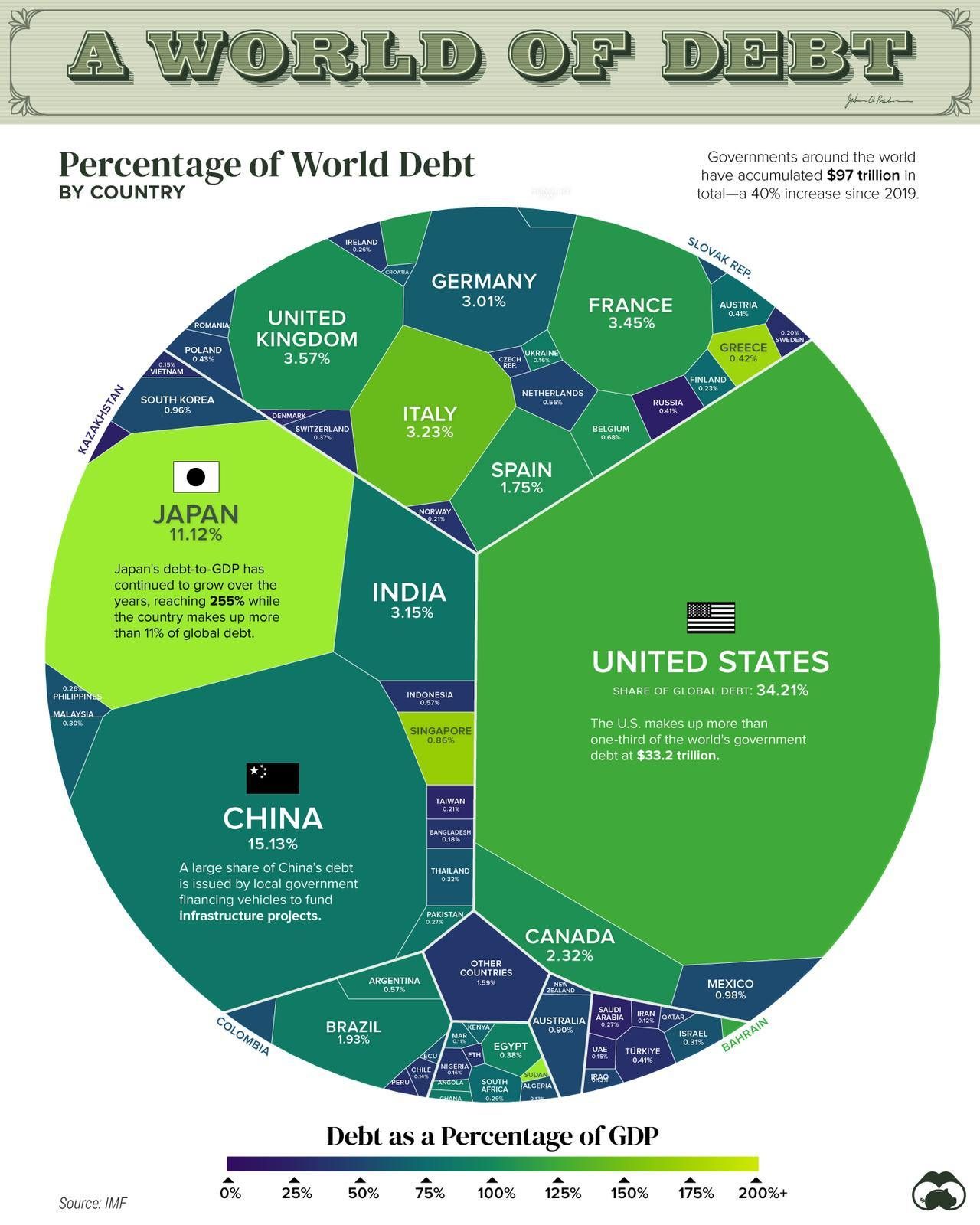
The graphic visualizes the percentage of world debt by country, offering a clear picture of how debt is distributed. The circular diagram effectively represents the proportion of debt held by various nations, making it easier to grasp the scale and impact of debt on a global scale.
United States
The United States holds the lion's share of global debt, with 34.21% of the total. This significant percentage reflects the country's role as a global economic powerhouse and its extensive spending on public services, defense, and social programs. The high debt level also highlights the challenges the U.S. faces in managing its fiscal policies and balancing its budget.
China
China accounts for 15.13% of global debt, making it the second-largest contributor. China's rapid economic growth and infrastructure development have driven its borrowing needs. The country's debt is a mix of domestic and foreign borrowing, with significant investments in infrastructure and domestic consumption.
Japan
Japan holds 11.12% of global debt. Japan's aging population and long-term economic stagnation have led to substantial public debt. The country's debt management strategies focus on maintaining fiscal stability while supporting an aging population and economic growth.
Key Factors Influencing Global Debt
Several factors contribute to the rising global debt levels. Understanding these factors can help policymakers and economists develop more effective strategies for managing and reducing debt.
Fiscal Policies
Governments worldwide have implemented various fiscal policies to mitigate the economic fallout from the COVID-19 pandemic. These policies, including stimulus packages, unemployment benefits, and business relief programs, have increased public spending and, consequently, public debt. While necessary for economic stability, these policies have also exacerbated fiscal deficits and debt levels.
Economic Growth
Economic growth plays a crucial role in managing debt. Countries with robust economic growth can more easily service their debt through increased tax revenues and economic activity. However, slower economic growth or recessions can strain a country's ability to repay its debt, leading to higher borrowing costs and increased debt levels.
Interest Rates
Interest rates significantly impact the cost of borrowing. Higher interest rates increase the cost of servicing existing debt, making it more challenging for governments to manage their financial obligations. Conversely, lower interest rates can reduce borrowing costs and ease the burden of debt repayment.
Practical Tips for Understanding and Managing Global Debt
Navigating the complexities of global debt requires a strategic and informed approach. Here are some practical tips for understanding and managing global debt:
Stay Informed
Keep up-to-date with the latest economic indicators, fiscal policies, and debt projections from reputable sources such as the International Monetary Fund (IMF) and World Bank. This information can provide valuable insights into global debt trends and their potential impact on your investments and financial decisions.
Diversify Investments
Diversifying investments across different asset classes and geographic regions can help mitigate the risks associated with high debt levels. By spreading your investments, you can reduce exposure to any single country's economic instability and protect your portfolio from potential downturns.
Monitor Fiscal Policies
Pay close attention to the fiscal policies implemented by governments. These policies can have a significant impact on debt levels and economic stability. Understand how fiscal policies affect interest rates, public spending, and economic growth, and how these factors can influence your investments and financial strategies.
Seek Professional Advice
Consult with financial advisors and economists to gain deeper insights into global debt trends and their implications. Professional advice can help you make informed decisions and develop strategies for managing your investments and financial risks.
Important Takeaways
Global government debt has reached unprecedented levels, with significant implications for economic stability and financial markets. Understanding the distribution of debt by country, the factors influencing debt levels, and the impact of fiscal policies and economic indicators is essential for policymakers, investors, and individuals.
Conclusion
The global debt landscape is complex and ever-evolving, influenced by a myriad of factors including fiscal policies, economic growth, and interest rates. By staying informed, diversifying investments, monitoring fiscal policies, and seeking professional advice, you can navigate the challenges of global debt and make informed decisions to safeguard your financial future. The projections from the IMF provide a valuable snapshot of the current state of global debt, highlighting the need for vigilance and strategic planning in the face of ongoing economic uncertainties.
Watch the Reel
Questions readers ask
Which country holds the largest share of global government debt in 2023?
The United States holds the largest share of global government debt in 2023. This is due to a combination of factors, including significant pandemic-response spending and pre-existing high levels of government debt.
How has the COVID-19 pandemic influenced global government debt levels?
The pandemic has significantly increased global government debt. This increase is primarily due to the substantial financial measures implemented by governments worldwide to support their economies, job markets, and businesses during the pandemic. These measures included spending on healthcare, stimulus packages, and financial relief programs.
What challenges do rising interest rates pose for countries with high debt levels?
Rising interest rates increase the cost of borrowing for governments, which can strain national budgets and make it more difficult for countries to manage their debt. This is particularly challenging for countries with high debt levels, as a larger portion of their budget will be allocated to interest payments, potentially limiting their ability to fund other essential services and infrastructure.
What is the projected global government debt in 2023, and how does it compare to previous years?
The global government debt is projected to reach $97.1 trillion in 2023. This represents a 40% increase since 2019, highlighting the significant impact of the pandemic on global debt levels.
Which countries have the highest government debt levels in 2023 besides the United States?
After the United States, Japan and China also have significant levels of government debt. Japan's high debt-to-GDP ratio makes it one of the most indebted countries in the world, while China's debt has grown rapidly in recent years due to stimulus spending and infrastructure investments.
What does distribution of global debt reveal about economic vulnerabilities?
The distribution of global debt reveals economic vulnerabilities by highlighting which countries may face challenges in repaying their debts due to high levels of borrowing and potential difficulties in managing interest payments. A highly uneven distribution can lead to global economic instability and make the world economy more susceptible to a world debt crisis.
How do IMF debt projections help governments plan for the future?
The IMF debt projections provide valuable insights into future economic conditions and risks. They allow governments to anticipate financial challenges, adjust their fiscal policies, and develop strategies to manage their debt levels more effectively. This can help governments to allocate resources more efficiently and mitigate the impact of rising interest rates on their budgets.
Recent articles
Fresh deep dives from the latest Reels we unpacked.




Comments
Be the first to comment.