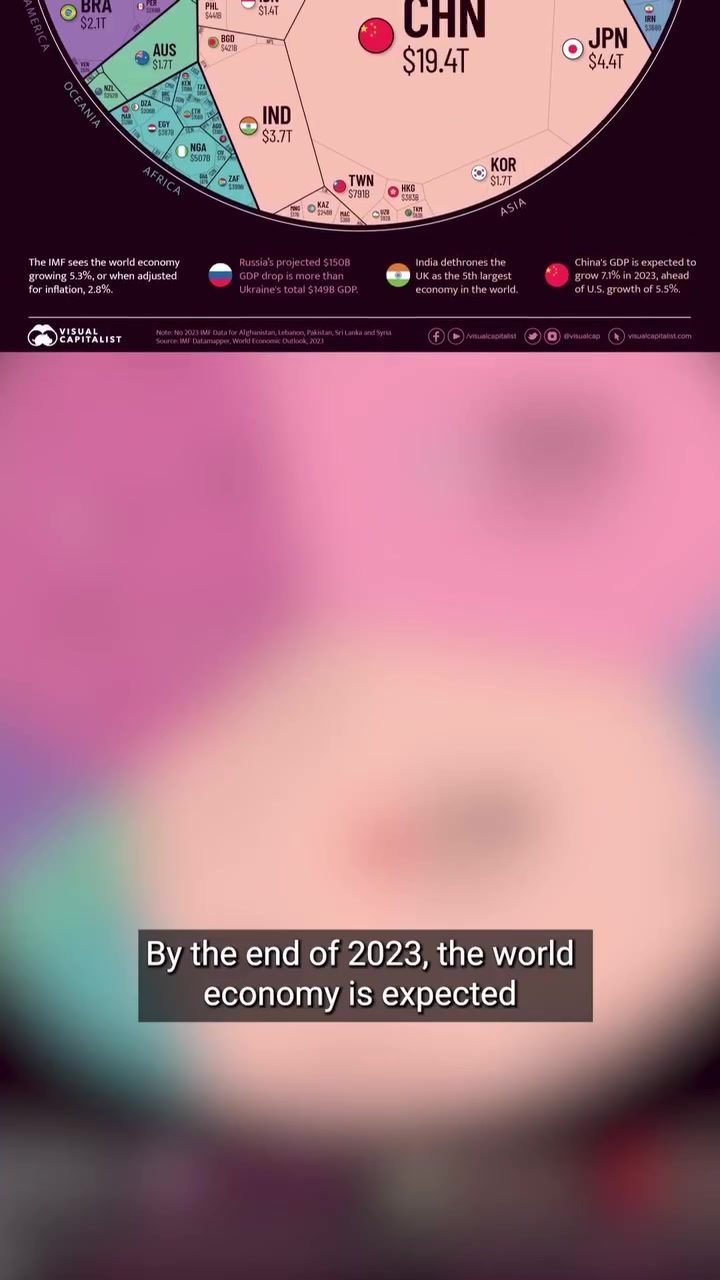
The global economy is projected to reach a staggering $105 trillion in GDP by the end of 2023. This represents a 5.3% nominal increase, highlighting the significant growth and economic activity worldwide. The United States, China, and India are the dominant players in this landscape, each with substantial contributions to the global GDP.
Context / Why this matters
Understanding the distribution of global GDP provides valuable insights into economic trends, investment opportunities, and geopolitical dynamics. The projections for 2023 offer a snapshot of the current economic landscape and potential shifts in global power dynamics. The United States is expected to maintain its position as the world's largest economy, with a projected GDP of $26.9 trillion. This reinforces the U.S.'s status as a global economic leader and a key player in international trade and investment.
China's economy is projected to remain the second largest, with a GDP of $19.4 trillion. China's steady growth reflects its ongoing economic development and its role as a major manufacturing and export hub. For investors and businesses, China's stable economic position indicates a reliable market for trade and investment.
India is poised to surge past the UK, becoming the fifth-largest economy with a projected GDP of $3.7 trillion. This rise underscores India's rapid economic development and its growing influence in the global economy. India's economic growth is driven by sectors such as technology, manufacturing, and services, making it an attractive market for international investors.
Main discussion
The United States: Leading the Global Economy
The United States continues to dominate the global economic landscape. With a projected GDP of $26.9 trillion, the U.S. remains the world's largest economy. This economic dominance is underpinned by several factors, including a robust financial sector, technological innovation, and a diverse range of industries.
The U.S. economy is driven by sectors such as technology, finance, healthcare, and manufacturing. The country's strong infrastructure, skilled workforce, and supportive regulatory environment foster innovation and economic growth. The U.S. dollar's status as the global reserve currency also contributes to the country's economic strength, providing stability and liquidity in international markets.
While the U.S. economy faces challenges, including inflation and political uncertainty, its resilience and adaptability are key factors in maintaining its position as the world's largest economy.
China: Steady Growth and Global Influence
China's projected GDP of $19.4 trillion solidifies its position as the second-largest economy in the world. China's economic growth is driven by a combination of domestic consumption, infrastructure development, and export-led manufacturing.
Over the years, China has shifted from an export-oriented economy to one driven by domestic consumption. This transition has been facilitated by policies aimed at increasing household incomes and promoting consumer spending. Meanwhile, China's infrastructure investments, exemplified by projects like the Belt and Road Initiative, have expanded its global influence and economic reach.
Despite facing challenges such as an aging population and slowing growth rates, China's strategic investments and policy initiatives are expected to sustain its economic momentum.
India: Rapid Economic Development
India's projected GDP of $3.7 trillion marks a significant milestone, as it overtakes the UK to become the fifth-largest economy. This rapid growth is driven by several factors, including a large and growing workforce, increasing domestic consumption, and a thriving technology sector.
India's economic development is supported by a favorable demographic profile, with a young and growing population. The country's technology sector, particularly in areas such as IT services and software development, has been a key driver of economic growth. Additionally, India's manufacturing sector is poised for expansion, supported by the "Make in India" initiative, which aims to transform the country into a global manufacturing hub.
India's economic growth is also bolstered by favorable government policies, including reforms in taxation, infrastructure development, and regulatory frameworks. These initiatives have fostered a business-friendly environment, attracting foreign investment and promoting economic development.
Russia's Economic Challenges
On the flip side, Russia is projected to experience the largest decline in GDP, with a contraction of $150 billion. This significant drop highlights the economic challenges Russia is facing, driven by factors such as geopolitical tensions, economic sanctions, and fluctuations in global oil prices.
Russia's economy is heavily dependent on energy exports, particularly oil and gas. Volatility in global energy prices and international sanctions have significantly impacted Russia's economic growth. Additionally, Russia faces challenges related to infrastructure development, technological innovation, and diversification of its economy.
While Russia's economic outlook is uncertain, the country's strategic initiatives and resource wealth may help mitigate some of the challenges. However, overcoming these hurdles will require significant policy reforms and economic diversification.
Economic Projections and Uncertainties
While most economic forecasts are generally reliable, it is essential to consider the uncertainties and factors that could impact these projections. Events such as geopolitical tensions, natural disasters, and economic shocks can significantly alter the economic trajectory of countries.
Inflation and economic instability are additional factors that could impact these projections. While the IMF's forecast is robust, it is vital to remain vigilant and adaptable to changing circumstances. The economic landscape is dynamic, and forecasts may not hold true by the end of the year. Regular updates and revisions to economic projections are necessary to reflect these changing dynamics.
Practical tips
How to Invest in Global Economies
For investors, understanding the economic landscape of different countries is crucial for making informed investment decisions. Here are some practical tips for investing in global economies:
-
Diversify Your Portfolio: Diversifying investments across different countries and sectors can help mitigate risk and maximize returns. Consider allocating investments to economies with strong growth prospects, such as the U.S., China, and India.
-
Monitor Economic Indicators: Keep an eye on key economic indicators, such as GDP growth, inflation rates, and employment data. These indicators can provide valuable insights into the health and stability of an economy.
-
Evaluate Geopolitical Risks: Geopolitical tensions and international relations can significantly impact economic stability. Assess the geopolitical risks associated with investing in a particular country and consider how these factors may affect your investment decisions.
-
Explore Emerging Markets: Emerging markets, such as India and Vietnam, offer high growth potential. However, they also come with higher risks. Conduct thorough research and consider consulting with financial advisors before investing in emerging markets.
-
Stay Informed: Keep updated with the latest economic news and developments. This will help you make well-informed decisions and adapt to changing economic conditions. Attend economic forums, read financial reports, and follow reliable sources for economic analysis.
Important takeaways
- The global economy is projected to reach $105 trillion by the end of 2023, with a 5.3% nominal increase in GDP.
- The United States, China, and India are the dominant economies, with significant contributions to global GDP.
- India is expected to surpass the UK, becoming the fifth-largest economy with a projected GDP of $3.7 trillion.
- Russia is projected to experience the largest decline in GDP, with a contraction of $150 billion, reflecting geopolitical and economic challenges.
- Inflation and economic instability are factors that could impact these projections, underscoring the need for vigilance and adaptability.
Conclusion
The global economy is a complex and dynamic landscape, with significant shifts and trends shaping its future. The United States, China, and India are poised to remain key players, with their economic growth and stability influencing global markets. Understanding these trends and their implications is crucial for investors, policymakers, and businesses. By staying informed and adaptable, stakeholders can navigate the challenges and opportunities presented by the evolving global economic landscape.
Watch the Reel
Questions readers ask
What is the projected global GDP for 2023?
The global GDP is expected to reach approximately $105 trillion by the end of 2023. This figure represents a 5.3% nominal increase from the previous year, indicating substantial worldwide economic growth.
Which countries are the top contributors to global GDP growth in 2023?
The United States, China, and India are the top contributors to the global GDP in 2023. The U.S. is expected to maintain its position as the world's largest economy, with China in second place and India rapidly advancing.
What is the projected GDP for the United States in 2023?
The United States is forecasted to have a GDP of $26.9 trillion in 2023, reinforcing its position as the world's leading economy. This projection underscores the U.S.'s significant role in global economic activity.
How is China's GDP expected to perform in 2023?
China is anticipated to hold the second position in global GDP rankings for 2023. While specific figures aren't mentioned, China's contribution to the worldwide economic activity is expected to be substantial, reflecting its ongoing economic expansion.
Why is India's economic performance in 2023 noteworthy?
India is rapidly rising in the global GDP rankings, making it a key player in the world economy. Its significant growth contributions are a notable aspect of the 2023 global economic landscape, showcasing its increasing economic prowess.
What insights can be gained from the 2023 global GDP projections?
The 2023 global GDP projections provide a snapshot of current economic trends, investment opportunities, and potential shifts in global power dynamics. They highlight the economic strengths and growth trajectories of major economies, such as the U.S., China, and India.
What does the 2023 global GDP projection of $105 trillion indicate about worldwide economic activity?
The 2023 global GDP projection of $105 trillion indicates robust global economic activity and growth. This figure reflects the collective economic performance of nations worldwide, with significant contributions from key economies like the U.S., China, and India.
Recent articles
Fresh deep dives from the latest Reels we unpacked.




Comments
Be the first to comment.