Global Food Affordability
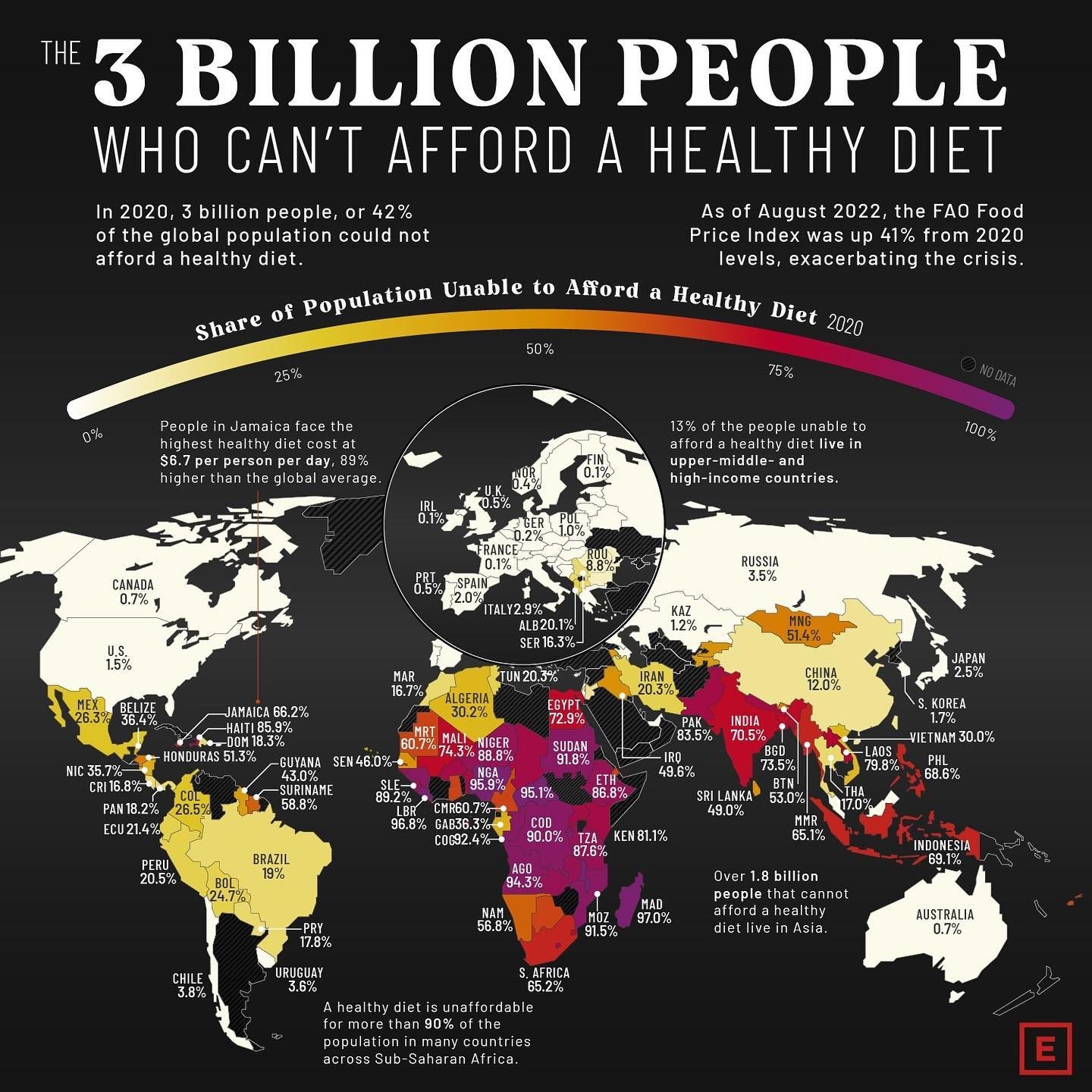
Hunger and undernourishment are critical issues affecting millions worldwide, yet they often go unnoticed in mainstream media. According to the United Nations Food and Agriculture Organization (FAO), more than 3 billion people, or 42% of the global population, struggled to afford a healthy diet in 2020. This alarming figure underscores a stark reality: the rising cost of food is outpacing income levels, particularly in low-income countries.
Why This Matters
Understanding the scope of global food affordability is crucial for addressing widespread malnutrition and food insecurity. The rising cost of food, coupled with stagnant or declining incomes, has made it challenging for a significant portion of the world's population to access nutritious food. This issue is exacerbating pre-existing inequalities and health disparities, making it a critical area to focus on for policymakers, organizations, and individuals alike.
Main Discussion
The Global Picture
The FAO data reveals that the average cost of a healthy diet rose by 3.3% from 2019 to 2020. This increase is a direct result of inflation, which has affected food prices globally. Countries like Sri Lanka, India, and Haiti have some of the highest percentages of people who cannot afford a healthy diet. For instance, 86.6% of the population in Sri Lanka, 70.5% in India, and 79.6% in Vietnam struggle with food affordability.
Regional Breakdown
Asia
Asia is the most affected region, with 1,891 million people unable to afford a healthy diet. India alone accounts for 973.3 million of these individuals, making it the most impacted country in the region. Other countries like Vietnam, the Philippines, and Indonesia follow closely with significant portions of their populations facing food insecurity.
Africa
In Africa, 1,031 million people cannot afford a healthy diet. Nigeria, with 197.6 million people, is the most affected country in the region. The high cost of food has left a vast number of Africans unable to access essential nutrients, leading to widespread malnutrition and related health issues.
Latin America and the Caribbean
Latin America and the Caribbean have 131.3 million people struggling with food affordability. Brazil and the countries in the Caribbean, including Haiti and Dominica Republic, have significant portions of their populations unable to afford a healthy diet.
North America, Europe, and Oceania
In contrast, the situation in North America, Europe, and Oceania is relatively better, with a smaller percentage of the population unable to afford a healthy diet. However, even in these regions, certain populations, particularly those in lower-income brackets, face challenges in accessing nutritious food.
Factors Contributing to Food Insecurity
Inflation is a primary factor driving up the cost of food. However, other economic and environmental factors, such as climate change, food waste, and supply chain disruptions, also play significant roles. For instance, climate change can lead to crop failures and reduced agricultural productivity, driving up food prices. Similarly, inefficient supply chains and food waste contribute to food scarcity and higher prices.
Impact on Health and Well-being
The inability to afford a healthy diet has profound implications for health and well-being. Malnutrition and undernourishment can lead to a range of health issues, including stunted growth, weakened immune systems, and cognitive impairment. Children and pregnant women are particularly vulnerable to the effects of malnutrition, which can have lifelong consequences.
Practical Tips
For Policy Makers
Policy interventions are crucial in addressing food affordability. Policies aimed at increasing income levels, providing subsidies, and ensuring fair wages can make a significant difference. Investing in agriculture and improving food distribution systems can also help reduce food costs and improve access to nutritious food.
For Organizations
Non-governmental organizations (NGOs) and international bodies can play a vital role in addressing food insecurity. Programs aimed at reducing food waste, promoting sustainable agriculture, and providing emergency food relief can help mitigate the impact of food affordability issues.
For Individuals
At an individual level, there are several strategies to manage food costs and ensure a healthy diet. Planning meals, buying in bulk, and choosing affordable, nutritious foods can help stretch budgets. Community gardens and local food cooperatives can also provide access to fresh, affordable produce.
Important Takeaways
Understanding the global landscape of food affordability is the first step in addressing this critical issue. Key takeaways include:
- Scope of the Problem: More than 3 billion people worldwide cannot afford a healthy diet, with significant variations across regions.
- Regional Disparities: Asia and Africa are the most affected regions, with hundreds of millions of people struggling with food affordability.
- Economic and Environmental Factors: Inflation, climate change, and supply chain disruptions are key factors driving food prices.
- Health Implications: Food insecurity has severe health consequences, particularly for vulnerable populations like children and pregnant women.
Conclusion
Addressing global food affordability is a complex challenge that requires coordinated efforts from policymakers, organizations, and individuals. By understanding the scope of the problem, its contributing factors, and its health implications, we can work towards creating a more food-secure world. Ensuring that everyone has access to a healthy diet is not just a matter of survival; it is a fundamental right that underpins human well-being and development.
Watch the Reel
Questions readers ask
What does the FAO 2020 report reveal about global food affordability?
The 2020 report from the United Nations Food and Agriculture Organization (FAO) highlights that over 3 billion people, or 42% of the global population, faced difficulties affording a healthy diet. This report underscores the severity of global food affordability issues and the impact of rising food costs on populations worldwide.
Which countries are most affected by the current global food crisis?
Countries like Sri Lanka, India, and Haiti are particularly affected by the global food crisis. These nations face significant challenges due to the rising cost of food outpacing income levels, leading to widespread food insecurity and malnutrition.
How does food inflation impact global food security?
Food inflation contributes to global food insecurity by making nutritious food less accessible to a larger portion of the population. When food prices rise faster than incomes, especially in low-income countries, it becomes increasingly difficult for people to afford a balanced and healthy diet, exacerbating health disparities.
What are the key factors driving the world food crisis?
The world food crisis is driven by several factors, including the rising cost of food, stagnant or declining incomes, and economic inequalities. These factors combined make it challenging for a significant portion of the global population to access and maintain a healthy diet, leading to widespread food insecurity.
Why is understanding global food affordability essential for addressing food insecurity?
Understanding global food affordability is essential for addressing food insecurity as it helps identify the root causes and the populations most at risk. By recognizing the impact of rising food costs and stagnant incomes, policymakers and organizations can develop targeted interventions to improve food accessibility and reduce malnutrition.
What can individuals do to promote healthy eating on a budget in the face of global food cost increases?
Individuals can promote healthy eating on a budget by planning meals, buying in-season produce, choosing affordable protein sources like beans and lentils, and minimizing food waste. Additionally, supporting local food initiatives and advocating for policies that address food affordability can help mitigate the impact of rising food costs.
How does the World Health Organization (WHO) address food affordability issues?
The World Health Organization (WHO) addresses food affordability issues by providing guidelines and recommendations for healthy diets, advocating for policies that improve food access, and collaborating with governments and organizations to implement strategies that promote food security and reduce health disparities.
Related deep dives
Similar reads based on topic and creator.



Recent articles
Fresh deep dives from the latest Reels we unpacked.




Comments
Be the first to comment.