Introduction
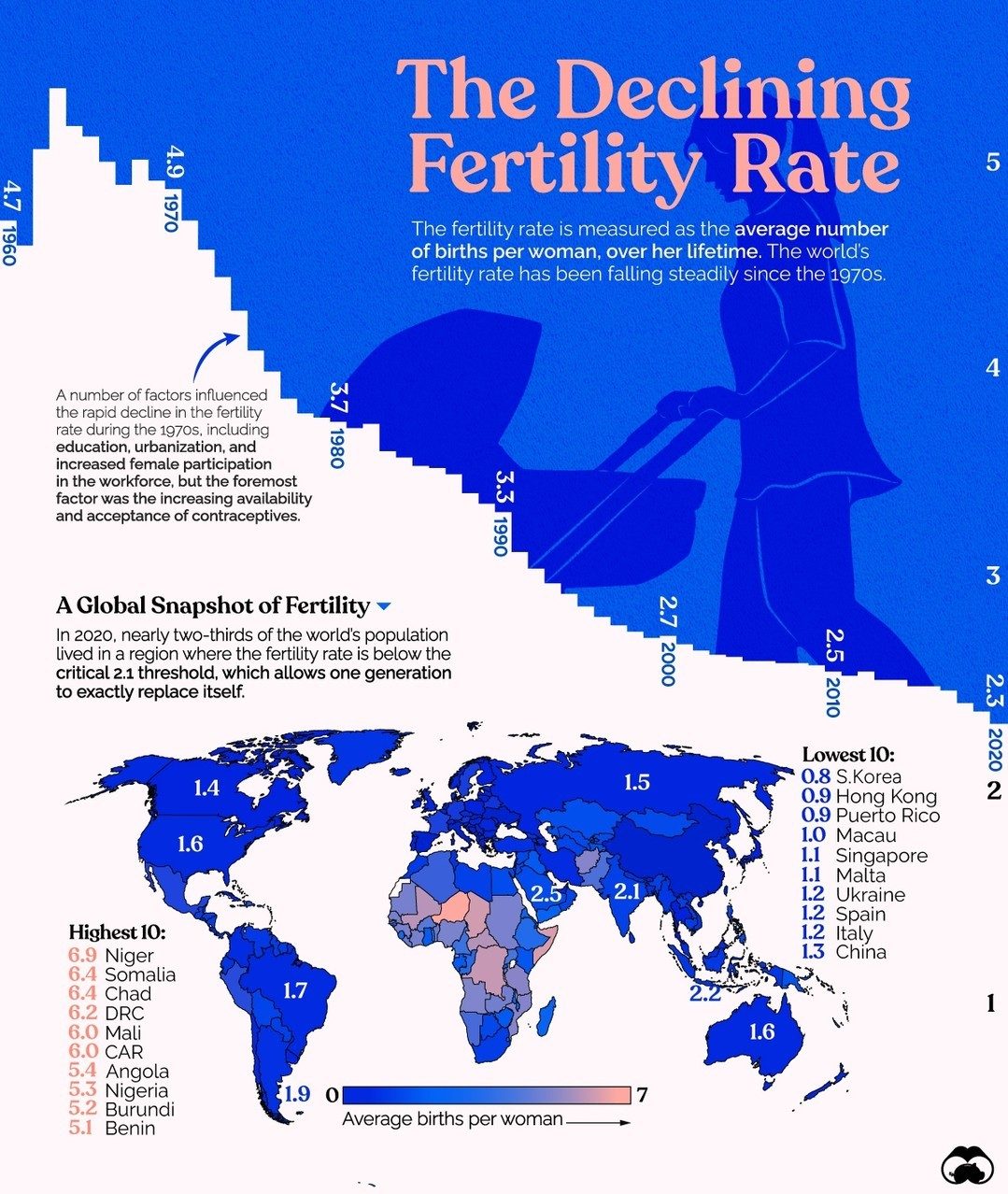
The global fertility rate has been on a steady decline, a trend that has significant implications for population growth and demographic shifts. This decline is evident in data from 1970 to 2020, showing a consistent decrease in the average number of births per woman. Understanding the factors contributing to this trend and its potential impacts is crucial for planning and policy-making.
Why This Matters
The decline in fertility rates is a global phenomenon that affects economic growth, social structures, and healthcare systems. With nearly two-thirds of the world's population living in regions where the fertility rate is below the replacement level of 2.1 births per woman, the implications are far-reaching. This shift will influence everything from labor markets to pension systems, making it a critical area of study for economists, demographers, and policymakers alike.
Main Discussion
Historical Trends
From 1970 to 2020, the average number of births per woman dropped from 4.4 to 2.0. This significant decrease is a result of various factors, including increased access to education, urbanization, and the growing participation of women in the workforce. However, the most significant contributor to this decline is the increasing availability and acceptance of contraceptives. These factors have empowered individuals to make more informed choices about family planning, leading to a more controlled fertility rate.
Regional Variations
The decline in fertility rates is not uniform across the globe. Regions with higher levels of education and better access to healthcare tend to have lower fertility rates. For instance, regions in Europe and East Asia have some of the lowest fertility rates, often falling below the replacement level. Conversely, regions in Sub-Saharan Africa and parts of South Asia still maintain higher fertility rates, though they too are experiencing a decline.
Socioeconomic Factors
Education, particularly for women, plays a pivotal role in lowering fertility rates. As women gain more access to education, they are more likely to enter the workforce and delay childbearing, which contributes to a lower fertility rate. Urbanization also plays a significant role. As people move from rural to urban areas, the cost of living increases, and living spaces become more constrained, making it harder to support large families.
Economic Implications
The decline in fertility rates has significant economic implications. A shrinking population can lead to labor shortages, which can impact economic growth. Conversely, a lower fertility rate can also lead to an aging population, placing a greater burden on pension systems and healthcare services. Governments and policymakers must navigate these challenges carefully to ensure sustainable economic growth.
Policy Responses
Many countries are already implementing policies to address the declining fertility rate. Some are offering incentives for having more children, such as tax breaks and extended maternity leave. Others are focusing on improving healthcare and education to support families. These policies aim to strike a balance between promoting family growth and ensuring a high quality of life for all citizens.
Practical Tips
For individuals and families, understanding the trends in fertility rates can inform personal decisions. Here are some practical tips based on the broader trends:
- Plan for the Future: Consider the long-term implications of having children, including the financial and emotional commitment.
- Seek Professional Advice: Consult with healthcare professionals to understand your options and make informed decisions about contraceptives and family planning.
- Stay Informed: Keep up with the latest research and data on fertility rates and demographics to make well-informed choices.
Important Takeaways
- The global fertility rate has been declining steadily since the 1970s, influenced by education, urbanization, and the availability of contraceptives.
- By 2020, nearly two-thirds of the world's population lived in regions with a fertility rate below 2.1 births per woman.
- Regional variations in fertility rates reflect differences in education, healthcare, and socioeconomic conditions.
- The decline in fertility rates has significant economic and social implications, requiring careful policy responses.
- For individuals, understanding these trends can inform personal decisions about family planning and future planning.
Conclusion
The declining fertility rate is a complex issue with far-reaching implications for population growth, economic development, and social structures. By understanding the factors contributing to this trend and the potential impacts, individuals and policymakers can make informed decisions to navigate the challenges ahead. Staying informed and adaptive will be key to addressing the changes brought about by the declining fertility rate.
Watch the Reel
Questions readers ask
What is the global fertility rate in 2020?
As of 2020, the global fertility rate stands at 2.0 births per woman, marking a significant decrease from 4.4 births per woman in 1970. This drop reflects a steady decline over the past five decades, influenced by various demographic and societal shifts.
What are some key factors contributing to the global fertility rate decline?
Several factors contribute to the global fertility rate decline, including urbanization, which often correlates with a shift towards smaller families. Additionally, increased participation of women in the workforce and greater access to contraceptives have led to more controlled family planning, resulting in fewer births per woman.
How does urbanization affect fertility rates?
Urbanization is a key factor in the decline of fertility rates. In urban areas, living costs, housing, and child-rearing expenses tend to be higher, leading families to have fewer children. Additionally, urban environments often provide more access to education and career opportunities, which may prompt women to delay or forgo childbearing.
What is the impact of women's workforce participation on global fertility rates?
Women's increased participation in the workforce has significantly influenced global fertility rates. As more women pursue careers, they often delay marriage and childbearing, resulting in fewer children. Additionally, the demands of a career may make it challenging to balance work and family life, further contributing to lower birth rates.
What is the significance of the global fertility rate dropping below the replacement level?
The global fertility rate dropping below the replacement level of 2.1 births per woman signifies that the population is not replacing itself. This has wide-ranging implications, including potential labor shortages, economic slowdowns, and challenges for healthcare and social services, as the population ages and the workforce shrinks.
What are the potential consequences of low fertility rates on world population growth?
Low fertility rates can lead to a decline in world population growth, which in turn affects various aspects of society. Potential consequences include labor market shifts, with fewer workers to support an aging population, economic changes, and increased pressure on healthcare systems to care for a larger elderly population.
Recent articles
Fresh deep dives from the latest Reels we unpacked.




Comments
Be the first to comment.