Understanding the Global Energy Crisis: A Deep Dive into Rising Energy Prices
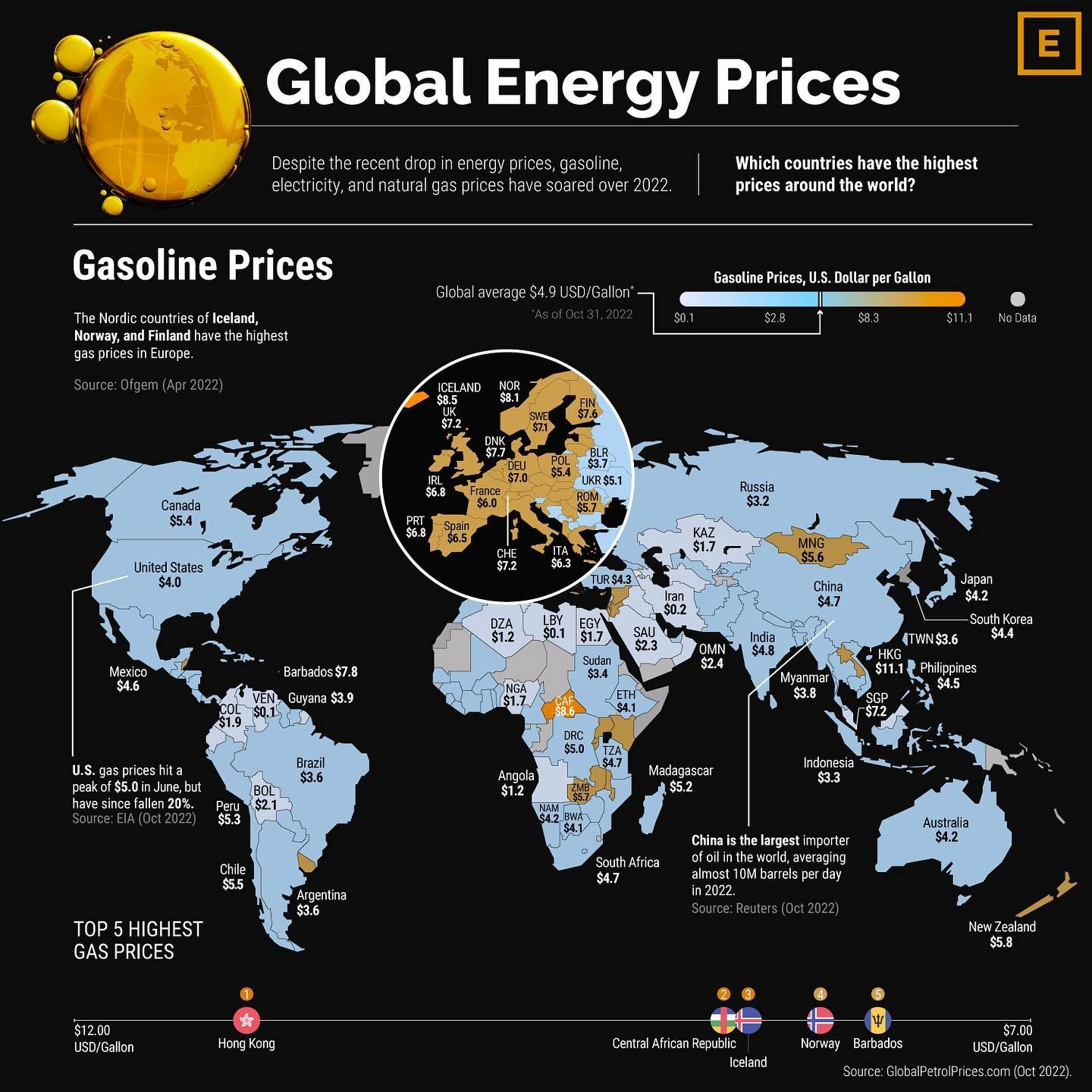
Gasoline, electricity, and natural gas prices have surged in 2022, leaving households and businesses grappling with increased energy bills. The recent drop in energy prices hasn't alleviated the broader trend of price volatility. This global energy crisis has significant consequences, affecting energy prices for households around the world.
Context / Why This Matters
The energy crisis is a multifaceted issue driven by various factors, including geopolitical tensions, supply chain disruptions, and increased demand. Understanding the fluctuations in energy prices is crucial for both governments and consumers to navigate the economic landscape effectively.
Main Discussion
Global Gasoline Prices
Gasoline prices have seen a dramatic increase, with the global average reaching $4.9 USD per gallon.
The Nordic countries in Europe, in particular, have experienced the highest gasoline prices, largely due to stringent environmental regulations and taxes aimed at reducing carbon emissions.
Global Electricity Prices
Electricity costs have hit record highs for American households in 2022. The global average electricity price stands at $0.14 USD per kilowatt-hour (kWh), reflecting the strain on power grids and the rising cost of fuel sources. The increase in electricity prices can be attributed to several factors, including the rising cost of natural gas, which is a primary fuel source for many power plants, and the growing demand for electricity as economies recover from the pandemic.
Global Natural Gas Prices
Natural gas prices have also soared, with the global average reaching $0.09 USD per kWh. This trend is particularly concerning for Europe, where natural gas storage levels could drop to as low as 20% by February if supply disruptions continue and demand remains high. The European Union's dependence on natural gas for heating and electricity generation makes it particularly vulnerable to price volatility.
Practical Tips
For Households
- Energy Efficiency: Invest in energy-efficient appliances and insulation to reduce energy consumption and lower bills.
- Renewable Energy: Consider switching to renewable energy sources, such as solar or wind power, if feasible.
- Government Programs: Look for government incentives and programs aimed at helping households manage energy costs.
- Energy Monitoring: Use smart meters and energy monitoring tools to track and manage energy usage effectively.
For Businesses
- Energy Audits: Conduct regular energy audits to identify areas of inefficiency and implement cost-saving measures.
- Renewable Energy: Explore options for transitioning to renewable energy sources to reduce reliance on volatile fossil fuel prices.
- Energy Storage: Invest in energy storage solutions to balance supply and demand and reduce reliance on peak energy prices.
- Contract Management: Negotiate long-term energy contracts to hedge against price volatility and secure stable energy costs.
Important Takeaways
- Global Impact: The energy crisis affects households and businesses globally, with varying impacts based on geographic location and energy mix.
- Market Fluctuations: Energy prices are subject to significant fluctuations due to geopolitical tensions, supply chain disruptions, and demand shifts.
- Policy Implications: Governments need to implement policies that support energy security, promote energy efficiency, and encourage the transition to renewable energy sources.
- Consumer Awareness: Households and businesses must stay informed about energy price trends and implement strategies to manage energy costs effectively.
Conclusion
The global energy crisis is a complex issue with far-reaching impacts on households and businesses. Understanding the drivers of price volatility and implementing practical measures to manage energy costs are essential steps in navigating this challenging landscape. By taking proactive steps and staying informed, consumers and businesses can better prepare for the ongoing fluctuations in energy prices.
Watch the Reel
Questions readers ask
What were the primary drivers behind the global energy price surge in 2022?
The primary drivers included geopolitical tensions, particularly conflicts and sanctions that disrupted supply, supply chain disruptions, and increased global energy demand as economies recovered from the COVID-19 pandemic.
How did the average gasoline price change in 2022 compared to previous years?
The average gasoline price in 2022 saw a significant increase compared to previous years. The surge was largely due to supply constraints and increased demand, with prices reaching record highs in many countries.
What factors contributed to the increase in electricity prices in 2022?
Electricity prices increased due to rising costs of raw materials and energy sources, supply chain interruptions, and higher demand. Additionally, the shift towards renewable energy sources has led to increased costs.
Why were natural gas costs particularly volatile in 2022?
Natural gas costs were volatile due to supply chain disruptions, geopolitical tensions, and increased demand for heating and electricity generation. Cold winters and reduced production further exacerbated the price fluctuations.
How have households been affected by the surge in energy bills?
Households have faced steep increases in their energy bills, leading to financial strain for many. The rise in energy prices has also led to a shift in consumption patterns, with many households seeking more efficient energy solutions.
What role did geopolitical tensions play in the 2022 energy price surge?
Geopolitical tensions, such as conflicts and trade restrictions, significantly impacted energy prices. These tensions disrupted supply chains, reduced production, and led to market uncertainty, driving up prices for gasoline, electricity, and natural gas.
What can consumers and businesses do to mitigate the impact of high energy prices?
Consumers and businesses can implement energy-saving measures, such as improving insulation, using energy-efficient appliances, and optimizing energy usage. Diversifying energy sources and investing in renewable energy can also help reduce long-term costs and dependency.
Recent articles
Fresh deep dives from the latest Reels we unpacked.




Comments
Be the first to comment.