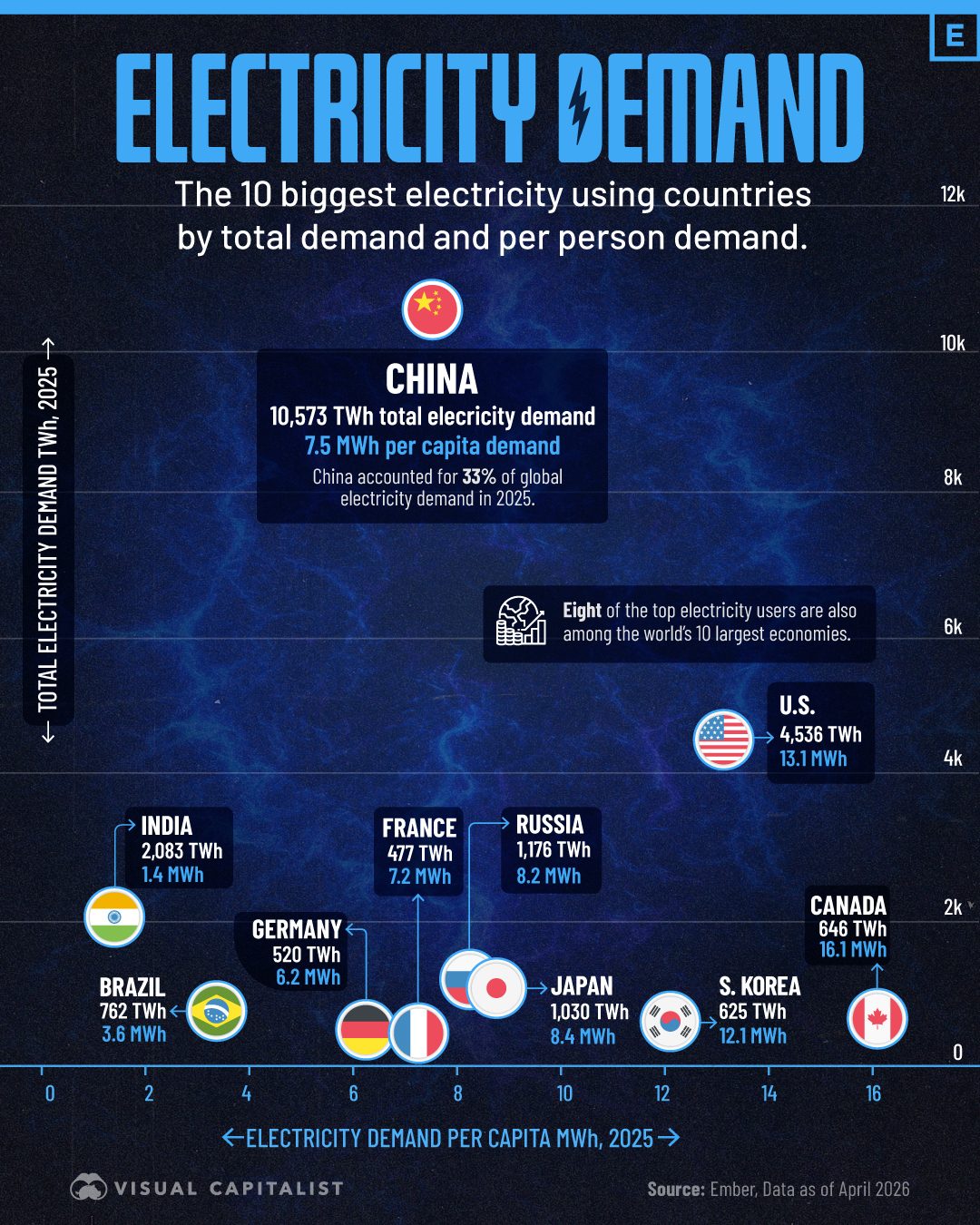
Electricity demand is at the heart of global economic activity, and understanding who consumes the most, and why, provides valuable insights into worldwide energy dynamics. China, the largest single consumer, now accounts for over one-third of total global demand. Meanwhile, North American countries lead in per capita electricity use, driven by larger homes, colder climates, and energy-intensive lifestyles. Let's delve into the specifics of the world’s largest electricity consumers and their demand per person.
Context / Why this matters
Electricity is the lifeblood of modern economies, driving everything from manufacturing and transportation to residential use. By examining the top electricity-consuming countries, we gain a clearer picture of global energy trends, economic development, and environmental challenges. This information is crucial for policymakers, energy providers, and consumers alike, as it informs decisions about infrastructure, sustainability, and resource allocation.
Main discussion
China: The Global Leader in Electricity Demand
China's astonishing rise in electricity demand is nothing short of remarkable. From under 10% in the early 2000s, China now accounts for approximately 33% of the global electricity demand as of 2025. This dramatic increase is fueled by rapid industrialization and economic growth, as well as a population of over 1.4 billion people.
China’s total electricity demand stands at an impressive 10,573 TWh (terawatt-hours), with a per capita demand of 7.5 MWh (megawatt-hours). This figure reflects both the scale of China’s industrial sector and the growing consumption levels of its citizens. China’s energy demand is driven by:
- Industrialization: China's robust manufacturing sector, which produces everything from electronics to automobiles, requires significant energy inputs.
- Urbanization: The rapid growth of cities and the accompanying infrastructure development necessitate more electricity.
- Population Growth: As the population increases, so does the demand for electricity to power homes, public services, and businesses.
North America: High Per Capita Consumption
Conversely, North American countries, including the United States and Canada, lead in per capita electricity use. This disparity is driven by several factors.
The United States, for instance, has a per capita demand of 13.1 MWh, more than double that of China. This high consumption can be attributed to:
- Larger Homes and Energy-Intensive Appliances: American households, on average, are larger and equipped with more energy-intensive appliances.
- Colder Climates: Heating during the winter months in northern states significantly increases electricity demand.
- Energy-Intensive Lifestyles: The widespread use of air conditioning, electric vehicles, and other energy-intensive technologies and lifestyles.
Canada, with a similar per capita demand of 16.1 MWh, faces similar challenges, though its colder climate plays an even more significant role in its high energy consumption.
Other Major Consumers
While China and North America dominate the global electricity conversation, other countries also contribute significantly to worldwide demand. Notable examples include:
- India: With a total demand of 2,083 TWh, India's per capita demand is relatively lower at 1.4 MWh, reflecting its ongoing economic development and efforts to provide electricity to its vast population.
- Russia: Russia’s total demand stands at 1,176 TWh, with a per capita demand of 8.2 MWh, driven by its large industrial base and extensive infrastructure.
- European Nations: Countries like France, Germany, and South Korea exhibit varying levels of total and per capita demand. For example, Germany has a total demand of 520 TWh and a per capita demand of 6.2 MWh, while France, with a total demand of 477 TWh, has a per capita demand of 7.2 MWh.
Economic and Environmental Implications
The high levels of electricity demand in these countries have both economic and environmental implications. Economically, robust electricity supply is crucial for sustaining industrial and residential activities. However, the environmental impact cannot be overlooked. The reliance on fossil fuels for electricity generation contributes to carbon emissions and climate change.
Practical tips
For Policymakers
- Invest in Renewable Energy: Transitioning to renewable energy sources can help reduce carbon emissions while meeting growing demand.
- Efficient Use: Promote energy-efficient appliances and practices, especially in residential and industrial sectors.
- Infrastructure Development: Build robust and resilient energy infrastructure to support growing demand and mitigate disruptions.
For Consumers
- Energy Efficiency: Use energy-efficient appliances and lighting to reduce consumption.
- Smart Technology: Adopt smart home technology to monitor and control energy use.
- Renewable Sources: Consider switching to electricity providers that use renewable energy sources.
For Businesses
- Sustainable Practices: Implement sustainable energy practices and invest in renewable energy sources.
- Efficiency Measures: Optimize energy use in operations to reduce costs and environmental impact.
Important takeaways
China’s rise to become the largest consumer of electricity globally is a testament to its economic growth and industrial prowess. However, the high per capita demand in North American countries highlights the disparities in energy consumption patterns. Understanding these global trends is crucial for developing effective energy policies and promoting sustainable practices. It’s essential for countries to focus on renewable energy sources, energy efficiency, and infrastructure development to meet the growing demand while minimizing environmental impacts.
Conclusion
Electricity demand is a critical aspect of global economic activity, with China and North American countries leading the way in total and per capita consumption, respectively. By examining these trends, we can better understand the international energy landscape and develop strategies to meet future demands sustainably. Whether you’re a policymaker, consumer, or business owner, staying informed about global electricity trends is vital for making informed decisions and contributing to a sustainable future.
Watch the Reel
Questions readers ask
Which country consumes the most electricity in the world?
China is the world's largest consumer of electricity, accounting for over one-third of the global electricity supply. This substantial consumption reflects China's extensive industrial activities and rapid economic growth.
Why do North American countries have high per capita electricity use?
North American countries lead in per capita electricity consumption due to several factors. These include larger living spaces, colder climates that require more heating, and lifestyles that rely heavily on energy-intensive activities and appliances.
What drives global electricity demand?
Global electricity demand is driven by a variety of factors, including industrial activities, residential use, and transportation needs. Understanding these drivers helps in predicting future energy trends and planning for infrastructure development.
How does electricity consumption vary by country?
Electricity consumption varies significantly by country due to differences in economic activities, population size, and lifestyle factors. For example, while China leads in total electricity consumption, North American countries have higher per capita usage.
What insights can be gained from examining the world's largest electricity consumers?
By analyzing the top electricity-consuming countries, we can better understand global energy dynamics and economic development. This information can be used to anticipate future demand, assess energy production capacities, and inform policy decisions.
What is the significance of looking at electricity production and consumption trends?
Examining electricity production and consumption trends is crucial for identifying potential energy shortages or surpluses and for planning infrastructure improvements. It also helps in developing strategies to enhance energy efficiency and sustainability.
Why does China's electricity consumption matter globally?
China's high electricity consumption matters globally because it influences worldwide energy markets, affects global energy production, and has significant implications for climate change. China's energy policies and technological advancements can also set trends for other countries.
Recent articles
Fresh deep dives from the latest Reels we unpacked.




Comments
Be the first to comment.