Egg Prices Around the World: A Global Comparison
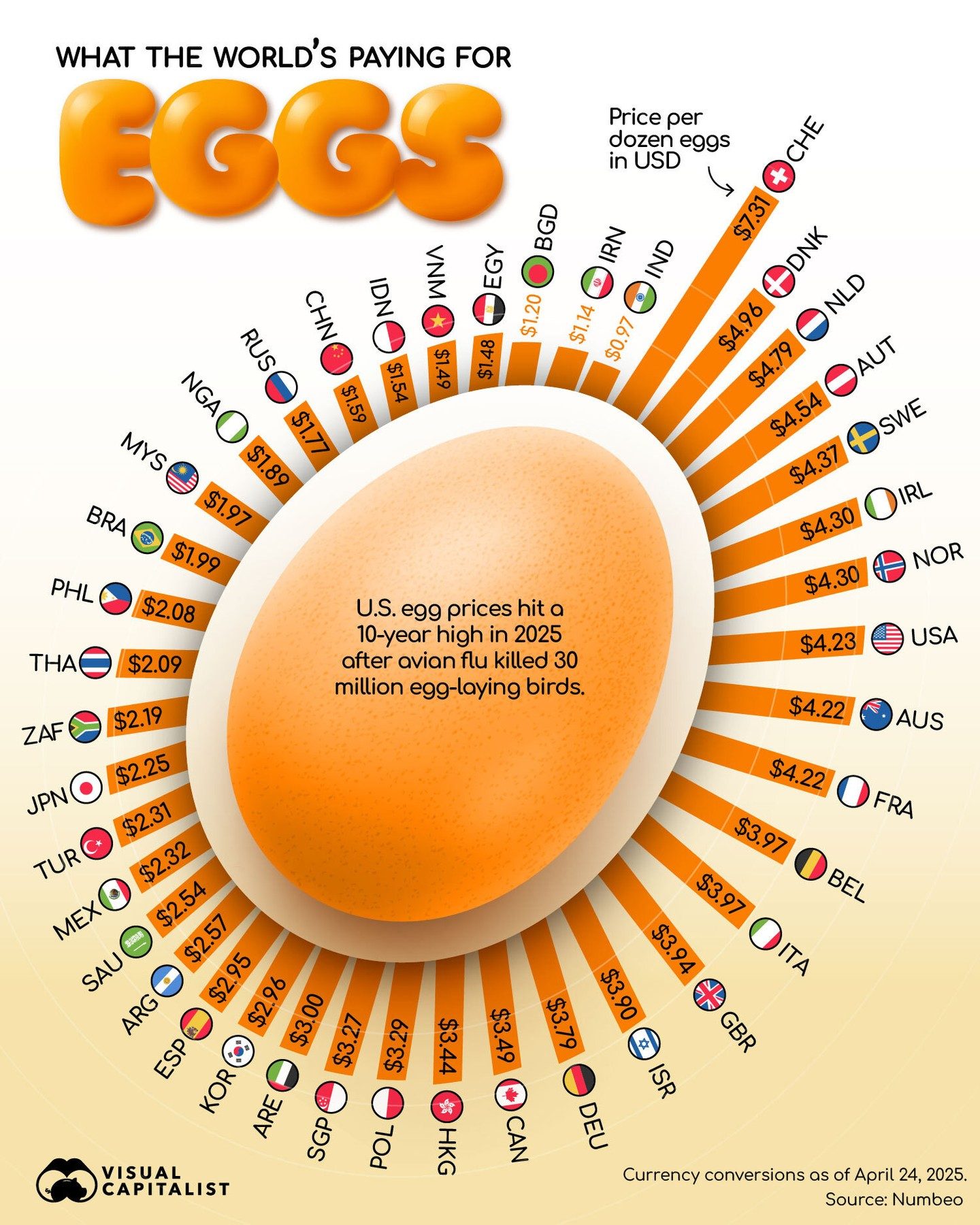
As of April 2025, consumers in Switzerland are paying the highest prices for eggs, with an average cost of $7.31 per dozen. This price surge is part of a global trend driven by avian flu outbreaks and rising costs for feed, fuel, and labor. Examining the average price of a dozen eggs across major economies reveals significant variations, influenced by a mix of local and global factors.
Why This Matters
Understanding the fluctuations in egg prices is crucial for both consumers and producers. It affects household budgets, farming practices, and economic policies. As avian flu continues to impact poultry populations and feed costs remain volatile, it's essential to track these changes to make informed decisions.
Price Variations Across Countries
The global price of eggs varies widely due to differing production costs, regulatory environments, and consumer demand. Here are some key points from the data:
High-Price Regions
Switzerland tops the list with the highest egg prices, driven by high production standards, strict regulations, and a strong currency. Following closely are several European countries, where prices are also significantly high:
- Switzerland: $7.31 per dozen
- Denmark: $4.96 per dozen
- Netherlands: $4.54 per dozen
Mid-Range Prices
Several countries fall into the mid-range category, with prices influenced by a mix of market dynamics:
- Australia: $4.30 per dozen
- Singapore: $4.22 per dozen
- France: $3.97 per dozen
Lower-Priced Regions
In contrast, some countries have significantly lower egg prices due to factors like lower production costs, government subsidies, or different consumer preferences:
- China: $1.14 per dozen
- South Africa: $1.20 per dozen
- United States: $2.08 per dozen
The data highlights that while prices vary globally, the overall trend shows an increase in egg prices, particularly in regions affected by avian flu.
Avian Flu Impact on Egg Prices
The avian flu outbreak of 2025 had a profound impact on egg prices, particularly in the United States. The flu killed 30 million egg-laying birds, leading to a significant reduction in the egg supply. This supply shortage drove prices to a 10-year high of $2.08 per dozen. The situation underscores the vulnerability of the poultry industry to disease outbreaks and the need for robust biosecurity measures.
Factors Driving Global Price Increases
Several factors contribute to the rising cost of eggs globally. These include:
Feed Costs
Rising feed costs are a significant driver of higher egg prices. Feed accounts for a substantial portion of the production cost, and fluctuations in the prices of corn, soybeans, and other grains directly impact the cost of eggs. The increase in feed prices is influenced by factors such as climate change, which affects crop yields, and global demand for animal feed.
Fuel and Labor Costs
In addition to feed, fuel, and labor costs have surged. Higher fuel prices increase transportation and operational expenses for farmers, while rising labor costs, driven by inflation and wage increases, further add to the production cost. These factors combined have pushed up the cost of eggs across the board.
Practical Tips for Navigating Rising Egg Prices
Consumers and producers can take several steps to navigate the rising cost of eggs:
- Buy in Bulk: Purchase eggs in larger quantities when prices are lower and store them properly to extend their shelf life.
- Explore Alternatives: Consider using egg substitutes in recipes or opting for lower-cost protein sources.
- Support Local Farmers: Buying directly from local farmers can sometimes offer better prices and support local agriculture.
- Monitor Prices: Keep an eye on price trends and plan purchases accordingly.
Important Takeaways
The global egg market is experiencing significant price fluctuations due to a combination of supply shortages, rising production costs, and disease outbreaks. Key takeaways include:
- Switzerland leads the way with the highest egg prices, reflecting its stringent production standards and high cost of living.
- The avian flu outbreak in 2025 caused a sharp increase in egg prices in the United States, highlighting the industry's vulnerability to disease.
- Rising feed, fuel, and labor costs are driving up egg prices worldwide.
Conclusion
The price of eggs is a critical indicator of broader economic trends and agricultural challenges. As global markets continue to evolve, staying informed about these fluctuations can help consumers and producers make better decisions. Whether you're a consumer looking to manage your budget or a producer navigating supply chain disruptions, understanding the factors behind egg price variations is essential.
Watch the Reel
Questions readers ask
Why are egg prices in Switzerland significantly higher than in other countries in 2025?
Switzerland's high egg prices are due to stringent regulations, higher production costs, and the impact of avian flu outbreaks. The country's standards for animal welfare and environmental sustainability contribute to increased costs, which are passed on to consumers.
How does avian flu impact global egg prices?
Avian flu outbreaks lead to the culling of infected poultry, reducing the supply of eggs. This decrease in supply, coupled with the costs of preventing and managing outbreaks, drives up prices globally. Additionally, trade restrictions may be imposed to control the spread, further affecting the market.
What are the average egg prices in China and the USA in 2025?
As of 2025, China and the USA offer more affordable egg prices compared to many other countries. In China, the average price per dozen is around $2.50, while in the USA, it is approximately $3.00. These prices are influenced by lower production costs and efficient farming practices.
How do production costs contribute to worldwide egg price variations?
Production costs, including feed, fuel, and labor, significantly impact egg prices. Countries with lower production costs, such as those with abundant feed resources or lower labor costs, generally have lower egg prices. Conversely, countries with higher production costs tend to have more expensive eggs.
Why is it important for consumers and producers to track global egg price variations?
Tracking global egg price variations helps consumers make informed purchasing decisions and manage their household budgets. For producers, it provides insights into market trends, competition, and potential adjustments needed in production practices to remain competitive.
What role do regulations play in determining egg prices by country?
Regulations, particularly those related to animal welfare, environmental standards, and food safety, can significantly influence egg prices. Countries with stricter regulations may have higher production costs, leading to increased egg prices. Conversely, countries with fewer regulations may offer more affordable eggs.
Which countries offer the most affordable egg prices in 2025?
As of 2025, countries like China and the USA are among those with the most affordable egg prices. Factors such as efficient production methods, lower labor costs, and abundant feed resources contribute to the lower prices in these countries, making eggs more accessible to consumers.
Related deep dives
Similar reads based on topic and creator.

Recent articles
Fresh deep dives from the latest Reels we unpacked.




Comments
Be the first to comment.