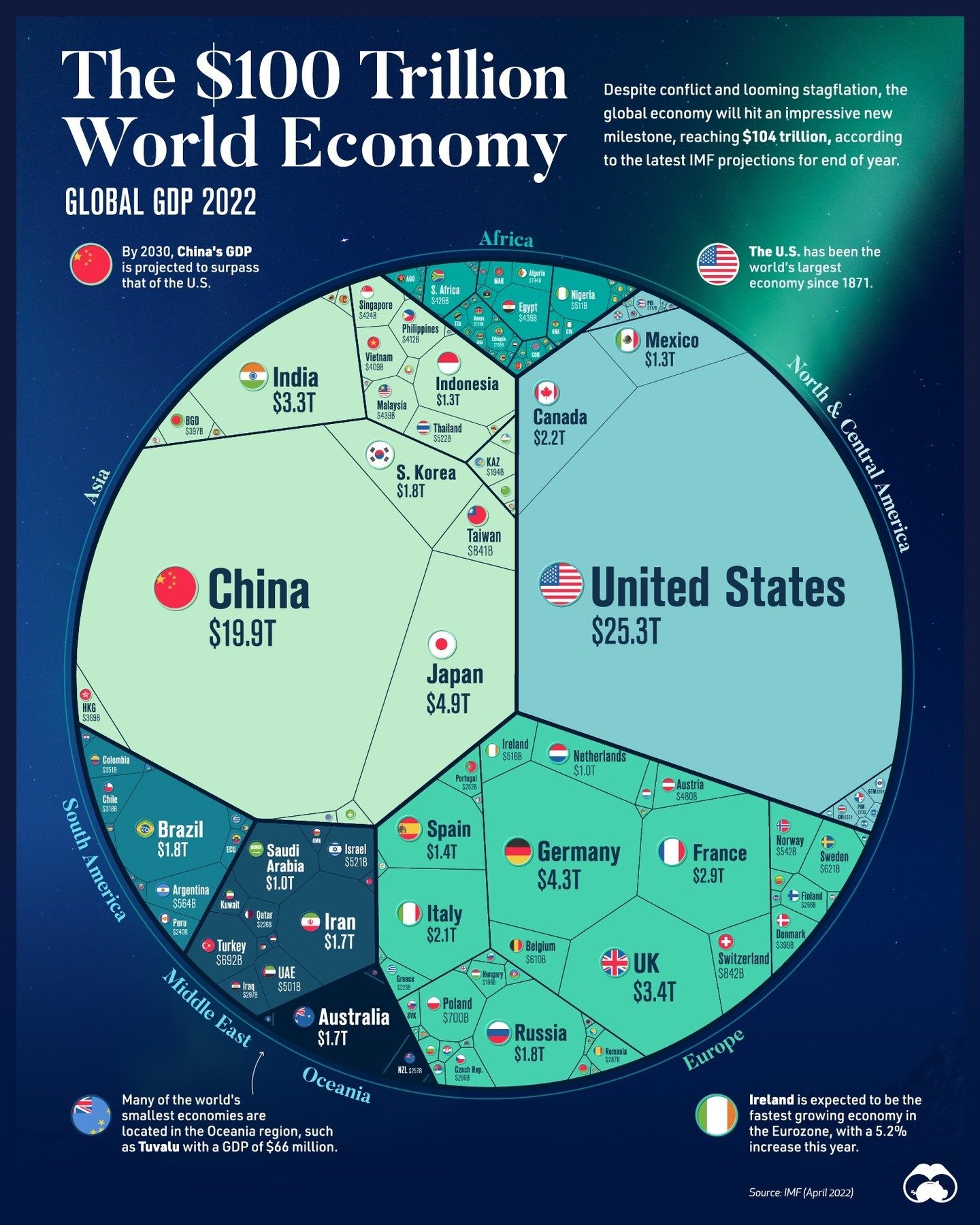
The Global Economy and GDP Distribution by Region
The global economy is on track to reach nearly $104 trillion in nominal value by the end of 2022, according to the latest projections from the International Monetary Fund (IMF). While the overall trend shows upward growth, the recovery from the pandemic is facing challenges due to recent conflicts, supply chain issues, and inflation. These factors have led to a downward revision of global economic projections. Initially, the global annual GDP growth for 2022 was expected to be 4.4% as of January, but it has since been adjusted to 3.6%.
This information is critical for understanding the current state of the global economy and the forces shaping its future. The IMF's projections provide a snapshot of economic health and growth across different regions, highlighting the significant contributors to global GDP.
Why This Matters
The IMF's projections help us understand the economic landscape, identifying key trends and challenging the assumptions about future economic growth. By tracking the GDP of major economies, we gain insights into how different regions are faring and what factors are influencing their economic performance. As of 2022, the global economic outlook reflects a complex interplay of growth and challenges.
Main Discussion
Global GDP and Economic Growth
The global economy's projected $104 trillion nominal value by the end of 2022 underscores the vast scale of economic activity worldwide. This figure represents the total value of all goods and services produced globally. Despite the overall upward trend, the recovery from the pandemic is slower than initially anticipated due to various factors, including geopolitical conflicts, supply chain disruptions, and inflation.
In 2022, the global economy was expected to grow by 4.4%, but this projection has been revised downward to 3.6%. This adjustment reflects the challenges faced by economies worldwide, including increased costs of raw materials, labor shortages, and higher energy prices. These factors have strained the post-pandemic recovery and led to a more cautious outlook for economic growth.
Regions and Their Major Contributors
The global economy is diverse, with different regions contributing varying amounts to the overall GDP. Here's a breakdown of the major contributors in key regions:
Asia
Asia is a significant contributor to global GDP, with China and India leading the way. China, with a GDP of $19.9 trillion, is the second-largest economy in the world. By 2030, China is projected to surpass the United States as the world's largest economy. India, with a GDP of $3.3 trillion, is the fifth-largest economy and is expected to play a crucial role in driving economic growth in Asia.
North & Central America
North & Central America is dominated by the United States, which has the world's largest economy with a GDP of $25.3 trillion. The U.S. economy is known for its diversity, innovation, and strong financial markets. However, it is facing challenges such as supply chain disruptions and rising inflation, which could impact its economic growth in the coming years.
South America
South America's largest economy is Brazil, with a GDP of $1.8 trillion. Brazil's economic performance is influenced by its commodity exports, particularly in the agricultural and mining sectors. The country has the potential to drive economic growth in the region, but it faces challenges such as political instability and economic inequality.
Middle East
The Middle East's largest economy is Saudi Arabia, with a GDP of $1.7 trillion. The region's economies are heavily reliant on oil and gas exports, making them vulnerable to fluctuations in global energy prices. Saudi Arabia is diversifying its economy to reduce its dependence on oil, but progress has been slow.
Europe
Europe's largest economy is Germany, with a GDP of $2.9 trillion. Germany is known for its strong manufacturing sector, particularly in the automotive and engineering industries. The country's economic performance is crucial for the stability of the European Union, which is facing challenges such as Brexit and the impact of the pandemic.
Oceania
Oceania's largest economy is Australia, with a GDP of $1.6 trillion. Australia's economy is known for its strong financial markets and mining sector. The country has benefited from increased commodity exports to China, but it faces challenges such as a slowdown in the Chinese economy and rising energy prices.
Factors Influencing Economic Growth
Several factors are influencing economic growth in different regions. Geopolitical conflicts, supply chain disruptions, and inflation are major challenges facing global economies. These factors have led to increased costs of raw materials, labor shortages, and higher energy prices, which have strained the post-pandemic recovery and led to a more cautious outlook for economic growth.
In addition to these challenges, economies are also facing structural issues such as demographic changes, technological advancements, and environmental concerns. These factors are shaping the future of the global economy and will continue to influence economic growth in the coming years.
Practical Tips
For investors and businesses looking to navigate the current economic landscape, here are some practical tips:
Diversify Your Portfolio
Diversifying your investment portfolio can help mitigate the risks associated with economic uncertainty. Investing in a mix of assets, such as stocks, bonds, and real estate, can provide a buffer against market volatility and help protect your investments in the long run.
Monitor Economic Indicators
Keeping an eye on key economic indicators, such as GDP growth, inflation, and unemployment rates, can help you stay informed about the economic outlook and make informed investment decisions. By monitoring these indicators, you can identify trends and adjust your investment strategy accordingly.
Stay Informed About Global Trends
Global trends, such as technological advancements, demographic changes, and environmental concerns, can have a significant impact on economic growth. Staying informed about these trends can help you anticipate market changes and make informed investment decisions.
Important Takeaways
The global economy is expected to reach $104 trillion in nominal value by the end of 2022, with different regions contributing varying amounts to the overall GDP. While the global economic outlook reflects a complex interplay of growth and challenges, understanding the factors influencing economic growth and regional contributions can help investors and businesses navigate the current economic landscape.
Additionally, staying informed about global trends and monitoring economic indicators can help you make informed investment decisions and mitigate the risks associated with economic uncertainty. By diversifying your investment portfolio and staying informed, you can protect your investments and position yourself for success in the ever-changing global economy.
Conclusion
The global economy is undergoing a complex interplay of growth and challenges. The IMF's projections provide a detailed look at the economic landscape, highlighting the significant contributors to global GDP and the factors influencing economic growth. By understanding these dynamics, investors and businesses can make informed decisions and navigate the current economic landscape more effectively. Whether it's diversifying your portfolio, monitoring economic indicators, or staying informed about global trends, taking proactive steps can help mitigate risks and position you for success in the global economy.
Watch the Reel
Recent articles
Fresh deep dives from the latest Reels we unpacked.




Comments
Be the first to comment.