Ultra High Net Worth Individuals: A Global Distribution
Ultra High Net Worth Individuals (UHNWIs) are a fascinating demographic, defined by a net worth exceeding $30 million. Understanding where these individuals reside and their global distribution offers insights into the dynamics of wealth concentration and economic power.
Why This Matters
The distribution of UHNWIs is not just an indicator of personal wealth but also reflects broader economic trends, investment opportunities, and the global flow of capital. Countries with high concentrations of UHNWIs often have robust financial systems, favorable tax policies, and attractive business environments.
Global Distribution of UHNWIs
The United States and China: The Titans
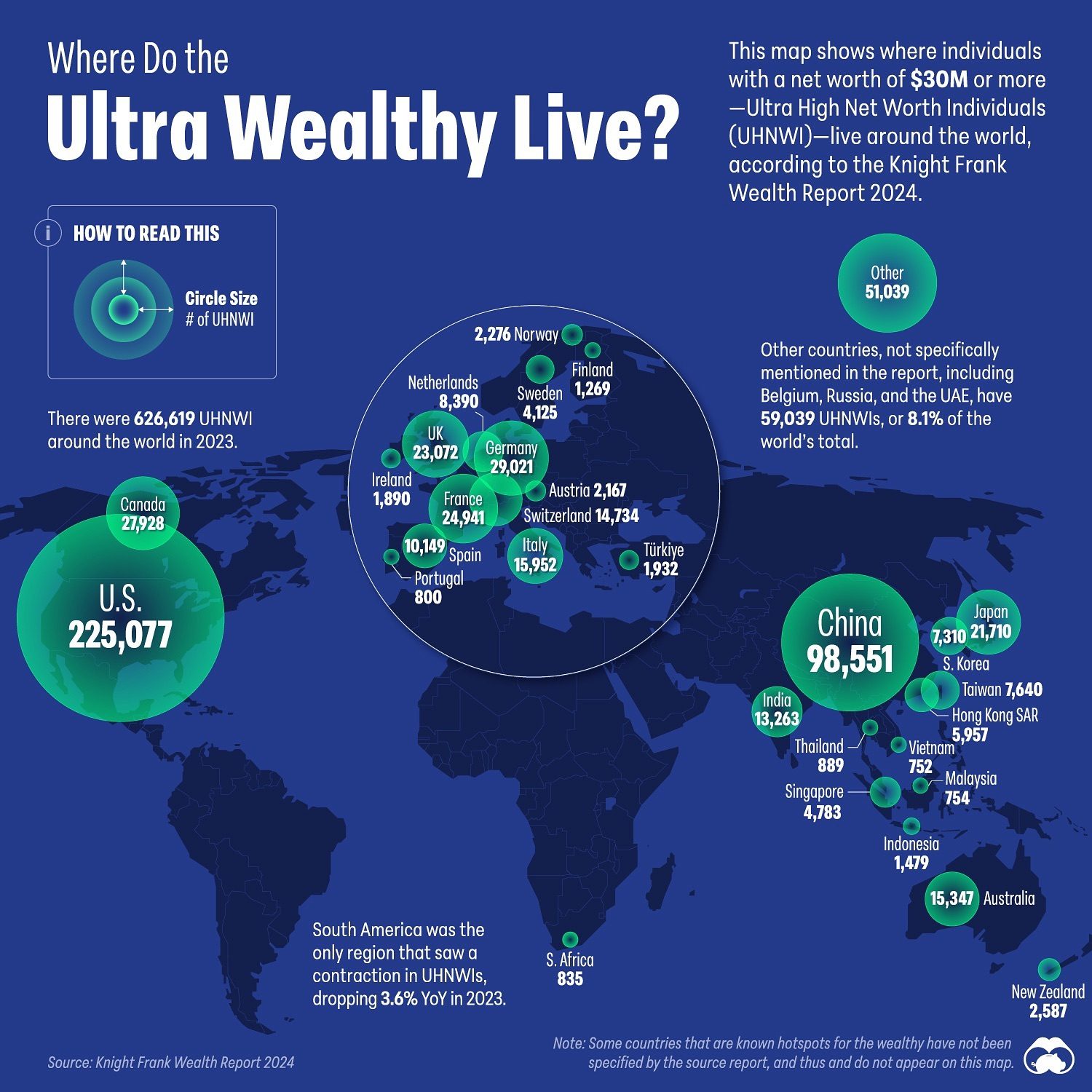
The United States and China top the list, with a combined 50% of the global UHNWI population. The United States boasts 225,000 UHNWIs, more than double the number in China, which has 98,551. These two nations' economic policies and financial systems play a crucial role in attracting and retaining wealth.
Europe: A Hub of Wealth
Europe is also a significant player in the global wealth distribution. Germany, for instance, has 29,021 UHNWIs, making it a key economic player. The UK closely follows with 23,072 UHNWIs. Switzerland and France also have substantial numbers, with 14,734 and 24,941 UHNWIs, respectively. These countries' stable economies, strong financial systems, and high quality of life are significant attractions.
Asia: The Emerging Wealth Hub
Asia, beyond China, is rapidly emerging as a wealth hub. Japan has 7,310 UHNWIs, while India has 13,263. Hong Kong SAR, with 5,957 UHNWIs, and Taiwan, with 7,640, are also notable. These numbers reflect the growing economic power of Asia and its increasing influence on the global stage.
Other Regions
Canada, with 27,928 UHNWIs, and Australia, with 15,347, are significant players in the global wealth landscape. These countries offer attractive investment opportunities and a high quality of life, making them popular among the wealthy. Sweden, with 1,269 UHNWIs, and Norway, with 2,276, are also notable, with their strong economies and favorable tax policies.
Key Takeaways
- Concentration of Wealth: The United States and China dominate the global UHNWI population, highlighting the importance of these countries in the global economy.
- European Influence: Europe remains a significant hub for UHNWIs, with countries like Germany, the UK, and Switzerland leading the way.
- Growing Asian Power: Asia's economic rise is reflected in the growing number of UHNWIs, particularly in countries like Japan, India, and Hong Kong SAR.
- Diverse Distribution: Beyond the top players, countries like Canada, Australia, Sweden, and Norway also have significant numbers of UHNWIs, indicating a diverse global distribution of wealth.
Practical Tips for Understanding UHNWIs
To better understand the dynamics and implications of UHNWIs, consider the following:
-
Economic Indicators: Study the economic policies, tax structures, and financial regulations of countries with high UHNWI concentrations. These factors significantly influence wealth accumulation and retention.
-
Investment Trends: Monitor investment trends and opportunities in regions with high UHNWI populations. Understanding where these individuals invest can provide valuable insights into global economic trends.
-
Quality of Life: Consider the quality of life and lifestyle factors that attract UHNWIs to specific regions. This includes healthcare, education, and cultural amenities.
-
Global Reports: Regularly review reports such as the Knight Frank Wealth Report, which provides detailed data on UHNWIs and their global distribution.
Important Takeaways
Whether you're an investor, economist, or simply interested in global wealth dynamics, understanding the distribution of UHNWIs offers valuable insights. These individuals play a crucial role in shaping economic policies, investment trends, and global financial systems. By studying their distribution and the factors that attract them to specific regions, you can gain a deeper understanding of the global economy.
Conclusion
The global distribution of UHNWIs is a complex and dynamic landscape, reflecting broader economic trends and investment opportunities. Countries like the United States, China, Germany, and the UK lead the way, while Asia and other regions are rapidly emerging as significant players. Understanding this distribution can provide valuable insights into the global economy and the factors that drive wealth accumulation and retention.
Watch the Reel
Questions readers ask
Which countries have the highest concentration of UHNWIs?
The United States and China lead the way in terms of the number of UHNWIs. Europe also has a significant presence, with countries like Germany, France, and the United Kingdom contributing substantially to the global UHNWI population.
What makes the U.S. a prominent hub for UHNWIs?
The robust financial markets, favorable tax policies, and diverse investment opportunities in the U.S. make it an attractive destination for UHNWIs. Additionally, the country's economic stability and business-friendly environment contribute to its status as a leading hub.
Why is Asia, particularly China, becoming a significant wealth hub?
Asia's rapid economic growth, especially in China, has led to a surge in the number of UHNWIs. Factors like urbanization, technological advancements, and a thriving entrepreneurial ecosystem are driving this trend, making Asia a key region for global wealth concentration.
What trends are expected for UHNWIs in 2023?
In 2023, it is expected that the distribution of UHNWIs will continue to diversify, with emerging markets in Asia and other regions gaining prominence. Additionally, there will likely be a growing emphasis on digital assets, sustainable investments, and philanthropic endeavors among UHNWIs.
How does the distribution of UHNWIs reflect broader economic trends?
The concentration of UHNWIs in certain countries often indicates strong economic indicators, such as a robust financial infrastructure, favorable regulatory environments, and lucrative investment avenues. Regions with a high number of UHNWIs are often experiencing economic growth and increased capital flow.
What are the implications of understanding the global distribution of UHNWIs for investors?
Understanding the global distribution of UHNWIs can provide valuable insights for investors. It helps in identifying potential markets for high-value investments, predicting economic trends, and recognizing regions with favorable conditions for wealth accumulation and investment opportunities.
What factors contribute to the wealth concentration in the world's wealthiest nations?
In the wealthiest nations, factors such as strong economic policies, advanced financial systems, stable political environments, and diverse investment opportunities contribute to wealth concentration. Additionally, the presence of established industries and innovation hubs facilitates the accumulation of wealth.
Recent articles
Fresh deep dives from the latest Reels we unpacked.




Comments
Be the first to comment.