Global Democracy Satisfaction: A Comparative Analysis
Regional Variations in Democracy Satisfaction
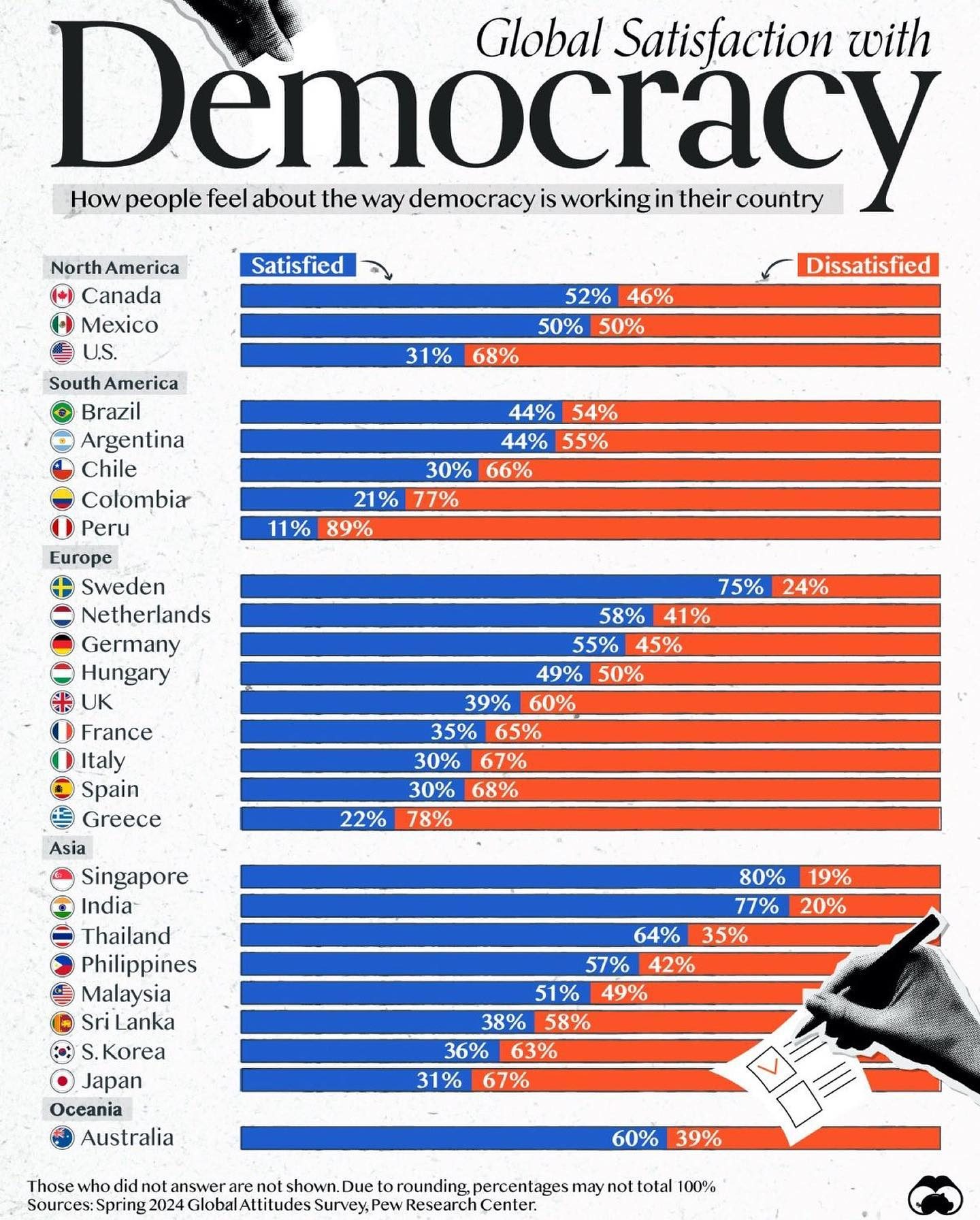
Democracy satisfaction varies widely across different regions, with some showing high levels of contentment while others grapple with significant dissatisfaction. In Asia, countries like Singapore and India stand out with over 76% of their populations expressing satisfaction with their democratic systems. This high level of satisfaction suggests that these countries' democratic processes are perceived as effective and responsive to their citizens' needs.
In contrast, countries in South America, such as Peru, and those in Europe, like Greece, Colombia, the U.S., and Spain, show the highest levels of dissatisfaction. Over 68% of people in these countries express dissatisfaction with their democratic systems. This indicates potential issues with governance, representation, or the overall functioning of democratic institutions in these regions.
North America: Mixed Results
North America presents a mixed picture. Canada stands out with higher satisfaction rates compared to the United States and Mexico. This suggests that Canadians generally feel more positively about their democratic processes, governance, and representation. The U.S., on the other hand, shows significant dissatisfaction, reflecting ongoing political tensions and perceived inefficiencies in the democratic system. Mexico's satisfaction rates are also concerning, indicating a need for improved democratic practices and governance.
South America: High Dissatisfaction
South America is marked by high levels of dissatisfaction, particularly in countries like Peru, Colombia, and Argentina. Various factors, including economic instability, governance issues, and social unrest, contribute to the widespread dissatisfaction with democratic systems in these countries. These issues highlight the need for reforms and improvements in governance to better meet the needs and expectations of the population.
Europe: Varied Satisfaction Levels
Europe exhibits a diverse range of satisfaction levels. Countries like Sweden and the Netherlands show relatively higher satisfaction rates, indicating effective democratic systems that meet the needs of their citizens. In contrast, countries like Greece, Spain, and Italy face significant dissatisfaction. Economic challenges, governance issues, and political instability are likely contributing factors. The UK and France also show varied levels of dissatisfaction, suggesting a need for targeted reforms to address specific issues affecting democratic satisfaction.
Asia: High Satisfaction in Key Countries
Asia presents a mixed picture, with countries like Singapore and India showing high levels of satisfaction. Over 76% of the population in these countries express contentment with their democratic systems, reflecting effective governance and responsive democratic institutions. Thailand, the Philippines, and Sri Lanka, on the other hand, show varied levels of satisfaction, indicating room for improvement in democratic processes and governance. Japan and South Korea also exhibit mixed results, with some citizens expressing dissatisfaction with their democratic systems.
Oceania: Stability and Satisfaction
Oceania, represented primarily by Australia, shows relatively higher satisfaction rates. This suggests that the democratic systems in place are generally effective and responsive to the needs of the population. However, the lack of data from other countries in the region limits a comprehensive analysis.
Practical Tips for Improving Democracy Satisfaction
Strengthen Democratic Institutions
Ensuring the strength and independence of democratic institutions is crucial. This includes robust judiciaries, effective legislatures, and accountable executives. Strengthening these institutions can enhance public trust and satisfaction with democratic systems.
Enhance Transparency and Accountability
Transparency and accountability are essential for democratic satisfaction. Governments should implement measures to ensure transparency in decision-making processes and hold public officials accountable for their actions. This includes timely disclosure of information and effective mechanisms for public oversight.
Foster Inclusive Participation
Inclusive participation is key to democratic satisfaction. Governments should create opportunities for citizens to participate in decision-making processes and have their voices heard. This includes promoting civic engagement, facilitating public consultations, and ensuring equal representation in governance.
Address Economic and Social Issues
Economic and social issues significantly impact democracy satisfaction. Governments should address economic inequalities, unemployment, and social disparities to enhance public trust and satisfaction with democratic systems.
Promote Good Governance
Good governance practices are crucial for democracy satisfaction. This includes efficient and effective public services, ethical conduct in governance, and the rule of law. Promoting these practices can enhance public trust and satisfaction with democratic systems.
Important Takeaways
- High Satisfaction in Asia: Countries like Singapore and India show over 76% satisfaction with their democratic systems, reflecting effective governance and responsive democratic institutions.
- Dissatisfaction in South America and Europe: Countries in South America and Europe, such as Peru, Greece, Colombia, the U.S., and Spain, show high levels of dissatisfaction, indicating potential issues with governance, representation, or democratic processes.
- Mixed Results in North America: Canada shows higher satisfaction rates compared to the U.S. and Mexico, highlighting the need for targeted improvements in democratic practices in North America.
- Varied Satisfaction in Asia: While Singapore and India show high satisfaction, countries like Thailand, the Philippines, and Sri Lanka exhibit varied levels, indicating room for improvement in democratic processes and governance.
- Promote Good Governance: Strengthening democratic institutions, enhancing transparency, fostering inclusive participation, addressing economic and social issues, and promoting good governance are practical ways to improve democracy satisfaction.
Conclusion
Democracy satisfaction varies significantly across different regions and countries, reflecting a complex interplay of factors influencing public perceptions of democratic systems. High satisfaction in countries like Singapore and India highlights the importance of effective governance and responsive democratic institutions. In contrast, high dissatisfaction in countries like Peru, Greece, and Spain underscores the need for targeted reforms and improvements in governance. By strengthening democratic institutions, enhancing transparency, fostering inclusive participation, addressing economic and social issues, and promoting good governance, countries can enhance public trust and satisfaction with their democratic systems.
Watch the Reel
Questions readers ask
Why are Singapore and India notable in global democracy satisfaction rankings?
Singapore and India are notable because they have high levels of citizen satisfaction with their democratic systems. In both countries, over 76% of the population expressed contentment, indicating that they perceive their democratic processes to be effective and responsive to their needs.
What is the current picture of democracy satisfaction in North America?
Northern America presents a mixed picture. Unlike South America it doesn't have widespread dissatisfaction. However, it still presents a mixed picture, with varying levels of satisfaction and dissatisfaction across different regions and demographics.
Which countries in South America show the highest levels of dissatisfaction with democracy?
Countries like Peru and Colombia in South America show the highest levels of dissatisfaction with their democratic systems. Over 68% of people in these countries express dissatisfaction, indicating significant concerns or grievances with their democratic processes.
How does Europe compare to other regions in terms of democracy satisfaction?
Europe shows a mix of satisfaction and dissatisfaction, with countries like Greece and Spain exhibiting high levels of dissatisfaction. Over 68% of people in these countries express dissatisfaction, similar to trends seen in some South American countries and Colombia.
What can be inferred from the high percentage of democracy satisfaction in India and Singapore?
The high percentage of democracy satisfaction in India and Singapore suggests that a significant majority of their citizens believe their voices are heard, and their democratic systems are functioning well. This is likely due to effective governance and responsive political systems.
What is the percentage of democracy satisfaction in India and Singapore?
Over 76% of the population in both India and Singapore express satisfaction with their democratic systems, making these countries stand out globally for their high levels of citizen contentment.
Which countries have the highest democracy satisfaction rates?
Countries like India and Singapore have the highest democracy satisfaction rates, with over 76% of their populations expressing contentment with their democratic systems. These high satisfaction rates indicate that citizens in these countries generally perceive their democratic processes to be effective and responsive.
Recent articles
Fresh deep dives from the latest Reels we unpacked.




Comments
Be the first to comment.