Public Debt-to-GDP Ratios: Current State and Future Projections
Global debt is a critical metric that affects economic stability and growth. As of the first quarter of 2023, total global debt has surged to nearly $305 trillion. Over the next five years, this number is expected to rise even further, raising concerns about government leverage in an environment marked by high interest rates and slower economic growth. These projections are based on the World Economic Outlook (April 2023 update) from the International Monetary Fund (IMF).
Context: Why This Matters
Public debt-to-GDP ratios are a key indicator of a country's fiscal health. These ratios help policymakers and economists understand the sustainability of a country's debt levels relative to its economic output. Countries with high debt-to-GDP ratios may face challenges in servicing their debt, especially in times of economic downturns or financial crises. The projections from the IMF highlight the need for careful fiscal management and policy adjustments to mitigate the risks associated with rising debt levels.
Main Discussion
Global Trends in Public Debt-to-GDP Ratios
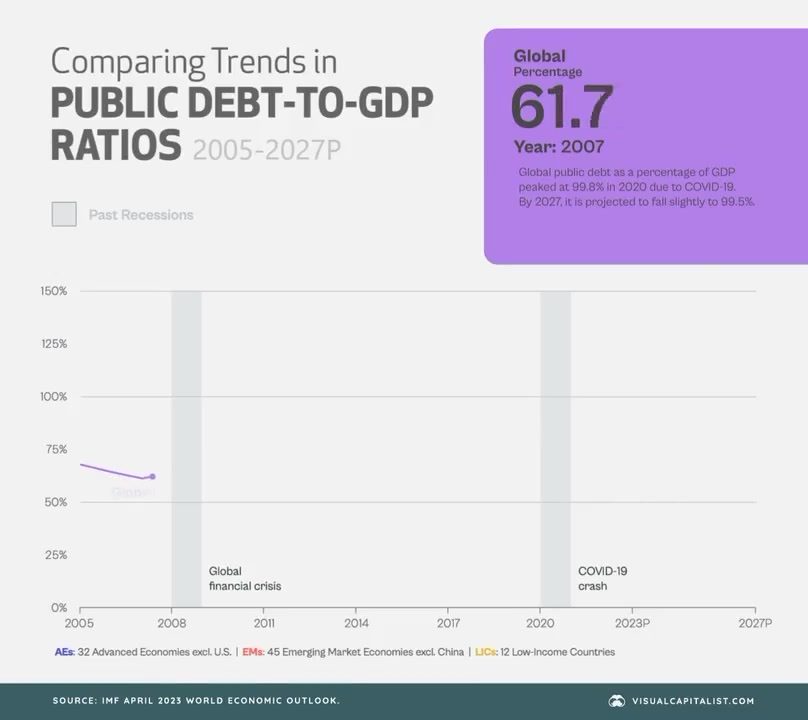
Global public debt as a percentage of GDP has experienced significant fluctuations over the past two decades. The 2008 global financial crisis and the 2020 COVID-19 crash are two key events that have left lasting impacts on global debt levels. The global financial crisis led to a spike in debt-to-GDP ratios as governments implemented stimulus packages and economic recovery measures. The COVID-19 pandemic further exacerbated this trend, pushing global public debt to its highest levels.
From 2005 to 2027, the global debt-to-GDP ratio has shown a general upward trend, with notable increases during economic downturns. The IMF projects that this ratio will continue to rise over the next five years, driven by factors such as fiscal stimulus measures, slower economic growth, and increasing interest rates.
Regional Differences
The trends in public debt-to-GDP ratios vary significantly across different regions. Advanced economies, excluding the U.S., have seen a steady increase in their debt-to-GDP ratios, driven by aging populations, rising healthcare costs, and slower economic growth. Emerging market economies, excluding China, have also experienced an increase in their debt levels, although the pace of growth has been more moderate compared to advanced economies.
China, the world's second-largest economy, has seen a dramatic rise in its public debt-to-GDP ratio over the past decade. As of 2018, China's public debt-to-GDP ratio stood at 133.5%, and it is forecast to reach 105.9% by 2027. This increase reflects China's significant infrastructure investments and economic stimulus measures, as well as its efforts to support economic growth.
The United States, the world's largest economy, has the highest public debt-to-GDP ratio among the major economies. The COVID-19 pandemic led to a substantial increase in U.S. public debt, with the debt-to-GDP ratio reaching 134% by 2023. This rise reflects the U.S. government's massive fiscal stimulus and relief packages implemented in response to the pandemic.
Lower-income countries (LICs) have relatively lower public debt-to-GDP ratios compared to advanced and emerging market economies. However, these ratios are projected to remain steady between 2023 and 2027. This stability reflects the limited fiscal space and borrowing capacity of LICs, which are often more dependent on external financing and aid.
Practical Tips
For policymakers and economists, understanding the drivers of public debt-to-GDP ratios is crucial for formulating effective fiscal policies. Here are some practical tips to manage public debt levels:
Promote Economic Growth
Sustainable economic growth is essential for reducing public debt-to-GDP ratios. Policies aimed at fostering innovation, entrepreneurship, and productivity can help boost economic output, making it easier to service debt.
Implement Fiscal Discipline
Maintaining fiscal discipline is key to managing public debt levels. Governments should aim to balance their budgets, reduce wasteful spending, and prioritize investments in infrastructure and other productive assets.
Monitor Interest Rates
Interest rates play a significant role in determining the cost of servicing public debt. Central banks should adopt prudent monetary policies to keep interest rates in check, thereby reducing the burden of debt servicing.
Strengthen Financial Systems
A robust financial system can help mitigate the risks associated with high public debt levels. Strengthening financial institutions, enhancing regulatory frameworks, and promoting financial inclusion can help ensure the stability and resilience of the financial system.
Foster International Cooperation
International cooperation can help address the challenges posed by high public debt levels. Countries should collaborate to develop global standards and best practices for managing public debt, share knowledge and expertise, and provide support to countries in need.
Important Takeaways
Public debt-to-GDP ratios are a critical metric for assessing a country's fiscal health. The current trends and future projections highlight the need for prudent fiscal management and policy adjustments to mitigate the risks associated with rising debt levels. Key takeaways include:
- The global debt-to-GDP ratio is expected to rise further over the next five years, driven by factors such as fiscal stimulus measures, slower economic growth, and increasing interest rates.
- The trends in public debt-to-GDP ratios vary significantly across different regions, reflecting the unique economic and fiscal challenges faced by each region.
- Policymakers and economists should prioritize sustainable economic growth, fiscal discipline, and financial stability to manage public debt levels effectively.
Conclusion
Global public debt levels are at an all-time high, and the projections for the next five years paint a concerning picture. Understanding the drivers and trends in public debt-to-GDP ratios is crucial for policymakers and economists to navigate the challenges posed by rising debt levels. By adopting prudent fiscal policies, promoting sustainable economic growth, and fostering international cooperation, countries can mitigate the risks associated with high public debt levels and ensure long-term economic stability.
Watch the Reel
Questions readers ask
What is the current level of global debt and how is it expected to change by 2027?
As of early 2023, global debt stands at nearly $305 trillion. The IMF projects that this amount will continue to rise over the next five years, with significant increases expected in both developed and developing economies.
How do high interest rates impact global debt trends?
High interest rates increase the cost of borrowing, making it more expensive for governments to service their debts. This can lead to slower economic growth, as governments may need to redirect funds from other areas to cover interest payments.
Which economies are most at risk due to the rising global debt levels?
Less-developed countries and those with high public debt-to-GDP ratios are most at risk. These economies may struggle with debt sustainability, especially in an environment of high interest rates and slower economic growth.
What role does the IMF play in global debt trends?
The IMF provides projections and analyses of global debt trends through reports like the World Economic Outlook. These insights help governments and institutions understand the potential risks and make informed decisions about debt management and economic policies.
How might China's lending practices influence global debt trends?
China's significant lending to other countries, particularly in less-developed regions, can contribute to an increase in global debt. However, it can also stimulate economic activity in recipient countries, which can lead to growth and potentially offset the debt burden.
What are some potential consequences of the projected debt crisis by 2027?
A debt crisis by 2027 could lead to reduced public spending on essential services, increased financial market volatility, and economic instability. Countries may face challenges in maintaining fiscal sustainability, potentially leading to financial crises in some regions.
How do public debt-to-GDP ratios help in understanding economic health?
Public debt-to-GDP ratios provide a snapshot of a country's fiscal health by comparing its debt levels to its economic output. A high ratio may indicate potential difficulties in repaying debts, while a low ratio suggests better financial stability and a lower risk of default.
Recent articles
Fresh deep dives from the latest Reels we unpacked.




Comments
Be the first to comment.