Global Debt Reaches New Heights in 2024
Global debt has surged to unprecedented levels, reaching $315 trillion by the first quarter of 2024. This monumental figure represents a staggering increase of $1.3 trillion in just three months, highlighting a period of significant economic shifts and financial challenges.
Context / Why This Matters
The global debt landscape is a critical component of international finance, impacting everything from interest rates to GDP growth. Understanding the dynamics of global debt is essential for policymakers, investors, and economists alike. The recent surge in debt, particularly following the COVID-19 pandemic, has had profound implications for financial stability and economic recovery.
The Role of Non-Financial Corporations
Non-financial corporations now hold the largest share of global debt, totaling $94.1 trillion. This figure underscores the significant role that private businesses play in the global economy. Corporations have been leveraging debt to fund operations, investments, and expansions, especially during periods of economic uncertainty.
Government Borrowings
Following closely behind non-financial corporations, government borrowings stand at $91.4 trillion. Governments have been a key driver of debt accumulation, particularly as they implemented fiscal stimulus measures to mitigate the economic fallout from the pandemic. These measures, while necessary for economic stabilization, have contributed to the overall increase in global debt.
Main Discussion
The Impact of the COVID-19 Pandemic
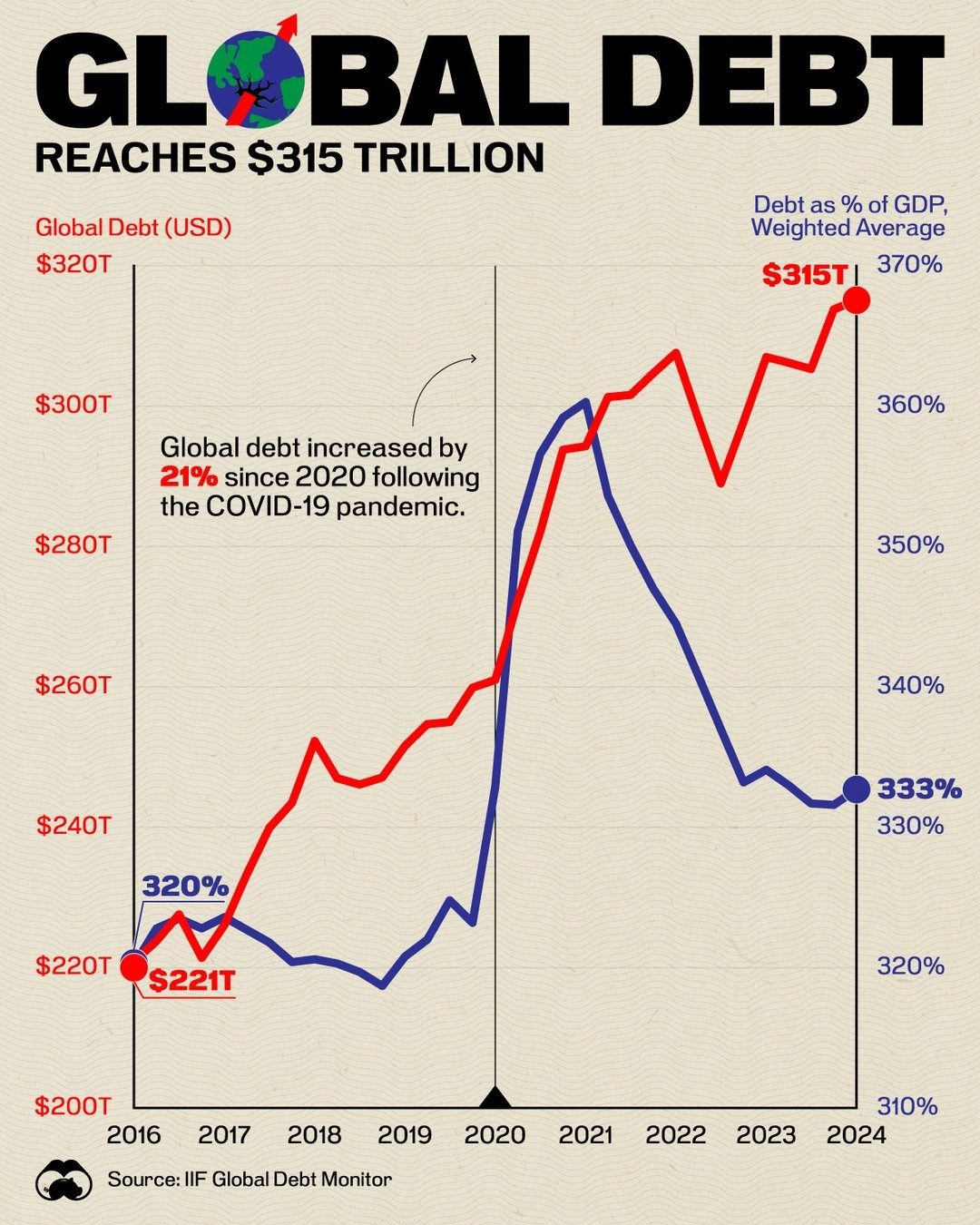
The COVID-19 pandemic has had a monumental impact on global debt levels. The infographic from the Institute of International Finance (IIF) highlights a 21% increase in global debt since 2020. This surge can be attributed to the massive government spending and economic relief packages aimed at supporting businesses and individuals during the pandemic.
Trends from 2016 to 2024
The infographic provides a comprehensive view of global debt trends from 2016 to 2024. This period includes both pre-pandemic stability and the post-pandemic economic recovery. The data shows a steady increase in global debt, both in absolute terms and as a percentage of GDP. For example, in 2016, global debt stood at around $220 trillion, or approximately 320% of GDP. By 2024, it has risen to $315 trillion, or 370% of GDP.
Debt as a Percentage of GDP
The debt as a percentage of GDP is a crucial metric for assessing the sustainability of global debt. A higher percentage indicates that a country or the global economy is carrying a heavier debt burden relative to its economic output. The weighted average debt as a percentage of GDP has risen from 320% in 2016 to 370% in 2024, reflecting the increasing reliance on debt to support economic activity.
Visualizing the Data
The infographic effectively illustrates the growth of global debt through a line graph. It compares the debt in USD trillions and as a percentage of GDP, providing a clear visual representation of the trends. This visualization helps in understanding the magnitude of the debt increase and its impact on the global economy.
Practical Tips
Monitoring global debt trends is essential for making informed financial decisions. Here are some practical tips for staying updated and navigating the debt landscape:
Stay Informed with Reliable Sources
Rely on credible sources such as the Institute of International Finance (IIF) for accurate and up-to-date information on global debt. Their reports and data can provide valuable insights into debt trends and their economic implications.
Understand the Impact on Interest Rates
Global debt levels can influence interest rates, affecting everything from mortgage rates to corporate borrowing costs. Staying informed about debt trends can help in predicting interest rate movements and adjusting financial strategies accordingly.
Assess Economic Stability
High levels of global debt can indicate economic instability. Keep an eye on debt-to-GDP ratios and other economic indicators to assess the overall health of the global economy. This information can guide investment decisions and risk management strategies.
Important Takeaways
Global debt has reached a historic high, driven by government borrowings and non-financial corporations. The impact of the COVID-19 pandemic has been particularly significant, contributing to a 21% increase in global debt since 2020. Understanding these trends and their implications is crucial for navigating the global financial landscape.
Conclusion
The surge in global debt to $315 trillion underscores the economic challenges and shifts that the world has experienced in recent years. Non-financial corporations and governments are the primary holders of this debt, with significant implications for economic stability and growth. By staying informed about these trends and their potential impacts, individuals and organizations can make better-informed decisions and navigate the complex global financial landscape.
Watch the Reel
Questions readers ask
What are the primary drivers behind the global debt surge to $315 trillion by 2024?
The primary drivers include the COVID-19 pandemic, which necessitated significant government spending and economic relief measures as well as the borrowing activities of non-financial corporations. This situation is a result of the economic challenges faced in the wake of the pandemic.
How has the increase in global debt affected interest rates and GDP growth?
The surge in global debt has placed upward pressure on interest rates as governments and corporations compete for financing. This increase can slow GDP growth, as higher interest rates make borrowing more expensive, potentially deterring investment and consumer spending.
What is the significance of non-financial corporations in the global debt landscape of 2024?
Non-financial corporations have played a substantial role in the global debt surge. Many companies have taken on debt to navigate economic uncertainties, invest in growth opportunities, and maintain liquidity during the pandemic.
What impact has the COVID-19 pandemic had on global debt levels?
The COVID-19 pandemic has significantly impacted global debt levels. Governments worldwide have increased borrowing to fund relief packages and support economic recovery. Additionally, many businesses have taken on debt to stay afloat during economic disruptions.
How does the $315 trillion global debt figure compare to previous years?
The $315 trillion figure represents a dramatic increase from previous years, with the debt level rising by $1.3 trillion in just three months. This rapid acceleration underscores the unprecedented economic challenges and financial responses to the pandemic.
What are the potential implications of the global debt surge for financial stability?
The global debt surge poses significant risks to financial stability. High levels of debt can lead to increased default risks, market volatility, and potential crises if economic conditions worsen. These factors can create uncertainty and instability in the global financial system.
Related deep dives
Similar reads based on topic and creator.


Recent articles
Fresh deep dives from the latest Reels we unpacked.




Comments
Be the first to comment.