Urbanization and Economic Growth: Global Cities with the Largest Working-Age Populations
In recent years, urbanization has accelerated, making cities the powerhouses of global economies. The backbone of these economic engines is the working-age population, defined as individuals aged 25–64. These individuals drive local economies through their labor, consumption, and innovation. Focusing on this demographic helps us understand the economic dynamism of cities worldwide.
Why This Matters
The concentration of working-age populations in cities is not just a demographic trend; it's an economic phenomenon. Cities with large working-age populations tend to have robust labor markets, high levels of consumer spending, and significant innovation hubs. Understanding which cities have the largest working-age populations can provide insights into future economic trends and urban development strategies.
The Power of Urbanization
Urbanization has been a critical driver of economic growth for centuries. As more people move to cities, economies become more productive, innovative, and interconnected. Cities with large working-age populations are often at the forefront of technological advancements, policy-making, and economic development. These cities attract businesses, create jobs, and foster a vibrant cultural scene, making them magnets for talent and investment.
The Role of the Working-Age Population
The working-age population (25–64) is crucial for several reasons:
- Economic Contribution: This demographic constitutes the bulk of the labor force, driving productivity and innovation.
- Consumer Power: These individuals have significant purchasing power, fueling local economies through consumption and spending.
- Savings and Investment: The working-age population often saves and invests, contributing to economic stability and growth.
The Largest Working Age Population Cities
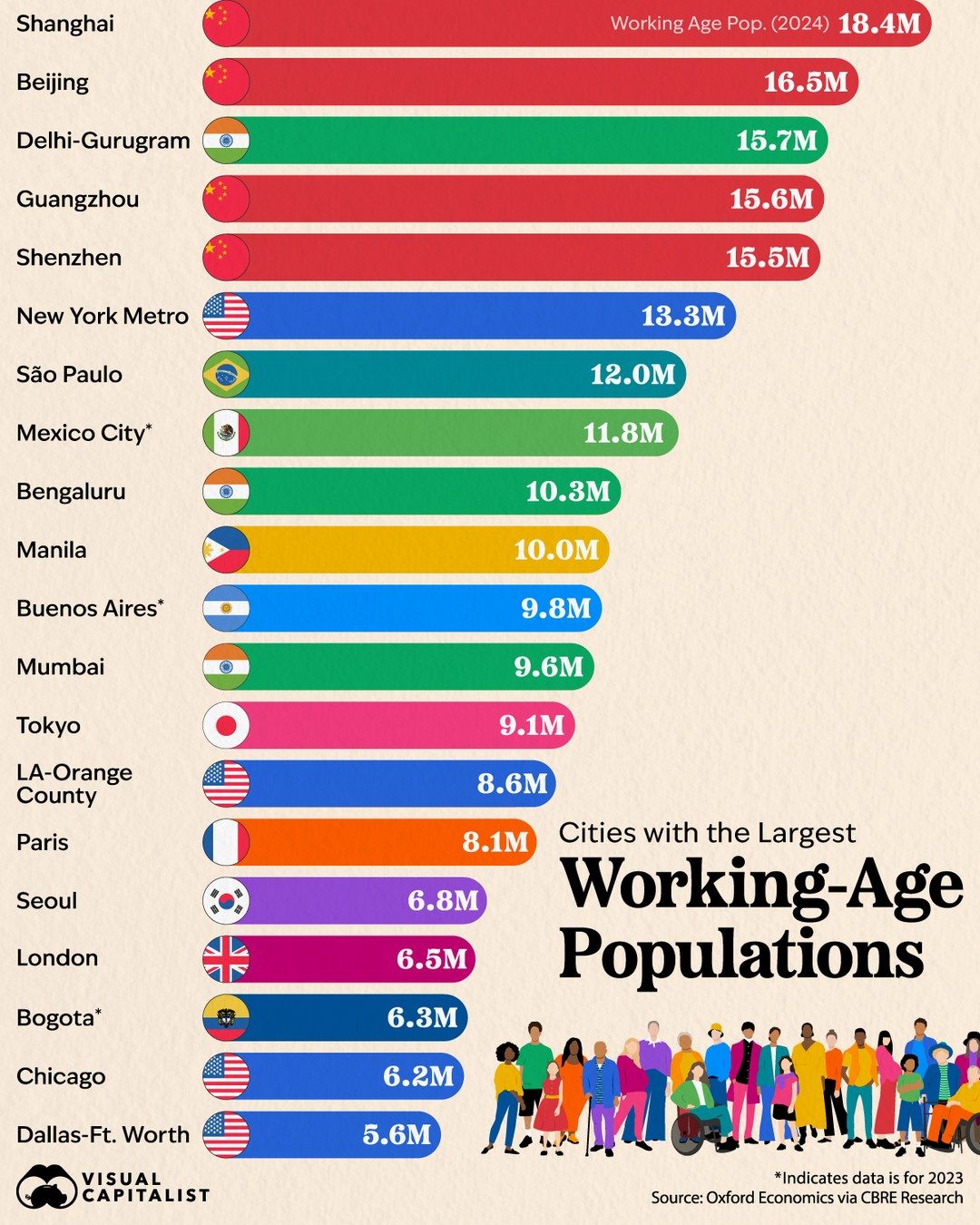
The data, sourced from Oxford Economics via CBRE Research, indicates the following cities have the largest working-age populations:
Top Five Cities
- Shanghai, China: With 18.4 million people in the working-age group, Shanghai tops the list. As a global financial hub, Shanghai's large working-age population supports its status as a key driver of China’s economy.
- Beijing, China: The capital city of China, Beijing, is not far behind, with its substantial working-age population contributing to both national and global economic trends.
- Delhi–Gurugram, India: This metropolitan area in India is a major contributor to the country’s economic growth, driven by its large working-age population.
- Guangzhou, China: Known as a manufacturing and economic hub, Guangzhou’s working-age population supports its industrial and commercial sectors.
- Shenzhen, China: Another Chinese city, Shenzhen, is a powerhouse in technology and innovation, with its large working-age population supporting these advancements.
Global Hotspots
Other notable cities with large working-age populations include:
- New York Metro, USA: As a global financial and cultural center, New York’s working-age population is a significant contributor to its economic prowess.
- São Paulo, Brazil: This megacity is the economic heart of Brazil, driven by its large working-age population.
- Mexico City, Mexico: Mexico City’s working-age population, based on 2023 data, supports its role as a key economic center in Latin America.
- Bengaluru, India, and Mumbai, India: Both cities are tech hubs and financial centers, respectively, driven by their large working-age populations. Paris, France, and Tokyo, Japan also make the list for their significant working-age populations.
The Impact of Urbanization on Economic Growth
Urbanization leads to several economic benefits:
- Economic Productivity: Cities tend to have higher productivity levels due to better infrastructure, access to resources, and a larger talent pool.
- Innovation and Entrepreneurship: Urban centers are often hotbeds for startups and innovation, fueled by a diverse and skilled workforce.
- Infrastructure Development: The concentration of people and economic activity in cities drives investment in infrastructure, which further enhances productivity and quality of life.
Practical Tips for Leveraging Urbanization
Cities and governments can capitalize on the benefits of urbanization by focusing on the following:
Invest in Infrastructure
Infrastructure development is crucial for supporting a growing urban population. This includes public transportation, housing, and digital infrastructure. Investing in these areas can enhance productivity, attract businesses, and improve the quality of life for residents.
Foster Innovation and Entrepreneurship
Cities should create an environment conducive to innovation and entrepreneurship. This can be achieved through policies that support startups, incubators, and innovative research. Encouraging a culture of entrepreneurship can drive economic growth and job creation.
Promote Public Health and Education
A healthy and educated workforce is vital for economic productivity. Cities should invest in public health systems and education to ensure a skilled and productive workforce. This includes investing in schools, universities, and healthcare facilities.
Important Takeaways
Understanding the dynamics of working-age populations in cities is crucial for economic planning and development. Here are the key takeaways:
- China Leads: Four of the top five cities with the largest working-age populations are in China, highlighting the country's role as a global economic powerhouse.
- Economic Drivers: Cities with large working-age populations are often economic engines, driving productivity, innovation, and consumer spending.
- Investments: Investment in infrastructure, education, and health is essential for sustaining economic growth and improving quality of life in urban areas.
Conclusion
As urbanization accelerates, the role of cities in driving economic growth becomes even more pronounced. The concentration of working-age populations in major cities is a crucial factor in this phenomenon. By understanding and leveraging this demographic trend, cities can become more productive, innovative, and resilient. Whether in China, India, or the United States, the economic power of urban centers will continue to shape the global economy.
Watch the Reel
Questions readers ask
Which global cities have the highest concentration of working-age populations?
The highest concentrations are typically found in megacities and major economic hubs. Examples include Tokyo, Delhi, Shanghai, and São Paulo. Cities with large working-age populations are often leaders in economic growth and innovation.
How does urbanization impact the working-age population in major cities?
Urbanization significantly increases the working-age population in cities, creating a dynamic labor market and fostering economic development. This influx of working-age individuals drives consumption, innovation, and overall economic productivity.
What is the impact of having a large working-age population in a city?
A large working-age population boosts a city's economic growth through increased labor, higher spending, and more innovation. It also creates a vibrant urban environment, attracting further investment and development.
How do working-age populations in cities contribute to economic growth?
Working-age populations contribute to economic growth by actively participating in the labor force, driving consumer spending, and fostering innovation. Their presence is crucial for sustaining and enhancing a city's economic dynamism.
Which factors influence the size of the working-age population in a city?
Several factors influence the size of the working-age population in a city, including migration patterns, birth rates, job opportunities, and quality of life. Cities with strong economies and ample job opportunities tend to attract and retain more working-age individuals.
What is the typical age range considered to be the working-age population?
The working-age population is typically defined as individuals aged 25 to 64. This age range is considered the most active in terms of labor force participation, consumption, and innovation.
How does the working-age population influence urban development trends?
The working-age population is a key driver of urban development trends, shaping infrastructure, housing, and services to meet the needs of this demographic. Cities with large working-age populations tend to invest more in public transportation, technology, and other amenities that support economic growth.
Related deep dives
Similar reads based on topic and creator.

Recent articles
Fresh deep dives from the latest Reels we unpacked.




Comments
Be the first to comment.