Real Estate Bubble Risks in Global Cities
Real estate markets in major cities around the world are facing significant pressure, with housing prices in cities like Miami, Zurich, and Tokyo outpacing local income and rent levels. This discrepancy raises concerns about the potential for housing bubbles, where prices are inflated beyond sustainable levels. Understanding these risks is crucial for investors, homebuyers, and policymakers alike.
Why this matters
In the fast-paced world of real estate, understanding which cities are at the highest risk of a housing bubble is pivotal for making informed decisions. Whether you're an investor looking to diversify your portfolio or a potential homebuyer considering a move, being aware of these risks can help you navigate the market more effectively. Additionally, policymakers need to be vigilant in monitoring these trends to implement measures that stabilize the market and prevent widespread financial fallout.
The Biggest Real Estate Bubble Risks
High-Risk Cities
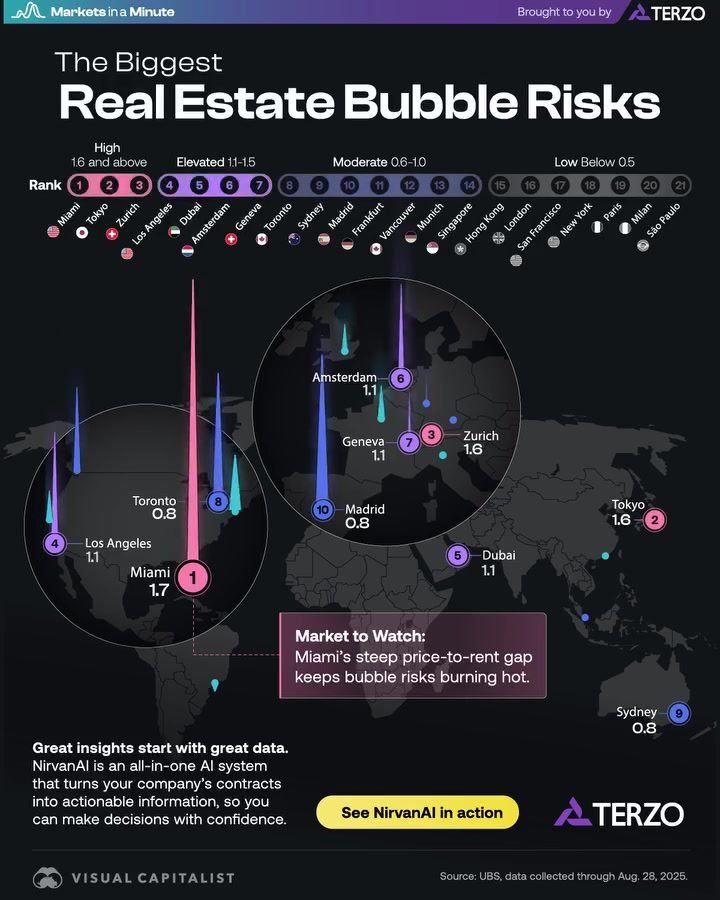
Several global cities are at a high risk of a real estate bubble. According to TERZO, Miami, Tokyo, and Zurich top the list. These cities are characterized by a significant price-to-rent gap, meaning that the cost of buying a property far exceeds what renters are willing to pay. This disparity is a clear indicator of a potential bubble.
Miami
Miami's real estate market is particularly concerning, with a steep price-to-rent gap that keeps bubble risks burning hot. The city's allure as a tourist destination and its appealing climate have driven demand, but the supply of affordable housing has not kept pace. This imbalance has led to soaring prices that are unsustainable for many residents.
Tokyo
Tokyo, a global financial hub and a city known for its high cost of living, is another hotspot for real estate bubble concerns. The city's dense population and limited land availability have pushed prices to unprecedented levels, making it one of the most expensive cities in the world to live in.
Zurich
Zurich, the financial capital of Switzerland, also faces significant risks. The city's robust economy and high standard of living have attracted a steady stream of wealthy residents, driving up property prices. However, the affordability gap between local incomes and housing costs is widening, raising concerns about a potential bubble.
Elevated and Moderate Risk Cities
While the risk is high in Miami, Tokyo, and Zurich, other cities are not far behind. Los Angeles, Dubai, and Geneva are among the cities with elevated risk levels. These cities also show signs of overheating, with prices rising faster than rents and local incomes.
Los Angeles
Los Angeles, known for its vibrant entertainment industry and desirable lifestyle, has seen a surge in real estate prices. The city's strict zoning laws and limited land availability have exacerbated the affordability crisis, pushing prices beyond what many residents can afford.
Dubai
Dubai, a global hub for luxury living and business, has become a magnet for international investment. The city's real estate market has seen significant growth, but the rapid price increases have raised concerns about sustainability and the potential for a bubble.
Geneva
Geneva, a city known for its high quality of life and international organizations, has also seen a surge in real estate prices. The city's desirability as a place to live and work has driven demand, but the limited supply of housing has led to steep price increases.
Low-Risk Cities
While many cities are grappling with high real estate risks, some cities are faring better. Cities like Amsterdam and Vancouver have relatively lower risks compared to their counterparts. These cities have implemented measures to stabilize their housing markets, such as stricter regulations on foreign buyers and increased housing supply.
Amsterdam
Amsterdam's approach to housing has focused on maintaining a balance between supply and demand. The city has implemented various policies to ensure affordable housing, which has helped keep real estate prices more stable.
Vancouver
Vancouver has also made efforts to curb speculative buying and stabilize its housing market. The city has introduced measures such as a foreign buyers' tax and increased rent control, which have helped mitigate some of the risks associated with rapid price increases.
The Data Behind the Risks
The data informing these assessments comes from UBS, a leading global financial services company. The information, collected through August 2025, provides a comprehensive view of the real estate markets in various cities. Cities are ranked based on their real estate bubble risk levels, categorized as High, Elevated, Moderate, and Low. This data offers valuable insights for making informed decisions in the real estate market.
Practical tips
For Investors
Investors should carefully consider the risks associated with high-risk cities. Diversifying your portfolio across different markets can help mitigate the impact of a potential bubble. It's also crucial to conduct thorough research and consult with financial advisors to make informed investment decisions.
For Homebuyers
For potential homebuyers, it's essential to assess your financial situation and consider the long-term implications of buying in a high-risk city. Factors such as job stability, local economic trends, and future market prospects should be taken into account before making a purchasing decision.
For Policymakers
Policymakers need to implement measures to stabilize the real estate market. This includes addressing supply constraints, regulating foreign buying, and encouraging the development of affordable housing. Effective policies can help prevent the formation of housing bubbles and ensure a more sustainable market.
Important takeaways
Global Market Trends
Real estate markets are influenced by a multitude of factors, including economic growth, population trends, and regulatory policies. Keeping an eye on global trends can provide valuable insights into potential risks and opportunities in different markets.
The Role of Data
Data plays a crucial role in understanding real estate market dynamics. Accurate and up-to-date information can help investors, homebuyers, and policymakers make informed decisions and navigate the complexities of the market more effectively.
Balancing Supply and Demand
Balancing the supply and demand for housing is essential for a stable real estate market. Policies that promote affordable housing and address supply constraints can help mitigate the risks associated with rapid price increases.
Conclusion
Understanding the risks of a real estate bubble in global cities is crucial for making informed decisions in the housing market. Cities like Miami, Tokyo, and Zurich are at the highest risk, while others like Amsterdam and Vancouver have taken steps to stabilize their markets. By staying informed and taking practical steps, investors, homebuyers, and policymakers can navigate the complexities of the real estate market more effectively.
Watch the Reel
Questions readers ask
Which global cities are currently at the highest risk for a real estate bubble?
Cities like Miami, Tokyo, and Zurich are currently at high risk. Housing prices in these cities have significantly outpaced local income and rent levels, indicating a potential price-to-rent imbalance.
What is a real estate bubble and why should I be concerned?
A real estate bubble occurs when housing prices inflate beyond sustainable levels. This can lead to market instability, impacting investors, homebuyers, and even the broader economy. Being aware of these risks can help you make informed decisions.
How does the price-to-rent ratio indicate market instability?
The price-to-rent ratio compares housing prices to local rent levels. When housing prices surpass rent levels, it can signal a potential bubble. This imbalance suggests that homes are overvalued, and prices may eventually correct, leading to market instability.
Why are cities like Miami and Tokyo at high risk for a real estate bubble?
Miami and Tokyo have experienced significant increases in housing prices that outstrip local income and rent levels. This rapid appreciation can lead to overvaluation and market instability, putting these cities at high risk for a real estate bubble.
What should investors and homebuyers consider when looking at global real estate markets?
Investors and homebuyers should evaluate the price-to-rent ratio and compare housing prices to local income levels. Additionally, they should stay informed about market trends and potential risks in the cities they are considering, so they can make well-informed decisions.
Recent articles
Fresh deep dives from the latest Reels we unpacked.




Comments
Be the first to comment.