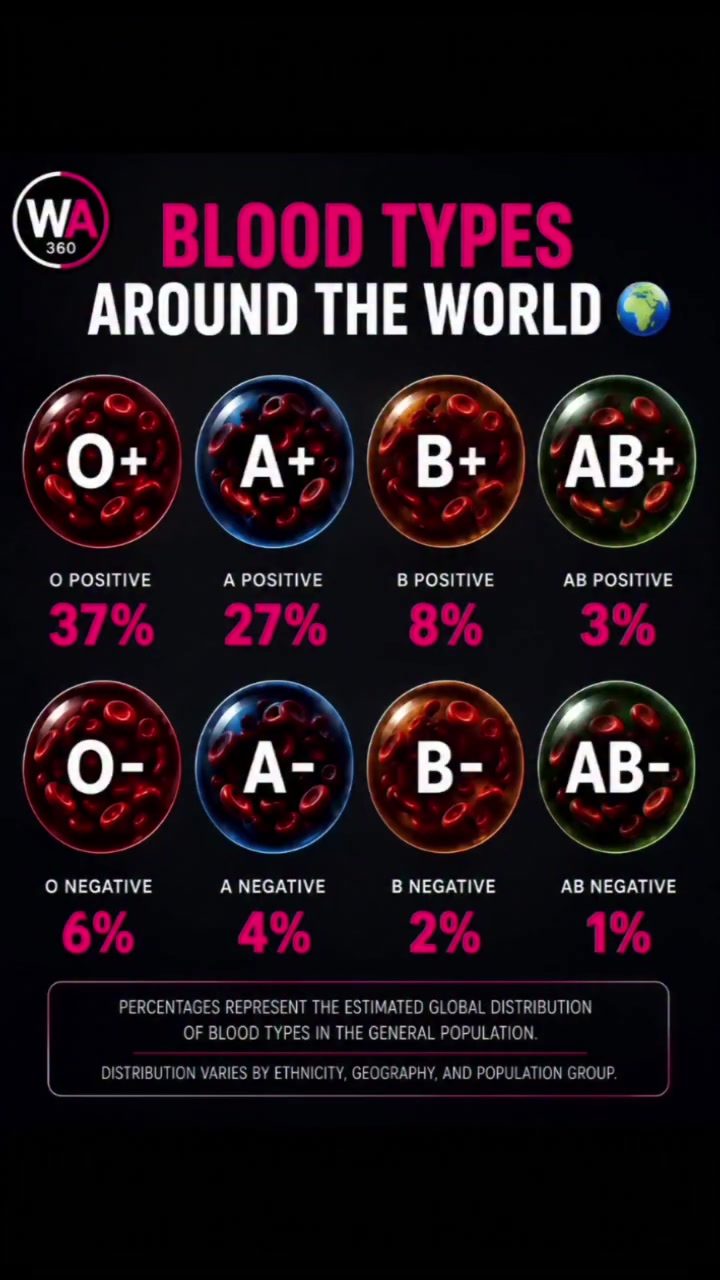
Blood Types Around the World
Blood types are one of the most critical biological traits that individuals carry. While O+ is the most common blood type worldwide, less common types like AB- are extremely rare, making every blood donation invaluable. The distribution of these types varies widely across countries, ethnicities, and population groups due to genetic and ancestral factors. This diversity is essential for maintaining adequate blood supplies, particularly in emergency medicine, surgeries, transfusions, and disaster response situations.
Why This Matters
Understanding the global distribution of blood types is vital. It aids medical professionals in managing blood supplies and ensuring that the right type is available when needed. Moreover, this knowledge can motivate individuals to donate blood, a life-saving act that can impact multiple lives.
The Global Distribution of Blood Types
Globally, here’s how blood types are distributed:
- O+: 37%
- A+: 27%
- B+: 8%
- AB+: 3%
- O-: 6%
- A-: 4%
- B-: 2%
- AB-: 1%
These percentages represent the estimated global distribution in the general population. However, it’s important to note that these figures can vary significantly based on ethnicity, geography, and specific population groups.
Regional Variations
Different regions around the world exhibit unique blood type distributions. For instance, in Europe, blood types A and O are more common, while in Asia, B and O types are more prevalent. In countries like China and Japan, the B+ blood type is more frequently found, whereas in Scandinavian countries, the A+ blood type is more common. These regional differences underscore the importance of diverse blood supplies.
Main Discussion
The Impact of Blood Type on Health
Blood type is more than just a label; it can influence health outcomes and susceptibility to certain diseases. For example, studies have shown that individuals with type O blood may have a lower risk of heart disease but a higher risk of ulcers. Conversely, those with type A blood may have a lower risk of heart disease but a higher risk of stomach cancer. Understanding these correlations can help in early detection and prevention of diseases.
The Role of Blood Types in Medical Procedures
Knowing your blood type is crucial for various medical procedures. In emergency situations, such as during a car accident or natural disaster, having the right blood type on hand can save lives. Similarly, during surgeries, transfusions, and organ transplants, matching blood types is essential to avoid complications.
The Importance of Blood Donation
Donating blood is a simple yet powerful act that can save lives. Every donation is screened and tested to ensure it meets safety standards. Regular donors are essential for maintaining a sufficient blood supply, especially for rare blood types. Encouraging others to donate can help build a diverse and reliable blood supply, ensuring that everyone has access to the lifesaving resources they need.
Practical Tips
Learning Your Blood Type
Knowing your blood type is the first step in being a responsible donor and patient. Here are some practical tips:
- Check Your Medical Records: Most people have their blood type listed in their medical records. Contact your healthcare provider to find out.
- Blood Donation Centers: Many blood donation centers offer blood type testing as part of the donation process. This is a great way to learn your blood type while also contributing to a critical cause.
- At-Home Kits: There are also at-home blood type testing kits available for purchase. These kits are easy to use and provide results within minutes.
Encouraging Blood Donation
Encouraging others to donate blood can help build a robust and diverse blood supply. Here are some ways to do that:
- Spread Awareness: Share information about the importance of blood donation on social media, in community groups, and among friends and family.
- Host Blood Drives: Organize blood drives in your community. Partner with local organizations and hospitals to make the process easy and accessible for potential donors.
- Recognize Donors: Recognize and thank donors for their contributions. Public recognition can motivate others to donate and build a culture of giving in your community.
Understanding the Rarity of Blood Types
While O+ is the most common blood type, others, like AB-, are extremely rare. Understanding the rarity of different blood types can help in motivating donors and ensuring a diverse blood supply. For example, encouraging individuals with rare blood types to donate regularly can help maintain a steady supply.
Important Takeaways
- Know Your Blood Type: Whether you’re a regular donor or simply curious, knowing your blood type can make a real difference.
- Blood Type Distribution Varies: The distribution of blood types varies across regions and populations, making diverse blood supplies essential.
- Donate Regularly: Regular blood donations are crucial for maintaining an adequate and diverse blood supply. Every donation has the potential to save multiple lives.
Conclusion
Understanding the global distribution of blood types is essential for maintaining adequate supplies and ensuring that everyone has access to the lifesaving resources they need. Whether you’re a regular donor or simply curious about human biology, knowing your blood type and encouraging others to donate can make a real difference. So, take a moment to learn your blood type, encourage others to donate, and help spread awareness about the importance of blood donation.
Watch the Reel
Questions readers ask
Why does blood type distribution vary by country and ethnicity?
Blood type distribution varies due to genetic and ancestral factors. Different populations have evolved with distinct blood type frequencies, influenced by historical migrations, genetic drift, and natural selection. For instance, blood type B is more common in Asia, while type A is prevalent in Europe.
What is the most common blood type worldwide?
The most common blood type globally is O+. This type is prominent in many populations, making it a highly sought-after blood type for transfusions. However, its prevalence can vary significantly by region.
How does understanding blood type distribution help in maintaining blood supplies?
Understanding blood type distribution helps medical professionals anticipate the demand for specific blood types. This knowledge ensures that hospitals and blood banks can maintain adequate supplies, particularly for rare types, and plan targeted donation drives to meet local needs.
Why is every blood donation considered invaluable?
Every blood donation is invaluable because it helps save lives in emergency situations and for medical procedures. Some blood types, like AB-, are extremely rare, so every unit of blood donated, regardless of type, is crucial for maintaining a diverse and sufficient blood supply.
How can knowing about global blood type distribution motivate blood donors?
Knowing about global blood type distribution can motivate donors by highlighting the unique value of their specific blood type. For example, someone with a rare blood type might feel especially compelled to donate, knowing their contribution is vital for those in need.
Which countries have the highest percentages of O+ blood type?
The O+ blood type is most prevalent in many countries, including the United States, the United Kingdom, and Australia. In these regions, O+ is often found in approximately 38% of the population, making it the most common blood type.
How does blood type geography influence emergency medicine and disaster response?
Blood type geography is crucial in emergency medicine and disaster response. Knowing the predominant blood types in a given region helps authorities prepare and manage blood supplies for potential emergencies, ensuring that the right blood types are available when needed.
Recent articles
Fresh deep dives from the latest Reels we unpacked.




Comments
Be the first to comment.