Aluminum Production: Global Statistics and Key Industries
Aluminum is a vital metal in modern industry, with a wide range of applications across various sectors. Understanding the global production landscape of aluminum is crucial for recognizing its impact on the economy and the environment.
Context / Why This Matters
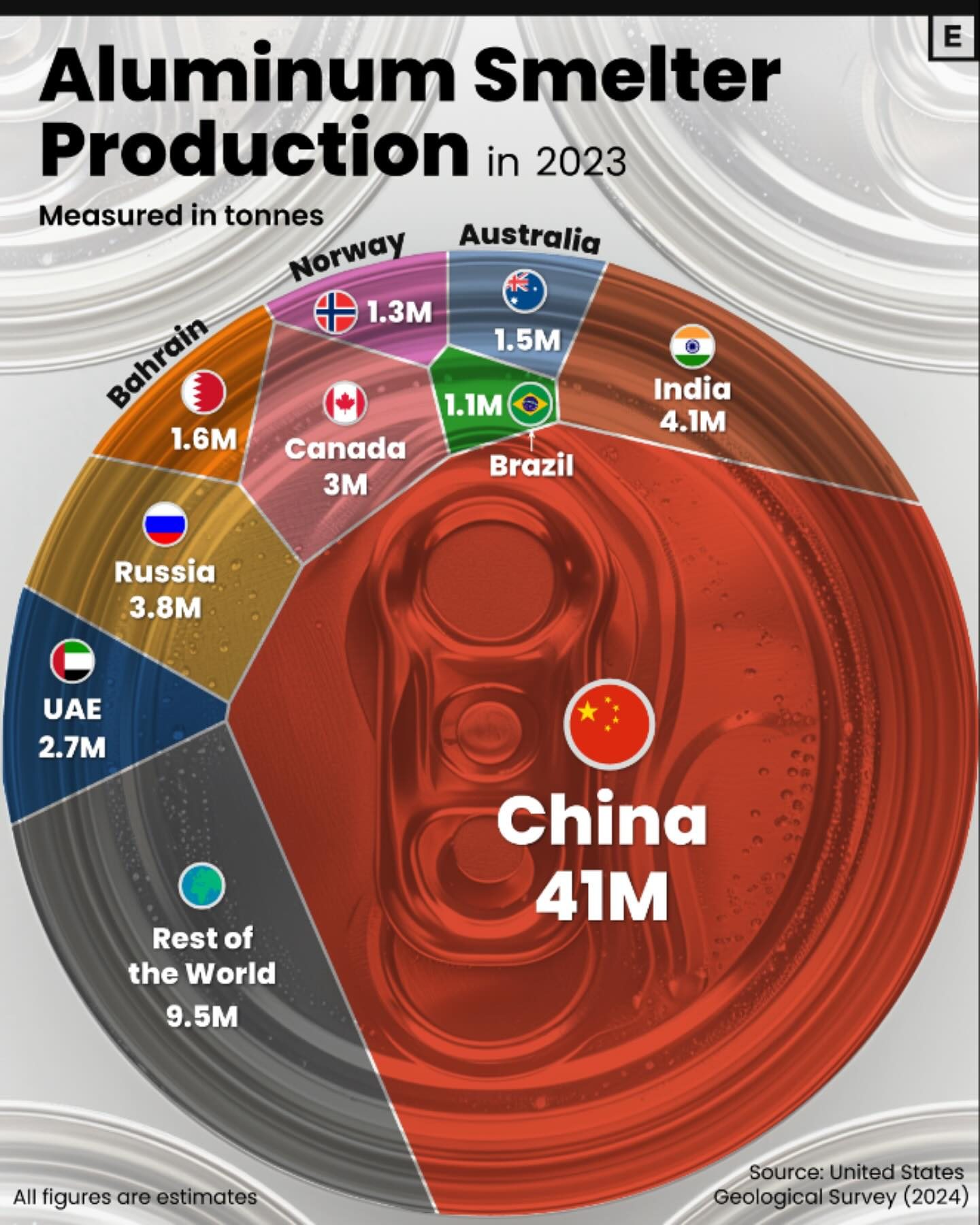
Aluminum production is a significant global industry, with the metal being used in various sectors such as construction, transportation, and packaging. As of 2023, an estimated 41 million tons of aluminum were produced in China alone. This represents a substantial portion of the global aluminum supply. The United States Geological Survey (USGS) reported that China has 60% of the aluminum smelter market.
Main discussion
Global Production by Country
The global aluminum production landscape is dominated by a few key countries. According to the latest data from the USGS, China leads the production of aluminum smelter, with a staggering 41 million tonnes in 2023, accounting for nearly 60% of global production. Other significant producers include the UAE, which produced 2.7 million tonnes, Russia with 3.8 million tonnes, and India contributing 4.1 million tonnes.
Other countries, such as Bahrain, Norway, Australia, and Canada, also have notable aluminum production capabilities, although on a smaller scale compared to China. Bahrain produced 1.6 million tonnes, Norway 1.3 million tonnes, Australia 1.5 million tonnes, and Canada 3 million tonnes. The collective production from the rest of the world amounts to approximately 9.5 million tonnes.
Industrial Applications of Aluminum
Aluminum is a versatile metal with widespread industrial applications. A significant portion of the aluminum produced goes into construction, with an estimated 25% of the total production in 2023. This is due to aluminum’s durability, lightweight, and corrosion resistance, making it a popular building material for skyscrapers, bridges, and residential structures. Transportation is another major consumer of aluminum, utilizing 23% of the global production. The lightweight nature of the metal makes it ideal for manufacturing vehicles, aircraft, and marine vessels, reducing fuel consumption and emissions.
Packaging is another critical area where aluminum is extensively used. In 2023, around 17% of the aluminum produced was allocated for packaging. Aluminum’s malleability and recyclability make it a preferred material for food and beverage packaging. It is commonly used in cans, foils, and a variety of containers that ensure the preservation of product freshness.
Practical Tips
For those involved in the aluminum industry or considering investments in this sector, it is essential to stay informed about the production trends and key players in the market. Understanding the distribution of aluminum production across different countries can provide valuable insights into supply chain dynamics and potential market disruptions.
Monitoring Market Trends
Keeping an eye on market trends and updates from reliable sources like the USGS can help industries anticipate changes in aluminum supply and demand. This information is crucial for strategic planning and resource allocation.
Diversifying Suppliers
Companies reliant on aluminum for their products should consider diversifying their supplier base. While China remains the dominant producer, relying solely on one country can pose risks. Establishing partnerships with multiple suppliers in different regions can mitigate supply chain disruptions and ensure a steady supply of raw materials.
Important Takeaways
The aluminum production landscape is heavily dominated by China, which produced 41 million tonnes in 2023. This dominance highlights the country's significant role in the global aluminum market. Understanding the distribution of aluminum production and its industrial applications is crucial for industries relying on this versatile metal. Keeping abreast of market trends, monitoring production figures, and diversifying supplier bases are practical strategies for navigating the aluminum market effectively.
Conclusion
Aluminum remains a cornerstone of modern industry, with its production and usage spanning various sectors. Whether you are involved in construction, transportation, or packaging, staying informed about aluminum production statistics and trends can provide valuable insights and strategic advantages. By understanding the key players and applications of aluminum, industries can better navigate the market and ensure a sustainable supply of this essential metal.
Watch the Reel
Questions readers ask
Which country leads in global aluminum production in 2023?
China is the leading producer of aluminum in 2023, with approximately 41 million tons produced. This significant output places China at the forefront of the global aluminum industry, contributing substantially to the worldwide supply.
What are the top aluminum producing countries in 2023?
The top aluminum producing countries in 2023 include China, Russia, India, and Australia. These countries are major contributors to the global aluminum supply, each with significant smelter capacities. Other notable producers include Canada and the United Arab Emirates.
What is the total global aluminum production for 2023?
The total global aluminum production for 2023 is approximately 68 million tonnes. This figure highlights the extensive scale of aluminum production and its critical role in various industries worldwide.
How much of the global aluminum supply does China produce?
China produces approximately 60% of the global aluminum supply. This substantial portion underscores China's dominance in the global aluminum market and its pivotal role in aluminum production.
What industries benefit most from global aluminum production?
The industries that benefit most from global aluminum production include construction, transportation, and packaging. Aluminum's lightweight, durable, and recyclable properties make it an ideal material for these sectors, driving its demand and production.
What is the role of the United States Geological Survey in aluminum production?
The United States Geological Survey (USGS) plays a key role in monitoring and reporting on aluminum production trends. The USGS provides crucial data on aluminum smelter capacities and market dynamics, helping stakeholders understand the global aluminum landscape.
Recent articles
Fresh deep dives from the latest Reels we unpacked.




Comments
Be the first to comment.