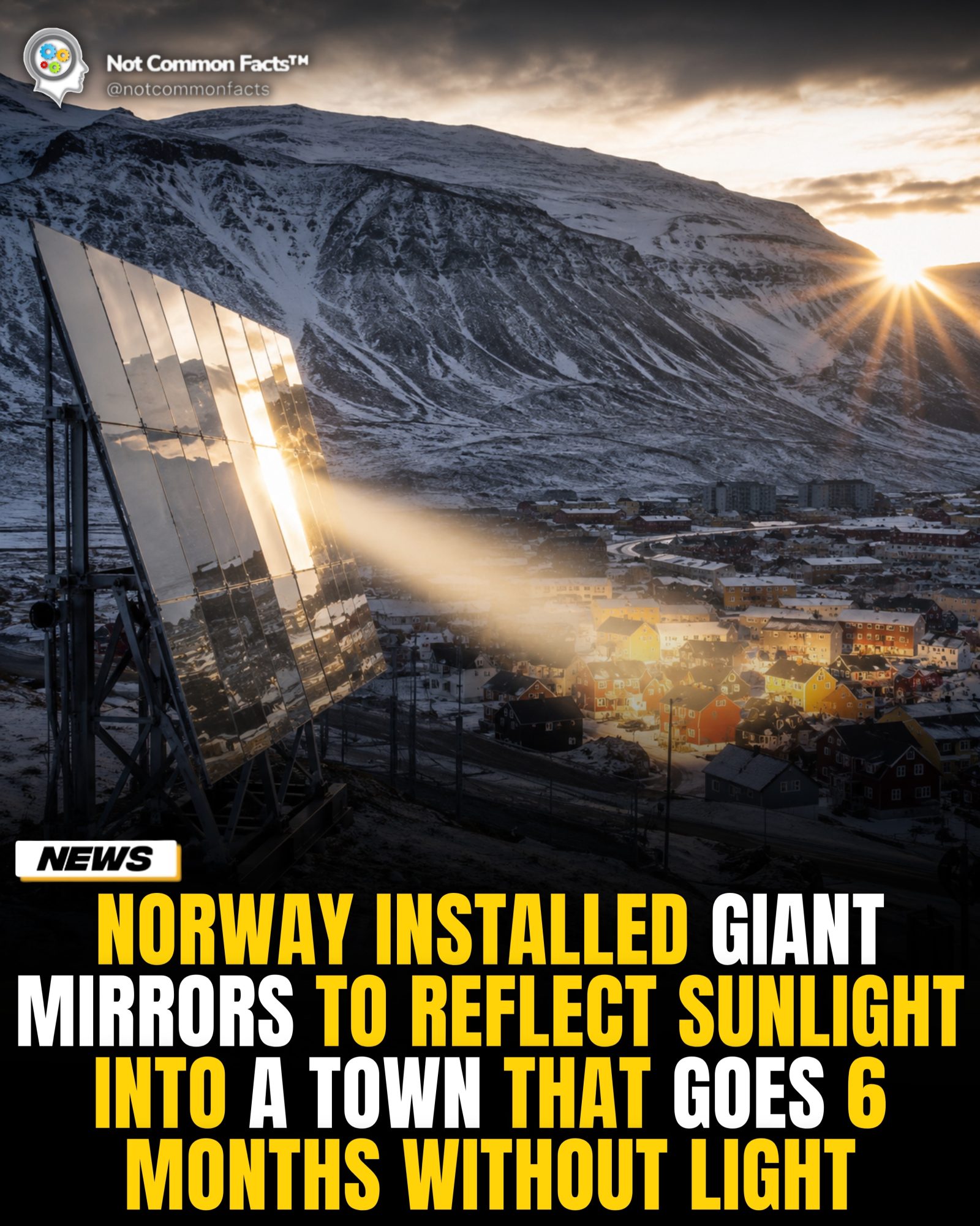
Giant Mirrors in Norway
The Norwegian town of Rjukan is nestled in a valley surrounded by steep mountains, a breathtaking landscape that also poses a unique challenge. Due to its geographical layout, Rjukan spends several months each year without direct sunlight. To combat this lack of natural light, engineers installed a series of giant mirrors on a nearby mountainside. These mirrors automatically track the sun and reflect its light into the valley, illuminating the town square and providing much-needed sunlight to residents during the darkest months of the year.
Why This Matters
Rjukan's situation is not unique. Many towns and cities around the world experience significant periods of low light or darkness due to their geographical location, weather patterns, or urban layout. The innovative use of mirrors in Rjukan offers a potential solution for these communities, demonstrating how solar technology can be harnessed to improve daily life. This approach not only brings natural light to areas that need it but also highlights the potential for engineering solutions to address environmental challenges.
The Engineering Behind the Mirrors
Design and Installation
The mirrors in Rjukan are designed to be both functional and unobtrusive. Each mirror is a large, satellite-dish-like structure, which is installed on a mountainside with a clear view of the sun. These mirrors are strategically positioned to maximize the amount of sunlight they can reflect into the valley. The mirrors themselves are made from durable, weather-resistant materials that can withstand the harsh Norwegian winters.
Automated Tracking
One of the most impressive features of the mirrors is their ability to automatically track the sun. This is achieved through a series of sensors and motors that adjust the mirrors' orientation throughout the day. This ensures that the reflected sunlight always reaches the town square, even as the sun's position changes.
Reflecting Light
The mirrors use a technique known as heliostat technology. A heliostat is a device that includes a mirror with two axes of rotational freedom that allows it to reflect sunlight in a desired direction. This means that the mirrors can not only track the sun but also direct its light precisely where it is needed. When combined with the town's layout, this creates a pool of reflected sunlight on the town square, brightening the area even during the darkest days of winter.
The Impact on the Town
The mirrors have significantly improved the quality of life in Rjukan. The reflected sunlight brightens the town square, making it a more inviting space for residents and visitors alike. This has had a positive impact on the community's mental health, as the absence of sunlight can lead to seasonal affective disorder (SAD) and other health issues.
Practical Tips for Implementing Similar Solutions
While the mirrors in Rjukan are a specific solution to a unique problem, similar principles can be applied in other contexts. Here are some practical tips for implementing such solutions:
Conduct a Location Analysis
Before installing mirrors, it's crucial to conduct a detailed location analysis. This should include assessing the surrounding topography, weather patterns, and the position of the sun throughout the year. This information will help determine the optimal placement and orientation of the mirrors.
Engage with the Community
Engaging with the local community is essential. Their input and support can help ensure that the project is successful and meets the community's needs. This can also help identify potential challenges and solutions early in the planning process.
Choose Durable Materials
When selecting materials for the mirrors, prioritize durability and weather resistance. The mirrors will be exposed to the elements, so they need to be able to withstand harsh conditions. Additionally, consider the environmental impact of the materials used and opt for eco-friendly options whenever possible.
Implement Automated Tracking
To maximize the effectiveness of the mirrors, consider implementing automated tracking systems. This will ensure that the mirrors can follow the sun's movement and reflect sunlight accurately, even as the seasons change.
Test and Adjust
Once the mirrors are installed, it's important to test and adjust them as needed. This includes monitoring their performance, assessing their impact on the community, and making any necessary adjustments to improve their effectiveness. Real-time monitoring and feedback can be invaluable in ensuring that the system works as intended, and any issues are quickly resolved.
Important Takeaways
The giant mirrors in Norway are a testament to human ingenuity and the power of engineering to improve daily life. These mirrors have brought natural sunlight to Rjukan, transforming a challenging geographical feature into an opportunity for innovation. The project's success demonstrates the potential for similar solutions in other communities facing similar issues.
Key takeaways include:
Harnessing Natural Resources
Engineering solutions like the mirrors in Rjukan showcase the power of using natural resources to improve quality of life. By reflecting sunlight, the mirrors bring much-needed light to areas that would otherwise remain in darkness, highlighting the potential for innovative approaches to environmental challenges.
Community Impact
The positive impact on the community's mental health and overall well-being underscores the importance of considering the human element in engineering projects. This emphasizes the need for community engagement and the consideration of residents' needs in all stages of project development.
Potential for Adaptation
While the mirrors in Rjukan are a unique solution, the principles behind them can be adapted to other contexts. This includes conducting a thorough location analysis, choosing durable materials, and implementing automated tracking systems to ensure the mirrors' effectiveness.
Conclusion
The installation of giant mirrors in Rjukan, Norway, is more than just an engineering marvel. It's a practical, innovative solution to a unique challenge, transforming a town that spends several months without sunlight into a brighter, more vibrant community. By harnessing natural resources and leveraging advanced engineering, this project not only brings light to the town square but also demonstrates the potential for similar solutions in other communities. The mirrors in Rjukan serve as an inspiring example of how engineering can be used to enhance daily life, providing a model for future projects in other parts of the world.
Watch the Reel
Questions readers ask
How do the giant mirrors in Rjukan work to brighten the town?
The giant mirrors in Rjukan are installed on a nearby mountainside and are designed to automatically track the sun's movement. They then reflect the sunlight down into the town square, providing natural light to the residents during the darkest months of the year.
What makes Rjukan's geographical layout unique and challenging?
Rjukan's valley location, surrounded by steep mountains, blocks direct sunlight from reaching the town for several months each year. This geographical feature creates a unique challenge for the community, making it a prime candidate for innovative sunlight reflection solutions.
Can other communities benefit from Rjukan's mirror solution?
Yes, many towns and cities around the world that suffer from low light or darkness due to their location or urban layout, could potentially benefit from a similar sunlight reflection system. However, careful planning and analysis will be needed to understand the unique needs and challenges of each community.
What are the benefits of using automated mirrors to provide sunlight to Rjukan's town square?
Automated mirrors offer a dynamic and efficient way to harness sunlight, providing natural light to the town square without the need for artificial lighting, which can save energy and reduce costs. Additionally, sunlight has been linked to improved mood and overall well-being, making it a beneficial solution for Rjukan's residents during the dark months.
How were the giant mirrors in Rjukan installed and who was involved in the project?
The installation of the giant mirrors in Rjukan was a collaborative engineering project, with engineers and project managers involved in the planning and execution of the mirror system on the mountainside. Engineers designed the mirrors to automatically track the sun's movement, ensuring they effectively reflect sunlight into the town square.
What are the primary factors that can make a town or city suitable for a sunlight reflection system?
Areas that spend prolonged periods in darkness or low light due to geographical features, weather patterns, or urban layout are great candidates for a sunlight reflection system. Additionally, communities that are experiencing a lack of sunlight in public spaces like town squares or parks might benefit from the installation of mirrors.
What makes Rjukan's sunlight solution a potential model for other communities?
Rjukan's sunlight solution offers an innovative way to bring natural light to a community that would otherwise spend months in darkness. Because of the automated technology, it provides a sustainable, long-term solution. Moreover, the success of this project in Rjukan demonstrates the potential for similar initiatives in other communities facing similar challenges worldwide.
Recent articles
Fresh deep dives from the latest Reels we unpacked.




Comments
Be the first to comment.