Urban Playgrounds
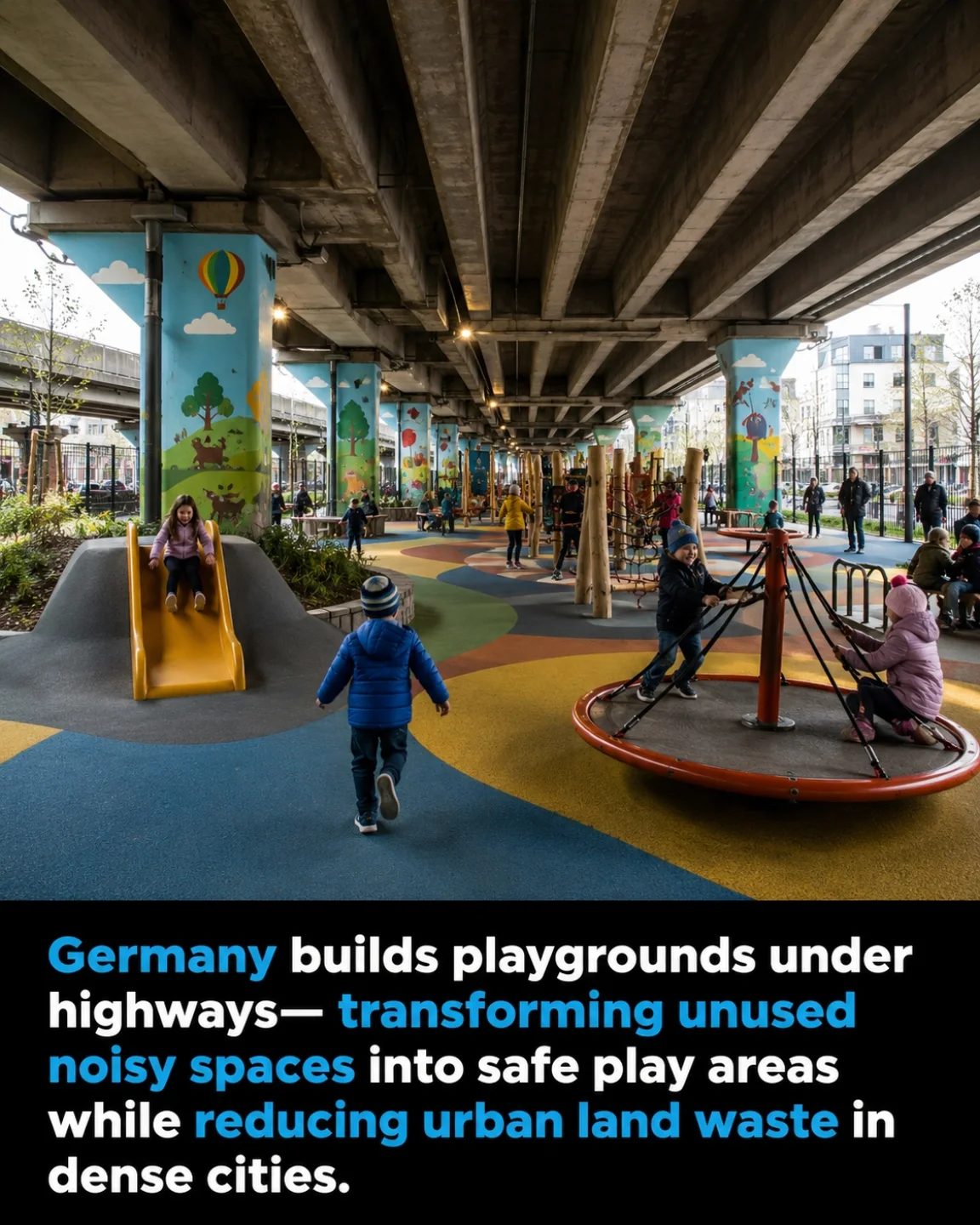
In cities worldwide, finding space for recreational areas can be challenging, but Germany has found an innovative solution: building playgrounds under highways. These urban playgrounds transform unused, noisy spaces into safe and engaging areas for children.
Why this matters
Urbanization often leads to limited green spaces and recreational areas. This scarcity can negatively impact children's physical and mental health, as well as the overall quality of life in densely populated cities. Innovative urban planning solutions, such as transforming infrastructure underpasses into play areas, help alleviate these issues by maximizing underutilized spaces.
Urban Playgrounds Under Highways
Transforming Unused Spaces
Highway overpasses and underpasses are often considered eyesores and noise pollutants. However, Germany's approach to urban planning turns these spaces into vibrant, child-friendly environments. By installing playground equipment like slides and swings, these areas become inviting and safe for children to play.
Noise Reduction and Safety
One of the significant benefits of building playgrounds under highways is the reduction of noise pollution. The highway infrastructure itself acts as a barrier, muffling the sound of traffic and creating a quieter play environment. Additionally, these enclosed spaces provide a sense of security, making them ideal for younger children.
Land Efficiency
Urban areas often struggle with land scarcity. By utilizing the space under highways, cities can effectively reduce land waste. This approach allows for the creation of recreational areas without encroaching on other valuable urban land, such as residential or commercial zones.
Benefits of Urban Playgrounds
Physical Health
Playgrounds encourage physical activity, which is crucial for children's health and development. Regular play helps build strength, coordination, and motor skills. Moreover, outdoor play has been linked to improved immune function and reduced obesity rates.
Mental Health and Social Skills
Playgrounds are not just about physical exercise; they are also essential for children's mental health and social development. These spaces provide opportunities for children to interact with peers, fostering social skills and emotional well-being. Playgrounds can also serve as therapeutic spaces, helping children cope with stress and anxiety.
Community Building
Urban playgrounds can strengthen community ties by creating shared spaces for families and neighbors to gather and interact. These spaces can become community hubs, fostering a sense of belonging and collective identity. By transforming underutilized spaces into recreational areas, cities can enhance the overall quality of life for residents.
Practical Tips for Creating Urban Playgrounds
Assess the Space
Before building a playground, conduct a thorough assessment of the available space. Consider factors such as the size of the area, the safety of the location, and the proximity to residential zones. Ensure that the playground is easily accessible and visible to the community.
Choose Durable Equipment
Select playground equipment that is durable and suitable for urban environments. Materials that can withstand weathering and vandalism are essential for the longevity of the playground. Additionally, consider equipment that is low-maintenance and requires minimal upkeep.
Incorporate Safety Features
Safety should be a top priority when designing an urban playground. Ensure that the playground is fully enclosed and includes safety features such as shock-absorbing surfaces, age-appropriate equipment, and clear signage. Regular inspections and maintenance can also help maintain a safe environment.
Engage the Community
Involve the local community in the planning and design process. Community input can help tailor the playground to the needs and preferences of the residents. Hosting town hall meetings, surveys, or community workshops can provide valuable insights and foster a sense of ownership among community members.
Promote Accessibility
Design the playground to be accessible to children of all abilities. Incorporate features such as ramps, sensory play areas, and inclusive equipment. Ensuring that the playground is accessible to everyone can create a more inclusive and welcoming environment.
Important Takeaways
Innovative urban planning solutions, such as transforming underutilized spaces into playgrounds, can significantly enhance the quality of life in dense cities. By addressing issues like land scarcity, noise pollution, and limited recreational areas, urban playgrounds offer numerous benefits to children and communities. These spaces not only promote physical and mental health but also foster social connections and community engagement.
Conclusion
Urban playgrounds under highways represent a forward-thinking approach to urban planning. By turning unused, noisy spaces into safe and engaging play areas, cities can address various challenges associated with urbanization. This innovative solution maximizes land use, reduces noise pollution, and provides valuable recreational spaces for children. As cities continue to grow and evolve, embracing such creative solutions can help create more livable, inclusive, and vibrant urban environments.
Watch the Reel
Questions readers ask
How do Germany's urban playgrounds under highways address noise issues?
These playgrounds are designed to absorb and deflect noise, creating a quieter environment for children to play in under busy highways. This is achieved through strategic landscaping, sound barriers, and strategic layout design. These features help minimize noise pollution, making these spaces more inviting and comfortable.
What types of activities can children enjoy in these unique urban playgrounds?
German urban playgrounds offer a variety of activities such as climbing structures, slides, swings, and open spaces for running and playing games. Some are equipped with sensory play areas, sports facilities, and even small gardens, catering to children of all ages and abilities. Additionally, these playgrounds often feature seating areas for parents and caregivers to relax and supervise.
How do these playgrounds enhance land efficiency in urban areas?
By utilizing the often-overlooked spaces under highway overpasses, Germany maximizes land use in densely populated cities. These areas, which are otherwise underutilized, are turned into vibrant playgrounds that provide valuable recreational space without encroaching on other urban land. This approach helps to preserve other open spaces for various uses.
How do German cities ensure the safety of these urban playgrounds?
Safety is a priority in these urban playgrounds. They are designed with secure fencing, non-toxic materials, and smooth surfaces to prevent injuries. The playgrounds are also well-lit and often within view of nearby residences or community centers, providing an extra layer of security. Regular maintenance and inspections ensure that these spaces remain safe for children to enjoy.
Are there other benefits to building playgrounds under highways besides recreation?
Yes, these innovative urban playgrounds offer multiple benefits. They improve the aesthetics and overall quality of life in urban environments, reduce noise and pollution, and promote physical activity and social interaction among children. Furthermore, these playgrounds can serve as community hubs, fostering a sense of belonging and community engagement. They also contribute to sustainable urban development by making efficient use of available space.
How do these urban playgrounds contribute to the overall quality of life in cities?
By providing much-needed recreational spaces, these playgrounds help improve the physical and mental well-being of city residents. They offer a respite from the urban environment, promote active lifestyles, and encourage social interaction. Additionally, these green spaces under highways contribute to better air quality and overall environmental health, enhancing the quality of life for all city dwellers.
Recent articles
Fresh deep dives from the latest Reels we unpacked.




Comments
Be the first to comment.