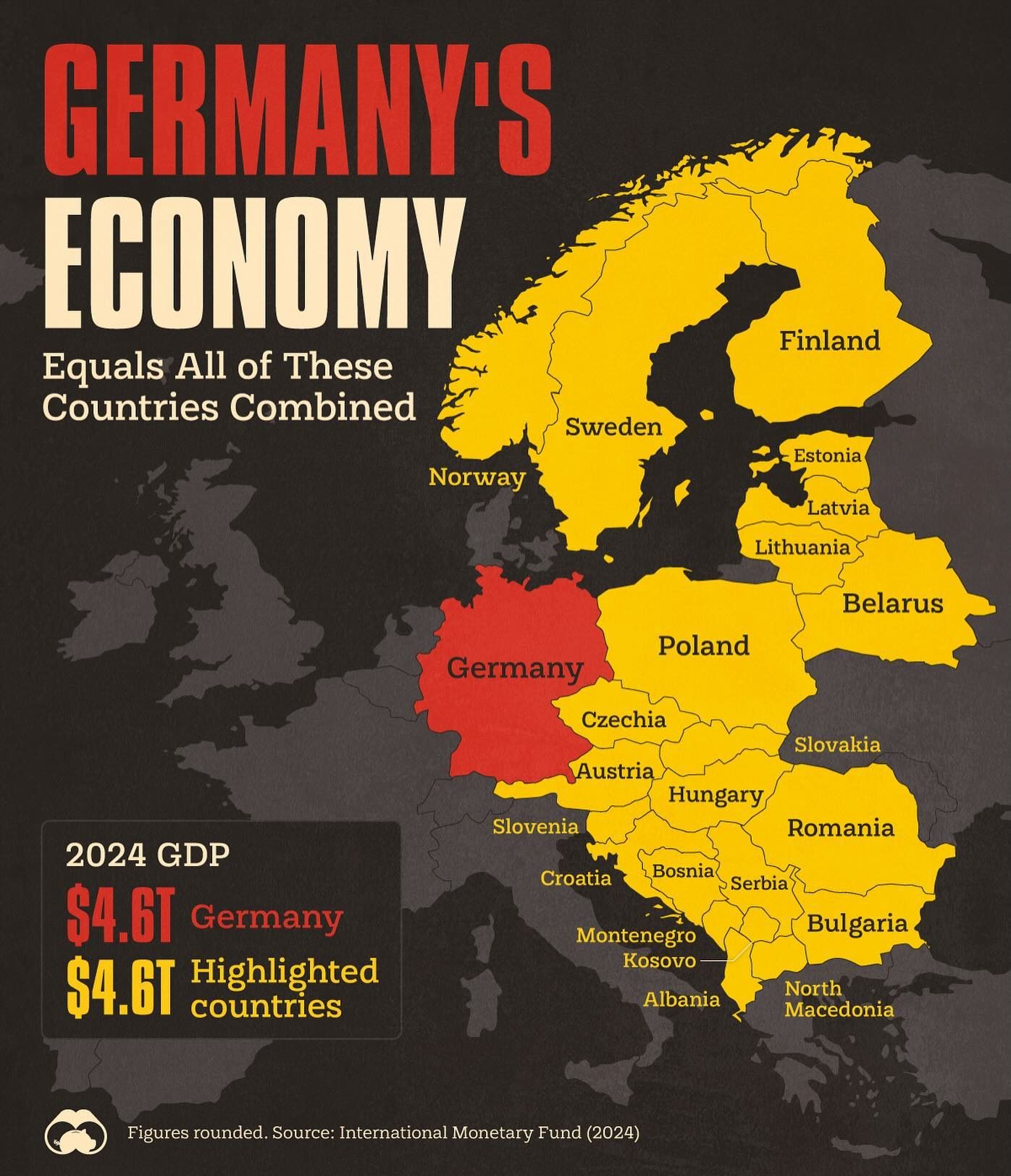
Germany's $4.6 trillion economy is a powerhouse, equivalent to the combined GDP of 22 other European countries. This economic force places Germany as Europe’s largest and the world’s third-largest economy. To put this into perspective, consider nations like Poland, Sweden, Austria, and Norway. Combining their economic output doesn't match Germany's $4.6 trillion GDP as projected by the International Monetary Fund (IMF) for 2024.
Why this matters
Understanding Germany's economic influence is crucial for several reasons. Firstly, Germany is the economic engine of Europe. Its performance significantly impacts the continent's overall economic health. Secondly, Germany’s economic policies and decisions can ripple through global markets, affecting trade, investments, and economic policies worldwide. Lastly, its economic strength is a critical factor in European and global economic stability.
Germany’s economic might
Industrial powerhouse
Germany's economy is renowned for its industrial prowess. The country is a global leader in manufacturing, known for producing high-quality goods across various sectors, including automobiles, machinery, and chemicals. This industrial strength drives a significant portion of Germany’s GDP.
Key industries contributing to Germany’s economic power include:
- Automotive: Germany is home to major automakers like Volkswagen, BMW, and Mercedes-Benz, which are globally recognized brands.
- Machinery and Equipment: Germany’s engineering and manufacturing expertise are showcased in the production of industrial machinery, medical equipment, and precision tools.
- Chemicals and Pharmaceuticals: The country is a leader in chemical production, with companies like BASF and Bayer contributing significantly to the sector.
Export-driven model
Germany’s economy thrives on exports. The country is one of the world’s largest exporters, contributing significantly to its GDP. High-quality manufacturing and innovative products make German goods highly competitive in the global market. Major export destinations include the United States, China, and other European countries.
Strong service sector
While Germany's industrial sector is robust, the service industry also plays a crucial role in its economy. This sector includes financial services, tourism, and information technology. Key factors driving the service sector include:
- Financial Services: Germany’s banking and insurance sectors are well-established, with major institutions like Deutsche Bank and Allianz leading the way.
- Tourism: The country attracts millions of tourists annually, drawn by its rich cultural heritage, famous landmarks, and diverse landscapes.
Innovative economy
Germany’s commitment to research and development (R&D) is a cornerstone of its economic success. Significant investments in technology and innovation drive productivity and competitiveness. This focus on innovation is evident in various sectors, including automotive, where companies like Tesla, Volkswagen, and BMW are leading the transition towards electric vehicles (EVs) and autonomous driving technologies.
Trade and investment
Germany's strong economic position is also supported by robust trade agreements and investments. The country’s central location in Europe facilitates trade with neighboring countries, while strong bilateral trade agreements with other nations, including the United States and China, further bolster its economic performance.
Economic stability
One of the hallmarks of Germany’s economy is its stability. Economic policies aimed at maintaining fiscal discipline, low inflation, and a balanced budget contribute to this stability. The country’s strong financial sector also provides the liquidity necessary for economic growth.
Practical tips
For investors
Investing in Germany can offer numerous benefits, including:
- Diversification: Adding German assets to a portfolio can provide diversification benefits, reducing overall risk.
- Strong Currency: The Euro, while facing some challenges, remains a stable and widely accepted currency.
- Leading Industries: Investing in Germany’s leading industries, such as automotive and machinery, can offer high returns.
For businesses
Businesses looking to enter or expand in Germany should consider the following:
- Market Research: Conduct thorough market research to understand the competitive landscape and consumer preferences. This is particularly important in the automotive and technology sectors.
- Regulatory Compliance: Ensure compliance with local regulations and standards, which can be stringent in sectors like manufacturing and healthcare.
- Partnerships: Form strategic partnerships with local businesses and institutions to leverage their expertise and networks.
Important takeaways
Economic influence
Germany’s economic policies and decisions significantly impact the global economy. Its industrial strength, innovation, and export-driven model contribute to its economic might and influence.
Industrial and technological leadership
Germany’s leadership in industrial production and technological innovation makes it a significant player in the global market. Its commitment to R&D drives productivity and competitiveness, benefiting both domestic and international markets.
Economic stability
Germany’s economic stability is a result of prudent fiscal policies and a strong financial sector. This stability provides a reliable environment for businesses and investors, contributing to long-term growth and prosperity.
Conclusion
Germany’s $4.6 trillion economy is a testament to its industrial, technological, and economic prowess. Its influence extends across Europe and the world, shaping global trade, investment, and economic policies. Understanding Germany’s economic landscape provides valuable insights for businesses, investors, and policymakers, offering opportunities for growth and development.
Watch the Reel
Related deep dives
Similar reads based on topic and creator.

Recent articles
Fresh deep dives from the latest Reels we unpacked.




Comments
Be the first to comment.