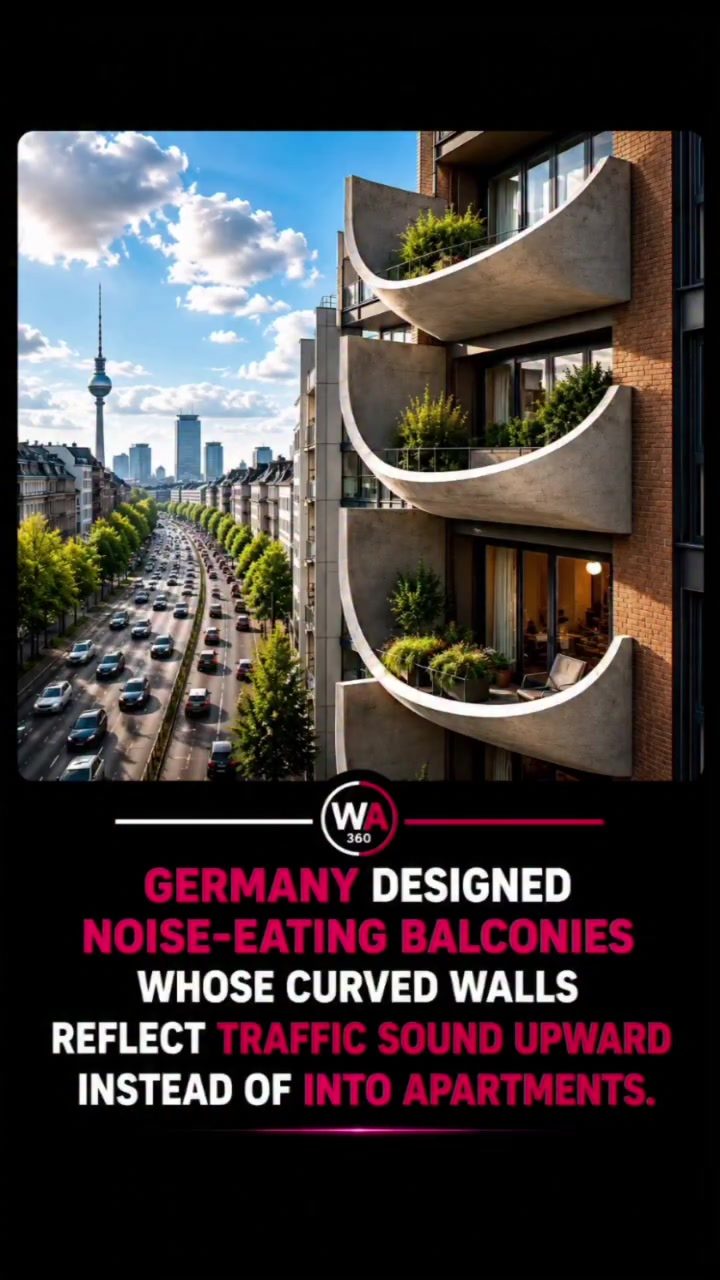
Germany's Innovative Approach to Reducing Traffic Noise with Smart Architecture
Traffic noise is an ever-growing challenge in modern urban environments. The constant hum of vehicles can be disruptive and uncomfortable, affecting the quality of life for city dwellers. One innovative solution comes from Germany, where architects have developed a unique approach to mitigate this issue through smart architectural design.
Context / Why this matters
As cities become more densely populated, the need for quiet, livable spaces becomes increasingly important. Traditional noise-reduction methods often fall short, either due to high costs or aesthetic compromises. Germany's approach demonstrates how innovative design can address this issue effectively without sacrificing the modern, attractive appearance of urban buildings.
Aesthetics and Functionality
The core of Germany's solution lies in the design of curved balconies. These balconies are not just visually appealing but also serve a practical purpose. By curving the walls, they effectively redirect traffic sound upward, preventing it from traveling directly into nearby apartments. This design principle is based on the reflection of sound waves, which helps to reduce the perceived noise level inside the living spaces.
This approach is a great example of how engineering and architecture can collaborate to create a more comfortable urban environment. It's not just about building taller structures; it's about creating healthier, quieter, and more livable spaces for everyone.
Main discussion
The Principles of Sound Reflection
The unique design of the balconies leverages the principles of sound reflection. Sound travels in waves, and when it encounters a curved surface, the waves are redirected. By curving the balcony walls, the sound from traffic is reflected upward, reducing the amount of noise that reaches the living spaces. This design aims to minimize noise pollution without compromising the building's modern aesthetic, making urban living more comfortable.
Curved Balconies in Modern Architecture
Germany's curved balconies are not just about noise reduction; they also add a modern and attractive touch to the building's design. The aesthetic appeal of these curved structures is a significant advantage, as it ensures that the building remains visually pleasing while serving a practical purpose. This dual benefit of functionality and aesthetics is a key aspect of smart architecture.
Practical tips
When considering noise reduction in modern urban design, here are some practical tips inspired by Germany's innovative approach:
Incorporate Sound-Reflective Surfaces
Consider incorporating curved or angled surfaces in your building design to deflect noise away from living spaces. This can be achieved through balconies, walls, or other architectural features that can redirect sound waves effectively.
Balance Aesthetics and Functionality
Ensure that your noise-reduction strategies do not compromise the aesthetic appeal of the building. By integrating noise-reduction features into the overall design, you can achieve a visually appealing structure that also serves a practical purpose.
Use Materials with Sound-Absorbing Properties
When selecting materials for your building, opt for those with sound-absorbing properties. Materials like acoustic foam, fiberglass, or other sound-absorbing textiles can help to reduce the overall noise levels inside the building.
Design for Quieter Cities
When planning urban development, prioritize designs that promote quieter living. This can be achieved by incorporating noise-reduction features in public spaces, such as sound barriers, green walls, or other noise-absorbing elements.
Important takeaways
- Unique Curved Balconies: The curved balconies in Germany effectively redirect traffic noise upward, reducing the amount of noise that reaches living spaces.
- Sound Reflection Principles: The design leverages the principles of sound reflection to minimize noise pollution.
- Aesthetic Appeal: The curved balconies add a modern and attractive touch to the building's design, ensuring that noise reduction does not compromise aesthetics.
- Urban Living: The future of urban living should focus on creating healthier, quieter, and more livable spaces.
- Smart Architecture: Collaboration between engineering and architecture can lead to innovative solutions that improve everyday life.
Conclusion
Germany's approach to reducing traffic noise through smart architectural design is a testament to the potential of innovating for a quieter urban living experience. By leveraging the principles of sound reflection and integrating noise-reduction features into the overall design, Germany has demonstrated that it is possible to create comfortable, modern, and visually appealing living spaces. As urban populations continue to grow, embracing such innovative solutions will be crucial in enhancing the overall quality of life in cities.
Watch the Reel
Questions readers ask
How do Germany's curved balconies help in reducing traffic noise?
Curved balconies in Germany are designed to reflect sound waves upward, which prevents them from entering nearby apartments. This redirection of sound reduces the noise pollution in residential areas, making the living environment quieter and more comfortable for city residents.
What makes Germany's curved balconies an appealing solution for urban noise pollution?
Germany's curved balconies offer a dual benefit of aesthetic appeal and functional noise reduction. Unlike traditional noise barriers, which can be unsightly, these architectural designs blend seamlessly into urban landscapes, enhancing the visual appeal of buildings while effectively mitigating traffic noise.
Can curved balconies be integrated into existing buildings, or are they only suitable for new constructions?
Curved balconies can be incorporated into both new constructions and existing buildings. While they are more commonly seen in new developments, retrofitting options are available for older buildings, making this noise reduction solution accessible to a wide range of urban environments.
What are the key benefits of curved balconies for city dwellers?
The primary benefits of curved balconies for city dwellers include reduced traffic noise, improved quality of life, and enhanced living spaces. By reflecting sound waves away from residential areas, these balconies create quieter interiors, promoting better rest and relaxation for residents.
How do Germany's curved balconies compare to other noise reduction methods?
Compared to traditional noise reduction methods like soundproof windows or noise barriers, Germany's curved balconies offer a more aesthetically pleasing and integrated solution. They do not require significant modifications to the building's exterior and provide a long-term, passive noise reduction strategy.
Are there any specific materials or designs that enhance the effectiveness of curved balconies in reducing noise?
The effectiveness of curved balconies in reducing noise is primarily due to their shape, which reflects sound waves upward. However, the use of certain materials like concrete or composite materials can further enhance their sound-reflecting properties. Additionally, the curvature design can be optimized to target specific frequency ranges of traffic noise, making them highly effective in urban settings.
Can curved balconies be customized to fit different architectural styles and building types?
Yes, curved balconies can be customized to complement various architectural styles and building types. Whether a building has a modern, minimalist design or a more traditional aesthetic, curved balconies can be tailored to match the overall look and feel, ensuring that they integrate harmoniously with the existing architecture while providing effective noise reduction.
Recent articles
Fresh deep dives from the latest Reels we unpacked.




Comments
Be the first to comment.