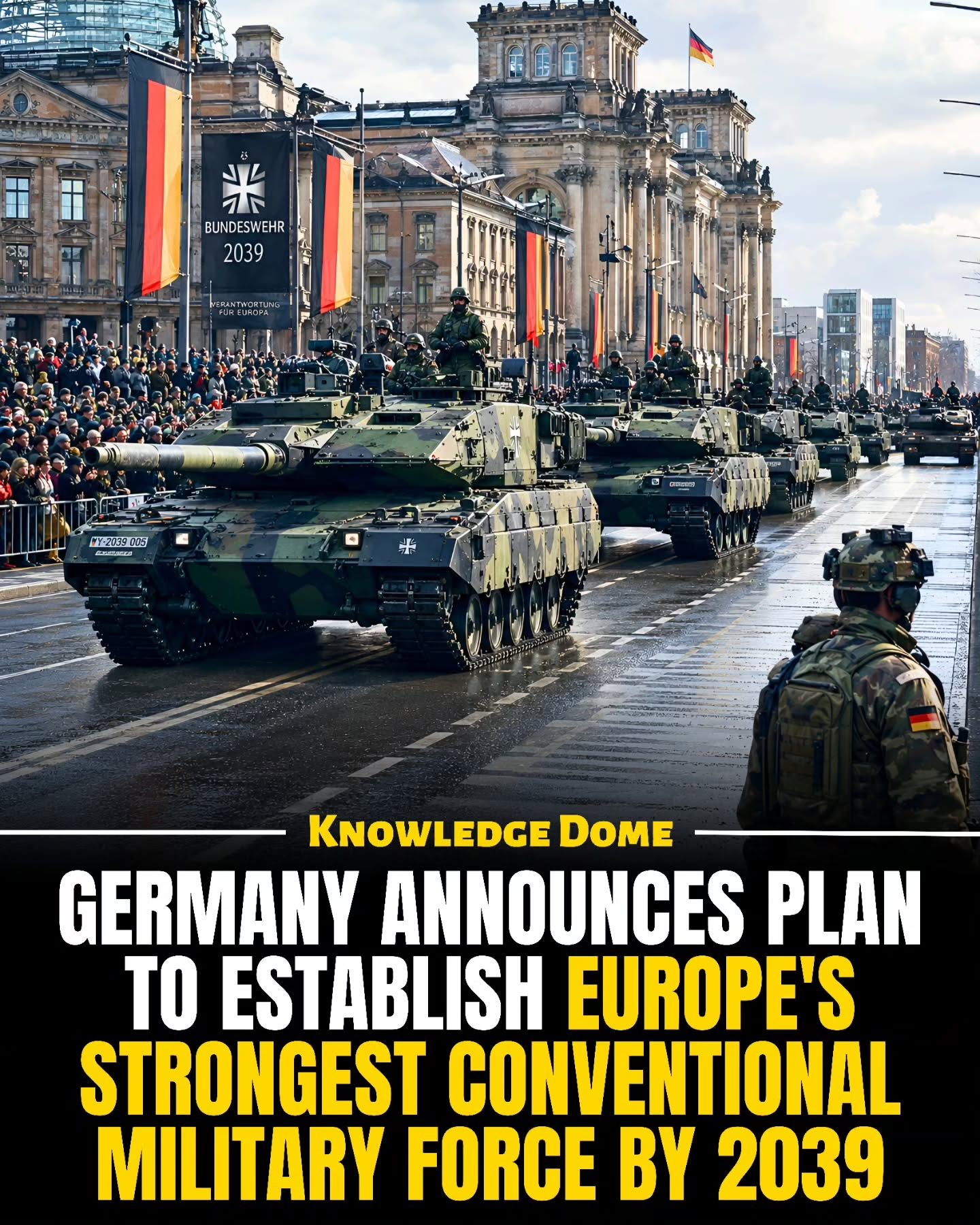
Germany's Major Military Plan: Verantwortung für Europa
Germany has unveiled its most significant military strategy since the Cold War, dubbed "Verantwortung für Europa," which translates to "Responsibility for Europe." This ambitious plan aims to transform the German armed forces, known as the Bundeswehr, into the most robust conventional military force in Europe by 2039. The initiative is driven by Germany's desire to enhance its preparedness against potential threats from Russia and reduce its reliance on the United States for defense.
Context: Why This Matters
This military plan is a pivotal moment in Europe's defense landscape. It signifies a substantial shift in Germany's approach to national security and its role within the European Union. The initiative is not merely about increasing the number of troops and weapons; it encompasses a comprehensive modernization of the military to meet the demands of contemporary warfare.
Main Discussion
The Three-Phase Strategy
The plan is structured into three distinct phases, each with specific objectives:
-
Phase 1 (2029): The initial phase focuses on improving the readiness and strength of the Bundeswehr. This includes enhancing the military's ability to respond swiftly to threats and bolstering its core capabilities.
-
Phase 2 (2035): The second phase involves expanding the Bundeswehr's power across various domains, including land, air, sea, cyber, and space. This phase aims to ensure that Germany's military is not only strong but also versatile and capable of operating in multiple environments.
-
Phase 3 (2039 and Beyond): The final phase is about achieving a level of military advancement that surpasses current capabilities. This includes integrating advanced technologies such as AI-powered command systems and drones, making the Bundeswehr a leading force in modern warfare.
Troop and Budget Increases
The plan requires a significant boost in the number of troops and financial resources. Germany aims to grow its armed forces to approximately 460,000 ready personnel. This includes:
- Increasing active soldiers from around 185,000 to 260,000.
- Expanding the reserve force to 200,000.
In terms of funding, Germany is targeting to allocate 3.5% of its GDP to core military needs by 2029. This substantial investment will support the modernization and expansion of the military's capabilities.
Modern Warfare Focus
One of the most notable aspects of this plan is its focus on modern warfare. Key areas of emphasis include:
- Long-Range Precision Strikes: Enhancing the ability to conduct precise and effective strikes over long distances.
- Air and Missile Defense: Strengthening defense systems against hypersonic threats and other advanced missile technologies.
- AI-Powered Command Systems: Leveraging artificial intelligence to improve command and control systems, ensuring faster and more accurate decision-making.
- Drones: Integrating drones into military operations to enhance reconnaissance, surveillance, and strike capabilities.
Practical Tips
If you're interested in understanding the broader implications of Germany's military plan, consider the following:
Stay Informed
Keep up-to-date with the latest developments in European defense policies. Follow reliable news sources and defense analysts to get insights into how this plan might unfold and its potential impact on regional and global security.
Understand the Technology
Familiarize yourself with the advanced technologies that Germany is planning to integrate into its military. This includes AI, drones, and hypersonic defense systems. Understanding these technologies will give you a clearer picture of the future of warfare.
Engage in Dialogue
Participate in discussions about defense and security. Engage with experts, policymakers, and other interested parties to share your views and learn from their insights. This can help foster a more informed and balanced perspective on military strategies.
Important Takeaways
Germany's military plan, "Verantwortung für Europa," is a comprehensive and ambitious initiative aimed at transforming the Bundeswehr into Europe's strongest conventional military force. Key takeaways include:
- The plan is structured in three phases, with specific goals for 2029, 2035, and 2039.
- It involves a significant increase in troops and defense spending.
- The focus is on modern warfare technologies and capabilities.
- The initiative underscores Germany's commitment to enhancing its defense capabilities and reducing dependence on external allies.
Conclusion
Germany's new military strategy marks a significant shift in its defense policies. By aiming to become Europe's strongest conventional military force, Germany is not only bolstering its own security but also playing a more active role in European defense. The comprehensive and ambitious nature of this plan highlights Germany's commitment to preparedness and modernization in an ever-changing global security landscape.
Watch the Reel
Questions readers ask
What is the 'Verantwortung für Europa' plan?
'Verantwortung für Europa,' or 'Responsibility for Europe,' is Germany's ambitious military strategy to upgrade its armed forces, the Bundeswehr, into Europe's leading conventional military force by 2039. It focuses on enhancing Germany's defense capabilities and preparing for potential threats, particularly from Russia.
Why is Germany aiming to reduce its reliance on the U.S. for defense?
Germany seeks to reduce its defense dependence on the U.S. to enhance its strategic autonomy and ensure it can respond effectively to regional threats. This shift also aligns with Germany's goal to take on a more prominent role in European security.
What are the key aspects of Germany's military modernization plan?
Germany's plan involves significant upgrades to its military infrastructure, equipment, and technology. It includes increasing the size and capabilities of the Bundeswehr, improving cyber defenses, and enhancing rapid response capabilities to address potential threats from Russia and other sources.
How will Germany's military growth benefit Europe?
By strengthening its military capabilities, Germany aims to bolster European defense and reduce the continent's reliance on external powers. This strategic move is expected to enhance Europe's collective security and improve its ability to address regional threats independently.
What role does Germany's military plan play in strengthening the EU's defense capabilities?
Germany's ambitious military plan is set to fortify the EU's defense capabilities by providing a robust conventional military force that can act as a first responder to threats. This will not only enhance the EU's security but also foster greater collaboration among member states in defense matters.
How does Germany's plan address potential threats from Russia?
The plan focuses on modernizing Germany's military to better counter potential threats from Russia. This includes enhancing Germany's conventional military capabilities, improving rapid response times, and strengthening border security measures to deter and defend against any aggression.
What is the timeline for Germany's military modernization plan?
Germany aims to achieve its goal of becoming Europe's strongest conventional military force by 2039. This timeline allows for comprehensive modernization efforts, including upgrades to infrastructure, equipment, and technology, as well as significant enhancements to the Bundeswehr's capabilities.
Recent articles
Fresh deep dives from the latest Reels we unpacked.




Comments
Be the first to comment.