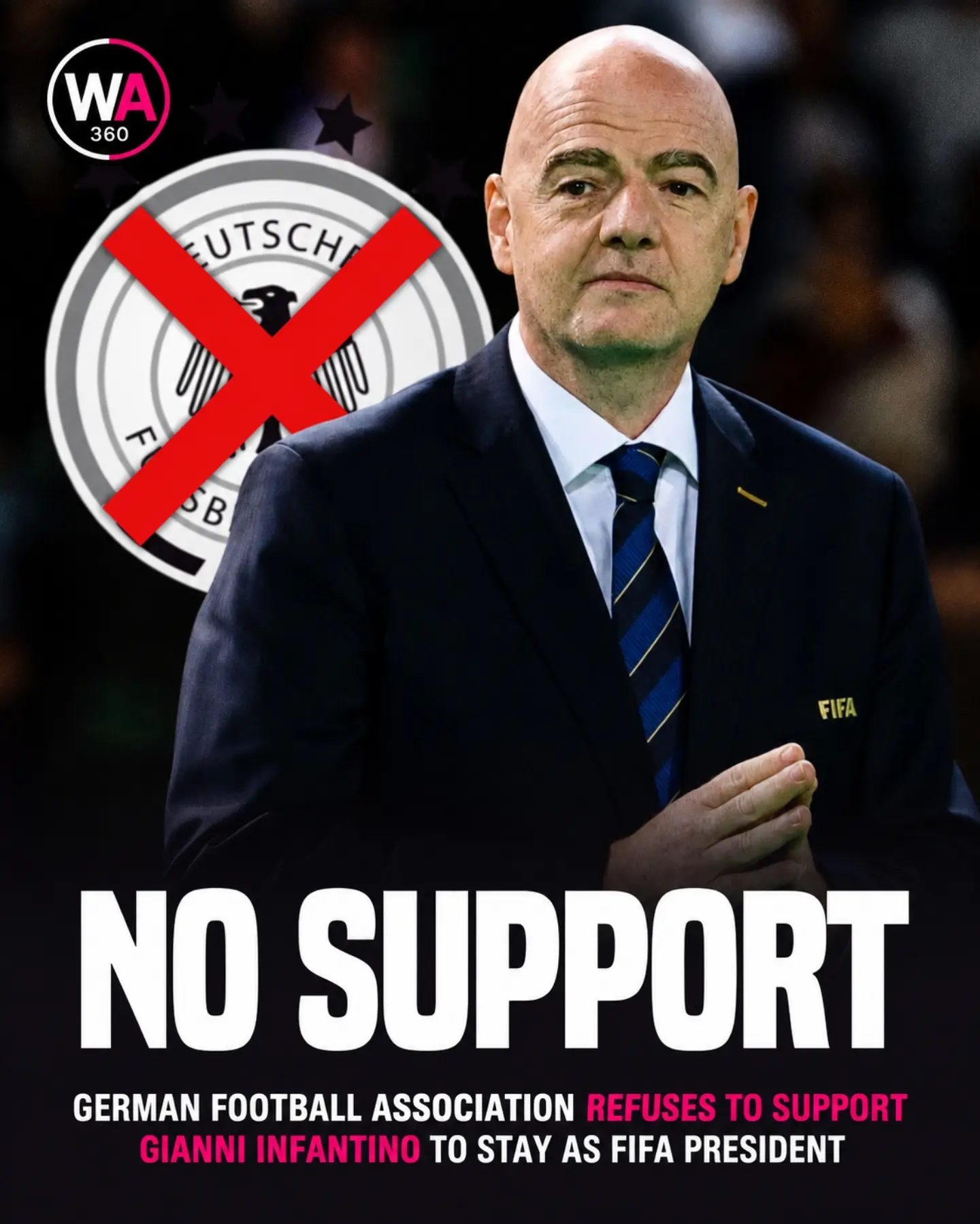
The German Football Association's Stance on FIFA Leadership
The German Football Association (DFB) has made headlines by refusing to endorse Gianni Infantino for another term as FIFA President. This decision underscores a significant rift between one of Europe’s most powerful football federations and the current leadership at FIFA. The move has sparked conversations about the future of football governance and the influence of European federations on global football politics.
Why This Matters
The DFB's refusal to back Infantino is more than just a procedural decision; it reflects broader concerns and potential shifts in the global football landscape. The DFB is one of the most influential football associations in Europe, with a strong track record in both domestic and international competitions. Their stance could signal a growing dissatisfaction with FIFA's current leadership and policies, potentially inspiring other federations to reconsider their support for Infantino.
The Background of the Conflict
The Role of the DFB
The DFB has a long history of advocacy for transparent and equitable governance in football. Their decision to withhold support for Infantino suggests a deep-seated concern about the direction of FIFA under his leadership. The DFB's influence in European football, combined with their commitment to ethical governance, makes their stance a significant development in the ongoing debate over FIFA's leadership.
Who is Gianni Infantino?
Gianni Infantino has been the President of FIFA since 2016, succeeding Sepp Blatter amid a corruption scandal that rocked the organization. Infantino's tenure has been marked by efforts to reform FIFA and restore its reputation. However, his leadership has also faced criticism for various issues, including a lack of transparency and concerns about the integrity of the FIFA World Cup bidding process.
The Implications of the DFB's Decision
The DFB's refusal to endorse Infantino could have far-reaching implications for FIFA's leadership and governance. It could embolden other federations to question Infantino's leadership and demand greater transparency and accountability from FIFA. The move also highlights the growing divide between European federations and FIFA, which could lead to a more fragmented and contested governance structure in global football.
Practical Tips for Understanding Global Football Politics
For those interested in understanding the complexities of global football politics, it's essential to stay informed about the decisions and stances of influential federations like the DFB. Monitoring news from reliable sources, such as CentreGoals and Bild, can provide valuable insights into the evolving landscape of football governance. Additionally, engaging with discussions and debates within the football community can offer a deeper understanding of the various perspectives and concerns at play.
Important Takeaways
The DFB's refusal to support Infantino underscores the ongoing tensions between major football federations and FIFA's leadership. The decision highlights the importance of transparent and equitable governance in football and signals a potential shift in the global football landscape. As the debate over FIFA's leadership continues, it's crucial to stay informed and engaged with the evolving dynamics of football politics.
Conclusion
The DFB's refusal to endorse Gianni Infantino for another term as FIFA President is a pivotal moment in global football governance. The decision reflects broader concerns about FIFA's leadership and policies, and it highlights the growing influence of European federations in shaping the future of football. As the debate continues, staying informed and engaged with the evolving dynamics of football politics will be essential for understanding the direction of the sport.
Watch the Reel
Questions readers ask
Why is the German Football Association's decision significant in the context of the FIFA election 2023?
The German Football Association (DFB) is one of the most influential football federations in Europe, and their refusal to endorse Gianni Infantino for re-election as FIFA President carries substantial weight. This decision signals potential changes in FIFA's governance and highlights dissatisfaction with current policies and leadership.
What does the DFB's stance imply about European influence in FIFA?
The DFB's decision suggests a potential shift in European influence within FIFA. European federations have traditionally held significant power, but this move indicates that some European bodies may be seeking changes in how FIFA is governed, challenging the status quo and looking to reshape global football politics.
What are the main concerns driving the DFB's opposition to Infantino's re-election?
The DFB's refusal to endorse Infantino is driven by broader concerns about FIFA's governance and policy direction. This stance implies dissatisfaction with how FIFA is currently managed and suggests a desire for leadership that aligns more closely with the DFB's vision for the sport.
How might the DFB's decision impact the FIFA President election?
The DFB's decision could influence other national federations and stakeholders, potentially affecting the outcome of the FIFA President election. It may encourage other football associations to weigh their support more carefully, leading to a more contested and dynamic electoral process.
What role does the German Football Association play in global football politics?
The German Football Association is a key player in global football politics due to its influence and track record in both domestic and international competitions. Its decisions and opinions can shape debates and influence policies within FIFA and other international football organizations.
Recent articles
Fresh deep dives from the latest Reels we unpacked.




Comments
Be the first to comment.