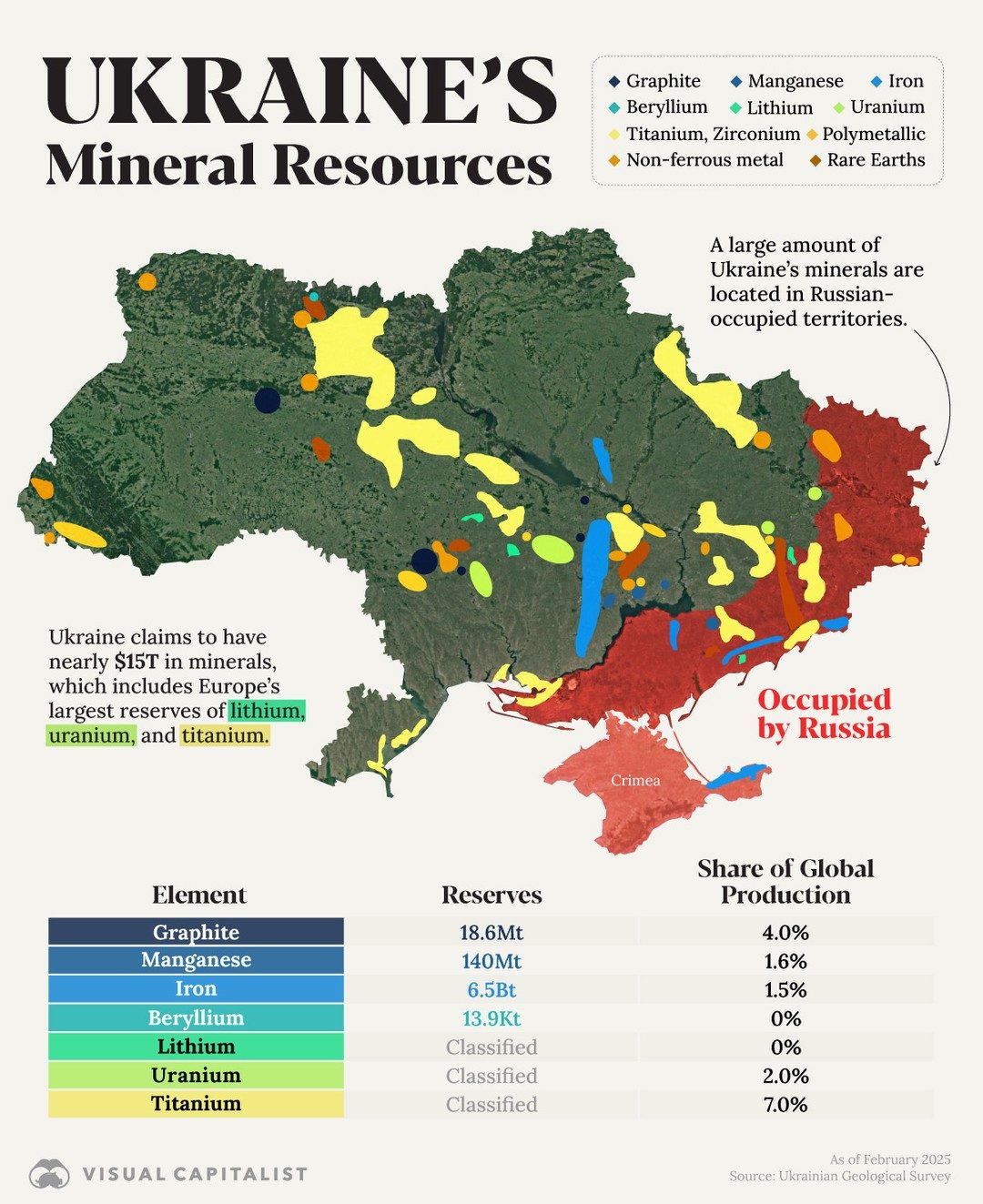
Ukraine's Mineral Resources
Ukraine is a treasure trove of mineral wealth, with claims of nearly $15 trillion worth of resources. This includes 23 of the 50 materials deemed critical by the U.S. government. Access to Ukraine's mineral wealth could strengthen U.S. supply chains and reduce reliance on China. Let's delve into the specifics of these resources, their global significance, and the geopolitical implications.
Context / Why This Matters
Ukraine's mineral resources are not just a matter of economic interest but also a geopolitical one. The country's vast reserves of critical minerals could play a pivotal role in global supply chains, particularly in sectors like technology, defense, and energy. Understanding the distribution and significance of these resources is crucial for policymakers and industries worldwide.
Main Discussion
The Scope of Ukraine's Mineral Wealth
Ukraine's mineral wealth is vast and diverse. The country claims to have nearly $15 trillion in mineral resources, which includes a significant portion of Europe's uranium and titanium. These resources are spread across various regions in Ukraine, but a large amount is located in territories currently occupied by Russia. This geopolitical reality adds a layer of complexity to the exploitation and management of these resources.
Critical Minerals and Their Global Importance
Among the critical minerals found in Ukraine are graphite, manganese, lithium, uranium, and titanium. Each of these minerals plays a crucial role in various industries:
- Graphite: With 18.6 million metric tons (Mt) of reserves, graphite is essential for manufacturing steel and producing batteries for electric vehicles.
- Manganese: Ukraine holds 140 million metric tons of manganese, which is vital for steel production and certain types of alloys.
- Lithium: Although the reserves are classified, lithium is a key component in rechargeable batteries, which are used in electronics and electric vehicles.
- Uranium: Ukraine's uranium reserves, though classified, are significant for nuclear energy production.
- Titanium: Classified reserves of titanium are crucial for aerospace, automotive, and medical industries.
The Geopolitical Implications
The distribution of Ukraine's mineral resources, particularly the significant portion located in Russian-occupied territories, has profound geopolitical implications. Access to these resources could strengthen the economic and strategic positions of countries that gain control over them. This is particularly relevant for the United States, which seeks to reduce its reliance on China for critical minerals. Furthermore, the control over these minerals could influence global supply chains and trade dynamics.
Practical Tips
For geopolitical strategists and industry leaders, understanding the distribution and significance of Ukraine's mineral resources is crucial. Here are some practical tips:
- Map the Resources: Use detailed maps and data from sources like the Ukrainian Geological Survey to understand the distribution of critical minerals.
- Assess Strategic Value: Evaluate the strategic importance of each mineral and its implications for global supply chains.
- Engage in Diplomatic Efforts: Foster diplomatic relations with Ukraine and other stakeholders to ensure stable and ethical access to these resources.
- Invest in Infrastructure: Support infrastructure development in Ukraine to facilitate the extraction and export of these minerals.
- Monitor Geopolitical Developments: Keep a close eye on geopolitical developments, particularly in Russian-occupied territories, as they could significantly impact access to these resources.
Challenges and Considerations
The exploitation of Ukraine's mineral resources is fraught with challenges. Geopolitical tensions, environmental concerns, and ethical considerations are just a few of the hurdles that need to be addressed. Effective management and sustainable practices are essential to harness the full potential of these resources while mitigating their negative impacts.
Important Takeaways
Ukraine's mineral resources are a significant geopolitical and economic asset. Key takeaways include:
- Economic Potential: Ukraine's mineral wealth could bolster global supply chains and reduce reliance on other countries.
- Geopolitical Significance: The distribution of these resources, particularly in Russian-occupied territories, adds complexity to their exploitation.
- Critical Minerals: Resources like graphite, manganese, lithium, uranium, and titanium are pivotal for various industries.
- Strategic Importance: Understanding and leveraging these resources could strengthen the strategic positions of countries and industries.
Conclusion
Ukraine's mineral resources are a treasure trove with immense economic and geopolitical significance. The vast reserves of critical minerals, including graphite, manganese, lithium, uranium, and titanium, play a pivotal role in global supply chains and industries. However, the geopolitical complexities, particularly the occupation of resource-rich territories, present significant challenges. By understanding the distribution and importance of these resources, policymakers and industry leaders can make informed decisions to harness their potential while navigating the intricate geopolitical landscape.
Watch the Reel
Questions readers ask
What are the most significant critical minerals found in Ukraine?
Ukraine is rich in various critical minerals, with notable reserves including titanium, graphite, and lithium. These minerals are essential for advancements in technology and defense sectors. They are also crucial for the development of clean energy technologies, such as electric vehicle batteries and renewable energy storage systems.
How do Ukraine's mineral reserves influence global supply chains?
Ukraine's vast mineral reserves can significantly impact global supply chains by providing a reliable source of critical minerals. This reduces dependence on other countries, particularly China, and enhances the resilience of supply chains in technology, defense, and energy sectors. By securing access to these resources, countries can bolster their domestic industries and reduce geopolitical risks.
Which regions in Ukraine are particularly important for their mineral wealth?
While Ukraine has a rich inventory of minerals, some of the most critical areas include regions that are currently under Russian occupation, such as the Donetsk and Luhansk regions, as well as Crimea. These areas are rich in resources like coal, iron ore, and titanium. The occupation of these territories complicates the geopolitical landscape, posing challenges for Ukraine and its allies in terms of resource access and control.
What potential benefits could the U.S. gain from accessing Ukraine's mineral wealth?
Access to Ukraine's mineral wealth could significantly benefit the U.S. by strengthening its supply chains and reducing reliance on foreign suppliers, particularly for critical minerals. This would enhance the U.S. defense and technology sectors, promote energy independence, and position the U.S. as a key player in the global transition to a low-carbon economy.
How might Ukraine's mineral reserves impact the energy sector?
Ukraine's mineral reserves, particularly its graphite and lithium deposits, are vital for the energy sector. These minerals are essential for the production of batteries used in electric vehicles and energy storage systems, which are crucial for the transition to renewable energy. By leveraging these resources, Ukraine can support the global shift towards sustainable energy solutions and create new economic opportunities.
What are the possible geopolitical challenges associated with Ukraine's mineral wealth?
The geopolitical challenges include Russia's occupation of mineral-rich territories, which complicates Ukraine's control over its resources. Additionally, the competition for these resources among global powers could lead to increased geopolitical tensions. Managing these challenges will require strategic partnerships, international cooperation, and a clear understanding of the global demand and supply dynamics of critical minerals.
What steps can Ukraine take to capitalize on its mineral wealth?
Ukraine can take several steps to capitalize on its mineral wealth, including conducting comprehensive mineral surveys to accurately assess and map its resources. Developing infrastructure to support mining and processing activities, as well as establishing partnerships with international players, can further enhance Ukraine's ability to leverage its mineral wealth. Additionally, Ukraine should implement policies that promote sustainable mining practices and attract foreign investment in the sector.
Recent articles
Fresh deep dives from the latest Reels we unpacked.




Comments
Be the first to comment.