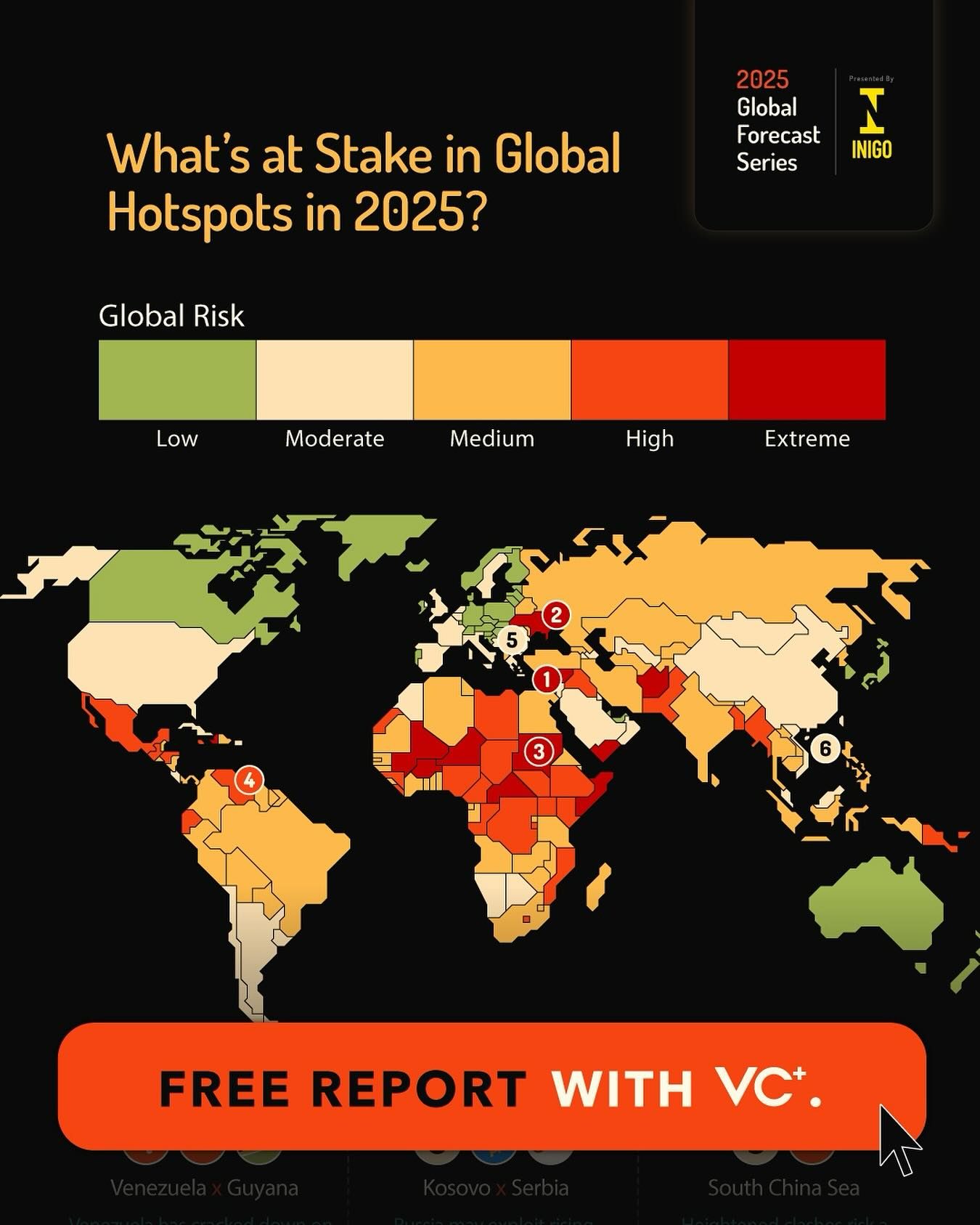
Global Risk Forecast: Assessing Geopolitical Hotspots for 2025
The world is a complex web of geopolitical dynamics, and understanding the risks that lie ahead is crucial for navigating the international landscape. The 2025 Global Forecast Series, presented by INIGO, provides a comprehensive overview of potential global tensions and their implications. This forecast highlights key hotspots and scenarios, including the Russia-Ukraine conflict, Middle East dynamics, and the potential impact of a Trump presidency.
Why This Matters
Geopolitical risks can have far-reaching consequences, affecting everything from international trade to national security. Staying informed about emerging threats and potential conflicts is essential for businesses, governments, and individuals alike. The 2025 Global Forecast Series offers valuable insights into the geopolitical landscape, helping stakeholders prepare for the challenges that lie ahead.
Main Discussion
The Russia-Ukraine Conflict
The ongoing Russia-Ukraine conflict remains a significant geopolitical risk. The forecast series explores various scenarios, including escalation, de-escalation, and potential peace agreements. Understanding these dynamics is crucial for assessing the impact on regional stability and global security. The conflict has already led to economic sanctions, displacement of people, and increased military presence in Eastern Europe. The map highlights this region with a high risk level, indicating the ongoing volatility and potential for further escalation.
Critical points in this discussion:
- Potential for further military action
- Economic sanctions and their global impact
- Humanitarian concerns and refugee crises
Middle East Dynamics
The Middle East is another hotspot with complex geopolitical dynamics. The region is marked by ongoing conflicts, political instability, and rivalry among major powers. Key issues include the Israel-Palestine conflict, the Syrian civil war, and the Iranian nuclear deal. The forecast series delves into these issues, providing a nuanced understanding of the risks and opportunities in the region. The map underscores the moderate to high risk levels across the Middle East, emphasizing the need for careful monitoring and diplomatic efforts.
Key factors to consider:
- Regional instability and its global impact
- The role of major powers and their interests
- Potential for diplomatic breakthroughs or escalations
Potential Global Impact of a Trump Presidency
The potential return of Donald Trump to the presidency raises questions about U.S. foreign policy and its impact on global geopolitics. A second Trump term could bring significant shifts in U.S. foreign policy, affecting international relations, trade agreements, and global security. The forecast series examines the potential implications, including changes in alliances, trade policies, and military interventions. The map highlights the U.S. with a moderate risk level, reflecting the uncertainty and potential for significant changes in global politics.
What to watch for:
- Changes in U.S. foreign policy and their global impact
- Potential shifts in alliances and trade agreements
- Military interventions and their consequences
Other Global Hotspots
The forecast series also highlights other critical hotspots that could shape the geopolitical landscape in 2025. These include:
Venezuela and Guyana
The dispute over the Essequibo region between Venezuela and Guyana is a long-standing issue with the potential to escalate into a broader conflict. The map indicates a high risk level, emphasizing the need for diplomatic resolution and international support.
Key issues:
- Territorial disputes and their implications
- The role of international arbitration
- Potential for escalation and regional instability
Kosovo and Serbia
The ongoing tensions between Kosovo and Serbia add another layer of complexity to the European geopolitical landscape. The map highlights a moderate risk level, reflecting the potential for both diplomatic progress and renewed conflict.
Critical points:
- The status of Kosovo and its international recognition
- The potential for renewed conflict and its impact on regional stability
- International efforts for peace and stability
South China Sea
The South China Sea remains a critical flashpoint in global geopolitics, with competing territorial claims and naval activity. The forecast series examines the potential for escalation and the role of major powers in the region. The map indicates a high risk level, underscoring the importance of diplomatic efforts and maritime security.
What to watch for:
- Territorial disputes and their implications
- Naval activity and military buildup
- The role of major powers and their strategic interests
Rethinking Diplomacy and Global Security
As geopolitical risks evolve, so too must our approach to diplomacy and global security. The 2025 Global Forecast Series underscores the importance of proactive engagement, diplomatic efforts, and international cooperation. By understanding the risks and opportunities in key hotspots, stakeholders can develop strategies to navigate the complex geopolitical landscape and promote global stability.
Practical Tips
- Stay informed about emerging geopolitical risks and their potential impact on your organization.
- Develop contingency plans for potential conflicts and disruptions in key hotspots.
- Engage in diplomatic efforts and international cooperation to promote peace and stability.
- Monitor changes in U.S. foreign policy and their implications for global geopolitics.
- Support international arbitration and peacekeeping efforts in conflict zones.
Important Takeaways
- The 2025 Global Forecast Series offers valuable insights into the geopolitical risks that could shape the future.
- Key hotspots, including the Russia-Ukraine conflict, Middle East dynamics, and the South China Sea, require careful monitoring and diplomatic efforts.
- Understanding the potential impact of a Trump presidency is crucial for assessing the global geopolitical landscape.
- Proactive engagement, diplomatic efforts, and international cooperation are essential for promoting global stability.
Conclusion
The 2025 Global Forecast Series by INIGO provides a comprehensive overview of the geopolitical risks and opportunities that lie ahead. By understanding the dynamics in key hotspots and their potential impact, stakeholders can develop strategies to navigate the complex geopolitical landscape and promote global stability. Stay informed, engage in diplomatic efforts, and support international cooperation to address the challenges that lie ahead.
Watch the Reel
Questions readers ask
What are the key geopolitical hotspots identified in INIGO's 2025 Global Forecast?
INIGO's 2025 Global Forecast highlights several critical geopolitical hotspots, including the ongoing Russia-Ukraine conflict, the dynamic political landscape of the Middle East, and the potential impact of a Trump presidency. These regions are expected to significantly influence global security and trade. Additionally, the forecast covers Venezuela, Guyana, Kosovo, Serbia, and the South China Sea, which are also poised to shape the geopolitical environment in 2025.
How might the Russia-Ukraine conflict evolve by 2025, and what impact could it have on global security?
By 2025, the Russia-Ukraine conflict could escalate further or potentially enter a prolonged stalemate. This could lead to continued instability in Eastern Europe and potentially draw in other global powers, thereby affecting broader European and international security. The conflict could also disrupt supply chains and trade routes, impacting global economics.
Why should businesses be concerned about geopolitical risks in 2025?
Businesses should be concerned about geopolitical risks in 2025 because they can significantly impact global supply chains, trade routes, and market stability. Uncertainty in key regions can lead to disruptions in operations, increased costs, and potential loss of market access. Understanding these risks can help businesses to better prepare and mitigate potential impacts.
What are the main geopolitical risks in the Middle East according to the INIGO 2025 Global Forecast?
The INIGO 2025 Global Forecast highlights ongoing tensions and power struggles among regional actors, potential shifts in oil production and exports, as well as the implications of the Israeli-Palestinian conflict and the involvement of external powers. These dynamics can affect trade, energy markets, and regional stability, with broader implications for the global economy and politics.
How might a potential Trump presidency influence geopolitical risks in 2025?
A potential Trump presidency in 2025 could introduce significant changes to U.S. foreign policy, impacting global alliances, trade agreements, and security partnerships. This could lead to increased volatility in international relations, affecting global security and trade. Specific areas of concern include shifts in U.S. policy toward China, Russia, and the Middle East, as well as potential changes in multilateral agreements and institutions.
What are the key geopolitical risks in the South China Sea for 2025?
The South China Sea is a critical geopolitical hotspot in 2025 due to territorial disputes between China and several Southeast Asian nations, as well as the presence of global powers like the U.S. These tensions could escalate, leading to potential military conflicts or further economic sanctions. The region's importance for global trade makes any disruption a significant risk for international commerce and security.
What steps can individuals take to prepare for potential geopolitical disruptions in 2025?
Individuals can prepare for potential geopolitical disruptions in 2025 by staying informed about global events, diversifying investments, and maintaining emergency supplies. They should also consider travel insurance and safety measures when visiting high-risk areas. Additionally, being adaptable and having a flexible mindset can help navigate unexpected changes in the international landscape.
Recent articles
Fresh deep dives from the latest Reels we unpacked.




Comments
Be the first to comment.