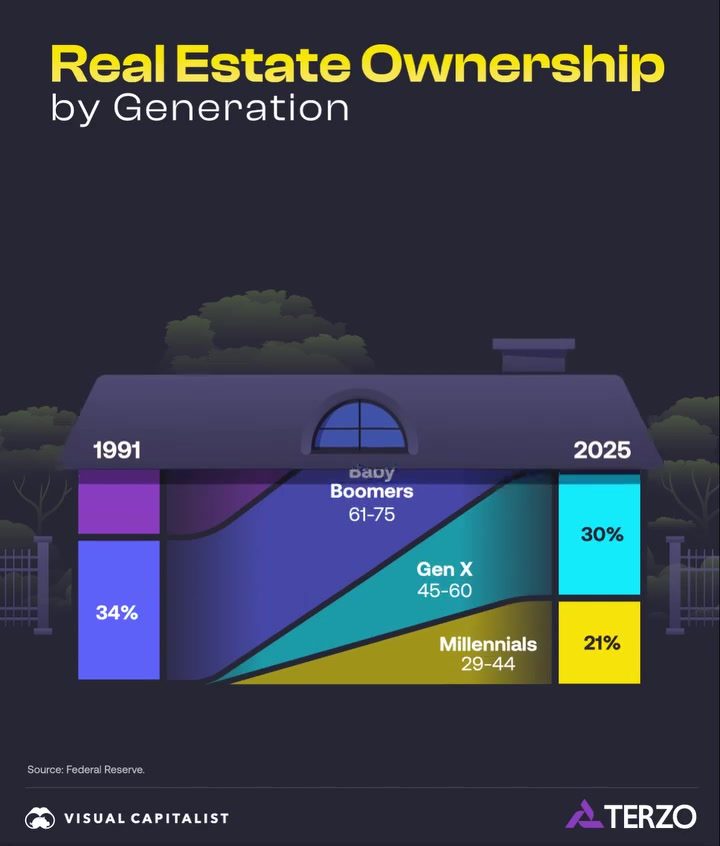
Real Estate Ownership by Generation
Real estate ownership in the U.S. has seen significant shifts across generations. Understanding these trends can provide valuable insights into the housing market and economic landscape. The Silent Generation, Baby Boomers, Generation X, and Millennials each have unique experiences and challenges when it comes to owning property. Let's explore how these generational dynamics have evolved and what the future might hold.
Context / Why This Matters
Real estate ownership is a cornerstone of wealth and stability for many Americans. It influences everything from local economies to personal financial health. As the population ages, the dynamics of who owns what and how much shifts dramatically. These shifts are not just numbers; they represent real people, their life choices, and the economic conditions that shape their opportunities.
Main Discussion
The Silent Generation
The Silent Generation, born between 1928 and 1945, has seen a dramatic drop in real estate ownership as they age. In 1991, they held a significant 65% of real estate. By 2025, this percentage is projected to decline to just 1%. This shift is largely due to aging, downsizing, and the natural process of property transfer to younger generations.
Baby Boomers
Baby Boomers, born between 1946 and 1964, have experienced a different trajectory. In 1991, they held a substantial 34% of real estate ownership. By 2025, they are expected to hold 65%, reflecting their peak earning and home-ownership years. This generation has benefited from economic growth, stable employment, and favorable housing policies, allowing them to accumulate wealth through real estate.
Generation X
Generation X, born between 1965 and 1980, saw a modest increase in real estate ownership. In 1991, they held 1% of the real estate market, but by 2025, this is projected to rise to 34%. This group has faced economic challenges, including the 2008 financial crisis, which impacted their ability to own property. However, many have managed to stabilize and grow their real estate holdings as they age.
Millennials
Millennials, born between 1981 and 1996, are currently in their prime home-owning years. In 1991, they held 0% of real estate ownership, as most were not yet of age to own property. By 2025, they are expected to own 21%. This generation faces unique challenges, including high student debt, a volatile job market, and rising housing costs, which make it difficult for many to enter the real estate market.
Practical Tips
If you are part of the Millennial generation or any other and looking to own real estate, consider the following tips:
Start Early
The earlier you start saving for a down payment, the better. Even small contributions can add up over time. Explore high-yield savings accounts or investment options to grow your savings faster.
Build Credit
A good credit score can significantly impact your ability to secure a mortgage with favorable terms. Pay your bills on time, keep your credit utilization low, and monitor your credit report regularly.
Research the Market
Understand the local real estate market trends. Look for areas with potential for appreciation and consider factors like job growth, infrastructure development, and community amenities.
Important Takeaways
Real estate ownership trends vary significantly across generations, influenced by economic conditions, life stages, and policy environments. Understanding these trends can help individuals make informed decisions about their own property ownership and investments. Here are the key points to remember:
- Generational Shifts: Each generation has unique experiences and challenges that shape their real estate ownership patterns.
- Economic Factors: Economic conditions, including employment stability, housing policies, and financial crises, play a crucial role in determining real estate ownership.
- Future Projections: By 2025, Baby Boomers are expected to hold the largest share of real estate, followed by Millennials, Generation X, and the Silent Generation.
Conclusion
The landscape of real estate ownership in the U.S. is continually evolving. The Silent Generation's declining share highlights the natural process of aging and property transfer. Meanwhile, Baby Boomers, Generation X, and Millennials each face unique opportunities and challenges that shape their real estate ownership journeys. By understanding these trends, individuals can better navigate the housing market and secure their financial future.
Watch the Reel
Questions readers ask
What are the key differences in real estate ownership between the Silent Generation and Baby Boomers?
The Silent Generation, born between 1928 and 1945, has seen a decline in home ownership as they age. Meanwhile, Baby Boomers, born between 1946 and 1964, have experienced a peak in real estate ownership, with many owning multiple properties. These generations have different needs and challenges. The Silent Generation may be downsizing, while Baby Boomers are often in their prime earning years, enabling them to invest in real estate.
How does Generation X compare to Millennials in terms of home buying trends?
Generation X, born between 1965 and 1980, has shown a steady rise in home ownership, with many reaching the peak of their earning potential. In contrast, Millennials, born between 1981 and 1996, have faced challenges such as student debt and economic uncertainty, which have delayed their entry into the real estate market. Millennials are increasingly searching for affordable housing options.
What are the projected real estate ownership trends for 2025?
By 2025, the housing market is expected to see Millennials becoming the largest group of homeowners. Meanwhile, Baby Boomers will likely start to exit the market, passing down their properties or downsizing. This shift will significantly impact the market, with a potential increase in smaller homes and condos. It may also lead to a rise in rental properties, as Generation X and Millennials adjust to the changing market.
What factors have influenced the generational shifts in U.S. real estate ownership?
Several factors have contributed to these shifts, including economic conditions, life milestones, and personal preferences. For example, the Silent Generation experienced an era of economic growth and stability. In contrast, Millennials have entered a market marked by economic downturns and rising housing costs. Life milestones, such as marriage and raising children, also influence these trends. Additionally, each generation has unique preferences for property types and locations.
Which generations are driving the demand for rental properties in the U.S.?
Millennials and Generation X are the driving forces behind the rental market. Many Millennials delay home ownership due to financial constraints and economic uncertainty, opting for renting instead. Meanwhile, Generation X is increasingly searching for flexible living arrangements, such as renting or downsizing, as their family needs change. These factors contribute to a growing demand for rental properties.
How do the real estate ownership patterns of the Silent Generation and Baby Boomers differ from those of Generation X and Millennials?
The Silent Generation and Baby Boomers have historically higher homeownership rates. They often own single-family homes in the suburbs. Conversely, Generation X and Millennials show a preference for urban living and smaller homes. They are more likely to rent or own condos or townhouses, reflecting a shift in lifestyle and work patterns. These differences highlight the evolving nature of the housing market.
Recent articles
Fresh deep dives from the latest Reels we unpacked.




Comments
Be the first to comment.