Generational Work Trends
The modern workforce is evolving, with Gen Z leading the charge in reshaping generational attitudes towards employment. Unlike previous generations, young workers from Gen Z—born between 1997 and 2012—are less inclined to stay with a single employer for their entire career. This shift is evident in the data, which shows a significant portion of Gen Z workers actively or passively looking for new job opportunities. This trend is not just a Gen Z phenomenon; it reflects a broader shift in the labor market, influenced by various factors.
Why This Matters
Understanding these trends is crucial for employers, employees, and policymakers. The changing dynamics of the labor force impact everything from employee retention strategies to workplace policies and economic stability. With a significant percentage of the workforce actively seeking new opportunities, industries must adapt to retain talent and foster a productive work environment.
Main Discussion
The Gen Z Job-Seeking Trend
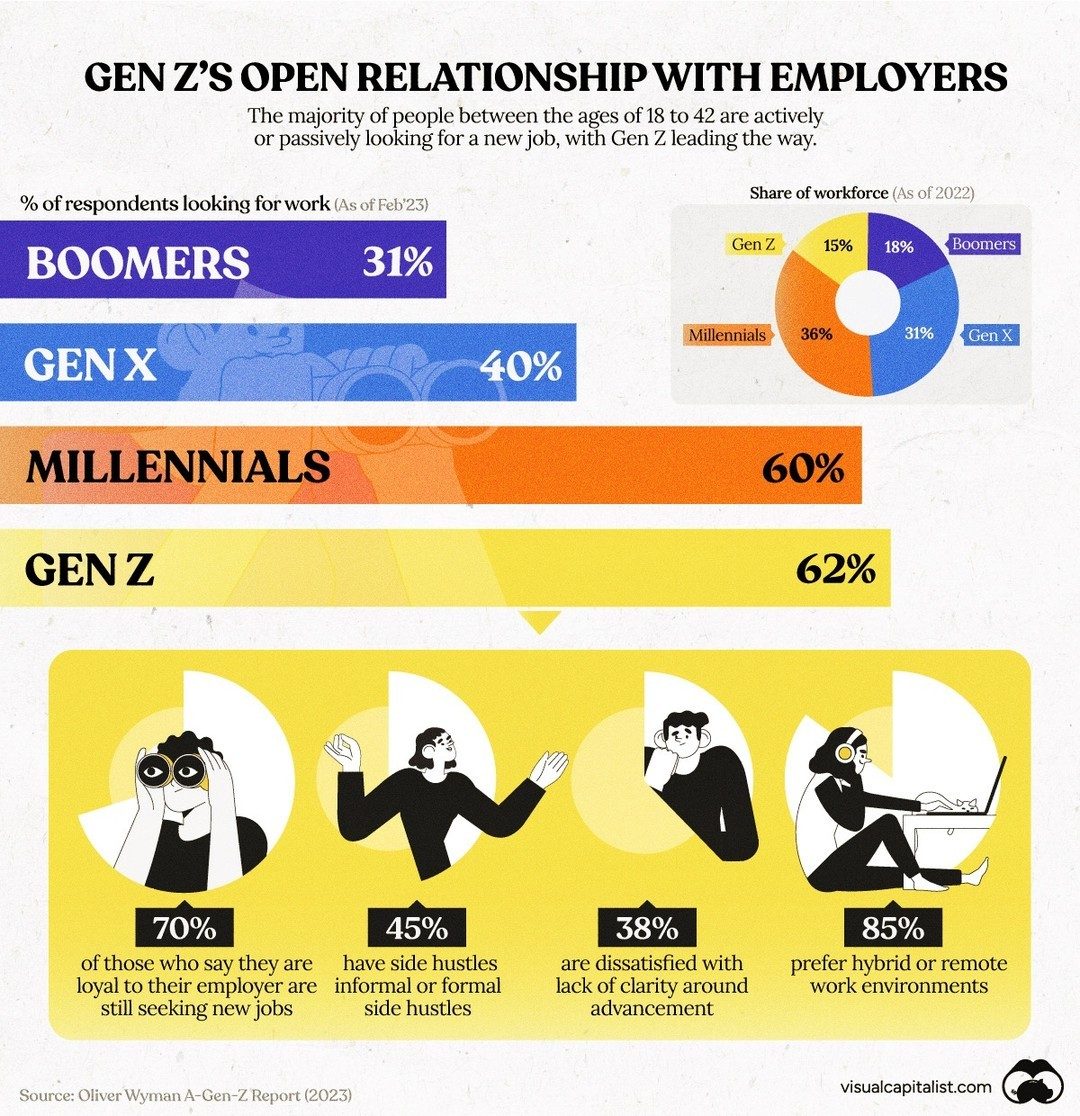
The infographic highlights a stark contrast between Gen Z and other generations when it comes to job seeking. Sixty-two percent of Gen Z workers are actively or passively looking for new jobs. This trend is particularly evident when compared to the older generations:
- Boomers (born 1946–1964): 31% are looking for new jobs.
- Gen X (born 1965–1980): 40% are looking for new jobs.
- Millennials (born 1981–1996): 36% are looking for new jobs.
Side Hustles and Job Dissatisfaction
Gen Z workers are not alone in their job-seeking behavior. The data reveals that 45% of the workforce, across all generations, have side hustles, either informal or formal. This indicates a significant portion of the workforce is diversifying their income streams, possibly driven by a desire for financial security or personal fulfillment.
Furthermore, a significant portion of the workforce, with 60% of Millennials and 62% of Gen Z workers, are dissatisfied with the lack of clarity around advancement opportunities in their current roles. This dissatisfaction could be a major factor driving the trend of actively looking for new opportunities.
Work Environment Preferences
The data also highlights a clear preference for hybrid or remote work environments. This preference is particularly strong among younger generations, including Millennials and Gen Z. The flexibility and balance offered by these work arrangements are likely driving factors in the job-seeking behavior of these generations.
On the contrary, 85% of those who claim loyalty to their employers are still actively or passively seeking new jobs. This statistic underscores that even loyal employees are not immune to the broader trends of job-seeking and career exploration.
Practical Tips
For Employers
For employers, understanding these trends is crucial for retaining talent and fostering a productive work environment. Here are some practical tips:
- Offer Clear Career Paths: Provide clear and achievable career paths to help employees see the potential for growth within the company.
- Promote Flexibility: Offer hybrid or remote work options to cater to the preferences of younger generations.
- Encourage Open Communication: Regularly collect and act on feedback from employees to address any dissatisfaction with the work environment or advancement opportunities.
For Employees
For employees, especially those in Gen Z and Millennial age groups, understanding these trends can help you navigate your career more effectively. Some practical tips include:
- Stay Informed: Keep an eye on industry trends and opportunities to ensure you are making informed decisions about your career.
- Network: Building a strong professional network can open up new job opportunities and help you stay informed about industry trends.
- Consider Side Hustles: Diversifying your income streams through side hustles can provide financial security and personal fulfillment.
Important Takeaways
Labor Market Dynamics
The labor market is evolving, with a significant portion of the workforce actively or passively seeking new job opportunities. This trend is particularly pronounced among younger generations, influenced by factors such as the desire for career growth, financial security, and work-life balance.
Employee Loyalty
Employee loyalty is becoming a more complex concept in the modern workforce. Even loyal employees are actively seeking new opportunities, highlighting the need for employers to focus on employee satisfaction and engagement.
Future of Work
The future of work is likely to be more flexible, with a greater emphasis on hybrid and remote work environments. Employers and employees alike should embrace this shift to stay competitive and satisfied in the job market.
Conclusion
The modern workforce is undergoing a significant transformation, with Gen Z leading the way in reshaping generational attitudes toward employment. By understanding the factors driving this shift, employers and employees can better navigate the evolving labor market and create more fulfilling and productive work environments. Stay informed, adapt to changes, and always be open to new opportunities.
Watch the Reel
Recent articles
Fresh deep dives from the latest Reels we unpacked.




Comments
Be the first to comment.