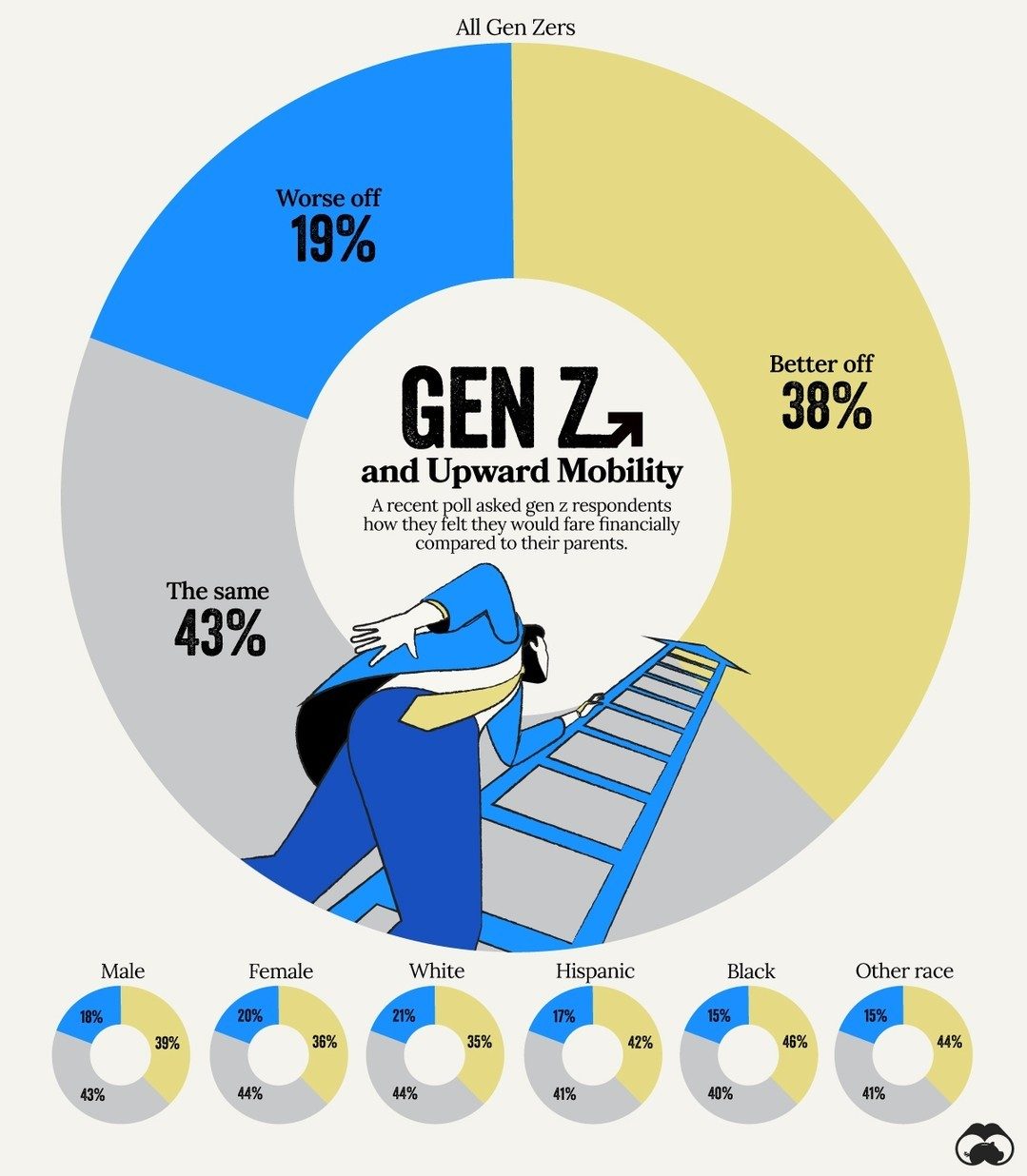
Gen Z Financial Sentiment
Gen Z, the generation born between 1997 and 2012, has faced unprecedented challenges as they entered the workforce. Rising costs of living and the effects of the pandemic have created multiple crises, leaving many feeling uncertain about their financial future. However, despite these challenges, a significant portion of Gen Z believes they will be financially better off than their parents, or at least on par.
Rising Costs and Financial Uncertainty
Gen Z entered the workforce during a time of significant economic turmoil. The pandemic led to job losses, economic instability, and a sharp increase in the cost of living. These factors have contributed to a sense of financial uncertainty among many in this generation. A survey conducted by Morning Consult found that Gen Z is feeling more uncertain about their financial future than ever before.
Despite this uncertainty, the survey also revealed that a majority of Gen Z respondents believe they will be better off financially than their parents, or at the very least, on the same financial footing. This optimism is encouraging, especially considering the challenges they have faced since entering the workforce.
Comparison to Parents' Financial Status
Overall Sentiment
The survey delved into how Gen Z perceives their future financial status compared to their parents. Notably, 19% of Gen Z respondents feel they will be worse off financially than their parents. This group is likely influenced by the economic challenges and job market volatility they have experienced.
On the other hand, 38% of Gen Z respondents are optimistic and believe they will be better off financially than their parents. This optimism could stem from various factors, including a stronger focus on financial literacy, technological advancements, and a greater emphasis on entrepreneurship and side hustles.
The remaining 43% of Gen Z respondents feel they will be about the same financially as their parents. This group likely sees a mix of challenges and opportunities, balancing the uncertainties of the current economic climate with potential future gains.
Breakdown by Gender
The sentiment varies by gender as well. The survey broke down the responses to understand how different genders perceive their financial future. While the exact percentages are not provided, the survey highlights that there are notable differences in how males and females in Gen Z view their financial prospects compared to their parents.
Breakdown by Race and Ethnicity
The survey also provides insights into how financial sentiment varies by race and ethnicity. The visual summary breaks down the sentiment into categories such as White, Hispanic, Black, and Other. This breakdown shows that financial sentiment is not uniform across different racial and ethnic groups within Gen Z.
For example, White respondents may have different financial expectations than Hispanic or Black respondents. This variation could be due to differences in economic opportunities, education levels, and cultural attitudes toward finance. Understanding these nuances can help in developing targeted financial education and support programs.
Factors Influencing Financial Sentiment
Several factors contribute to the financial sentiment of Gen Z, including economic conditions, education, and personal values. Let's explore these factors in more detail.
Economic Conditions
Economic conditions play a significant role in shaping the financial sentiment of Gen Z. The pandemic has had a profound impact on the job market, leading to job losses and economic instability. However, Gen Z has also seen a resurgence in entrepreneurship and the gig economy, which offers new opportunities for financial growth.
Education and Financial Literacy
Education and financial literacy are crucial factors in shaping the financial outlook of Gen Z. Many in this generation have had access to more financial education resources than previous generations, which can help them make informed financial decisions. Focusing on financial literacy can empower Gen Z to navigate the complexities of the modern economy more effectively.
Personal Values and Goals
Personal values and goals also influence financial sentiment. Many in Gen Z prioritize experiences, social impact, and work-life balance over traditional measures of financial success. This shift in values can drive different financial decisions and shape their overall financial outlook.
Practical Tips for Financial Stability
Achieving financial stability is a key goal for many in Gen Z. Here are some practical tips to help navigate the current economic landscape.
Budgeting and Saving
One of the most important steps toward financial stability is creating a budget and sticking to it. Budgeting helps you understand your income and expenses, allowing you to make informed decisions about your spending. Additionally, saving a portion of your income regularly can provide a financial cushion during uncertain times.
Investing and Financial Planning
Investing is another crucial aspect of financial stability. While the stock market can be volatile, investing in diverse portfolios can help mitigate risks and potentially yield significant returns. Working with a financial advisor can provide valuable insights and strategies for long-term financial planning.
Entrepreneurship and Side Hustles
Entrepreneurship and side hustles offer additional income streams and can provide financial stability. Many in Gen Z are turning to these opportunities to supplement their income and build their financial future. Whether it's starting a small business, freelancing, or exploring the gig economy, there are numerous ways to leverage entrepreneurship for financial growth.
Financial Education
Continuous learning and financial education are essential for making informed financial decisions. There are numerous online resources, books, and courses available to help individuals deepen their understanding of financial concepts and strategies. Staying informed can empower you to make better financial choices and navigate the complexities of the modern economy.
Important Takeaways
Navigating the financial landscape can be challenging, but with the right mindset and tools, it is possible to achieve financial stability. Here are some important takeaways from the survey and discussion:
- Gen Z faces significant financial uncertainty due to rising costs and economic instability.
- Despite these challenges, a majority of Gen Z believes they will be better off or on par with their parents financially.
- Financial sentiment varies by gender, race, and ethnicity, highlighting the need for targeted financial support and education.
- Budgeting, saving, investing, and entrepreneurship are key strategies for achieving financial stability.
- Continuous learning and financial education are essential for making informed financial decisions.
These insights can help individuals in Gen Z make strategic decisions about their financial future and work towards achieving their financial goals.
Conclusion
Gen Z has faced unprecedented challenges as they entered the workforce, including rising costs of living and the effects of the pandemic. Despite these challenges, many in this generation remain optimistic about their financial future, with a majority believing they will be better off or on par with their parents. Understanding the factors that influence financial sentiment and implementing practical strategies can help individuals in Gen Z achieve financial stability and navigate the complexities of the modern economy. By focusing on budgeting, saving, investing, and continuous learning, Gen Z can build a strong financial foundation for the future.
Watch the Reel
Questions readers ask
Why is Gen Z facing significant economic challenges?
Gen Z is facing significant economic challenges due to several factors, including rising living costs and job losses brought about by the pandemic. These issues have contributed to a sense of financial uncertainty among many in this generation.
How does Gen Z feel about their financial future?
Despite the economic challenges Gen Z faces, many remain optimistic about their financial future. A significant portion believes they will be financially better off than their parents or at least on par with them.
What economic factors have contributed to Gen Z's financial uncertainty?
The economic factors that have contributed to Gen Z's financial uncertainty include job losses, economic instability, and a sharp increase in the cost of living, all of which were exacerbated by the pandemic.
Why do many Gen Zers believe they will match or exceed their parents' financial status?
Many Gen Zers believe they will match or exceed their parents' financial status despite the current economic challenges. This optimism may stem from factors such as increased access to information, technological advancements, and a strong focus on personal career development.
How has the pandemic affected Gen Z's financial outlook?
The pandemic has significantly impacted Gen Z's financial outlook by leading to job losses and economic instability. This has created a sense of financial uncertainty, but many still maintain a hopeful perspective about their future financial prospects.
What are the main economic hurdles Gen Z is currently facing?
The main economic hurdles Gen Z is currently facing include rising living costs, job losses due to the pandemic, and overall economic instability. These challenges have made it difficult for many to feel secure about their financial future.
Recent articles
Fresh deep dives from the latest Reels we unpacked.




Comments
Be the first to comment.