Garlic: A Powerful Natural Compound
Garlic has long been recognized as a potent ally in the kitchen, but its health benefits extend far beyond enhancing the flavor of your meals. When you crush or chop fresh garlic, you're not just making it smell stronger—you're also creating allicin, a powerful natural compound with a variety of health-promoting properties.
Context / Why This Matters
Allicin is formed when an enzyme called alliinase converts a compound known as alliin into allicin. This reaction occurs only after the garlic's cells are damaged, which is why whole cloves contain very little allicin until they're crushed or chopped. Scientists have been studying allicin for its antibacterial, antifungal, antiviral, and antiparasitic properties, making it a subject of significant interest in the health community.
Main Discussion
The Science Behind Allicin
Laboratory studies have shown that allicin can damage the cell membranes and essential enzymes of various bacteria, fungi, and several species of parasites. This makes it more difficult for these microorganisms to survive and reproduce under laboratory conditions. Researchers believe allicin works by disrupting sulfur-containing proteins that many microbes depend on for normal function. However, it's important to note that most of these findings come from laboratory experiments, where purified allicin is applied directly to microorganisms. Scientists are still studying how much of this activity occurs inside the human body after eating fresh garlic.
Parasites and Allicin
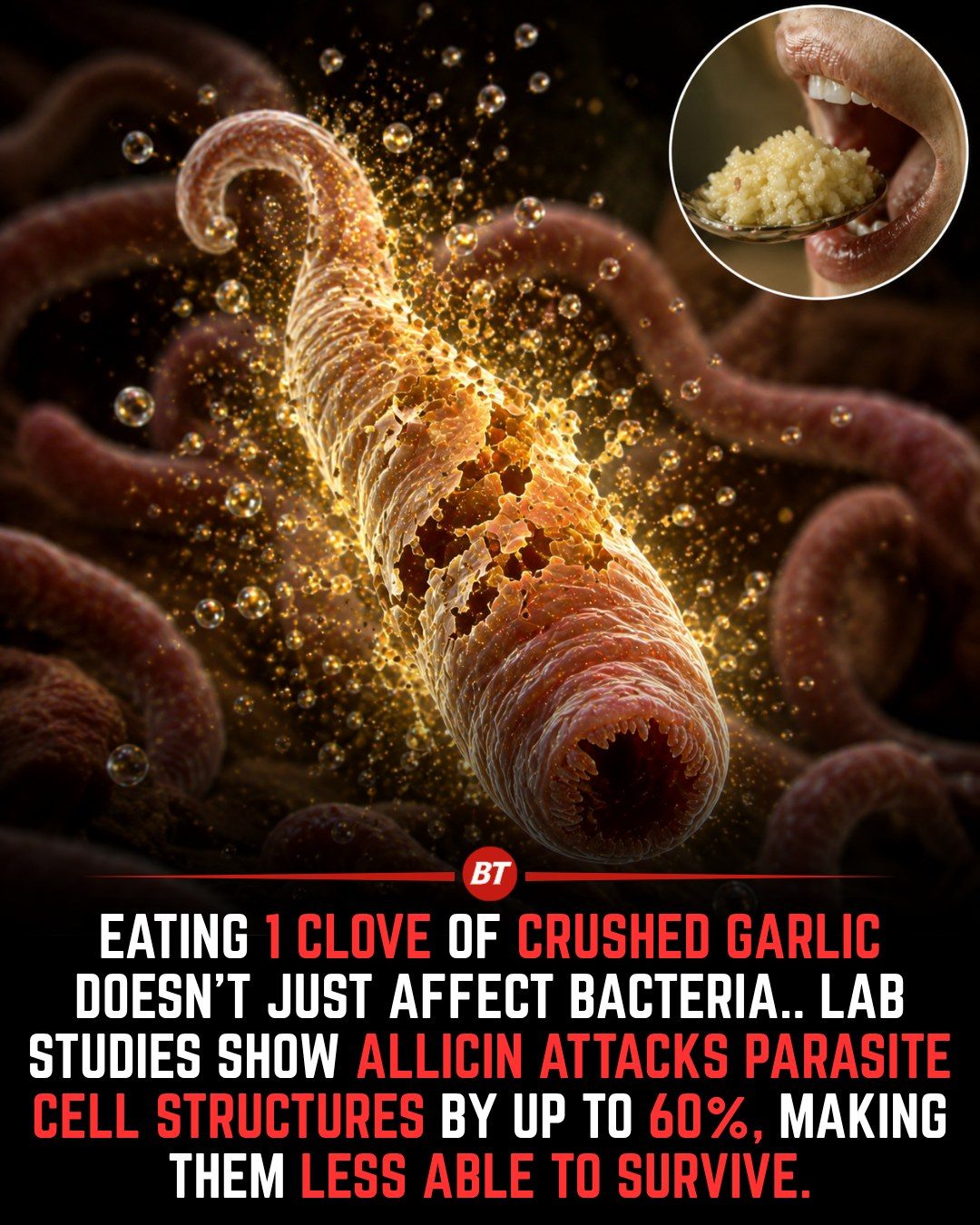
Eating one clove of crushed garlic can affect more than just bacteria. Laboratory studies have shown that allicin attacks parasite cell structures by up to 60%, making them less able to survive. This indicates that allicin has significant antiparasitic properties, which could be beneficial in fighting parasitic infections.
Immune Support and Cardiovascular Health
Beyond its antimicrobial and antiparasitic properties, garlic is rich in sulfur compounds and antioxidants that have been linked to immune support, cardiovascular health, and a healthy inflammatory response. These properties make garlic a valuable addition to a balanced diet.
Practical Tips
To maximize the health benefits of garlic, follow these tips:
- Crush or finely chop: Crushing or finely chopping fresh garlic increases the surface area, allowing more alliinase to react with alliin, thus producing more allicin. This is essential as the conversion happens after the garlic cells are damaged.
- Let it rest: After crushing or chopping, let the garlic rest for 10 minutes before cooking or eating. This gives more time for allicin to form before heat begins to reduce its levels. This step is crucial for maximizing the allicin content in your garlic.
- Cook lightly: While heat can reduce allicin levels, lightly cooking garlic can still preserve some of its beneficial compounds. Avoid overcooking to retain as many health benefits as possible.
Important Takeaways
- Allicin Formation: Crushing or chopping fresh garlic triggers the formation of allicin, a powerful natural compound with various health benefits.
- Antimicrobial Properties: Allicin has been shown to damage the cell membranes and essential enzymes of bacteria, fungi, and parasites in laboratory settings.
- Immune and Heart Health: Garlic is rich in antioxidants and sulfur compounds that support immune function and cardiovascular health.
- Optimal Preparation: For the most allicin, crush or finely chop fresh garlic and let it rest for 10 minutes before cooking or eating.
Conclusion
Crushing or chopping fresh garlic unleashes powerful health benefits. The formation of allicin and its antimicrobial, antifungal, antiviral, and antiparasitic properties make garlic a valuable addition to any diet. While laboratory studies provide promising insights, more research is needed to fully understand the extent of garlic's health benefits in the human body. Incorporating garlic into your meals, along with a balanced diet, can support overall health and well-being.
Watch the Reel
Questions readers ask
What is allicin and how is it formed in garlic?
Allicin is a potent compound found in garlic that is formed when the garlic's cells are damaged, such as when it is crushed or chopped. This process activates an enzyme called alliinase, which converts alliin into allicin, releasing its beneficial properties. Raw garlic is the best source of allicin and will not be found in cooked garlic or garlic supplements.
How does allicin in garlic exhibit antiparasitic properties?
Allicin in garlic has been shown to effectively combat various parasites in laboratory studies. Its potent antimicrobial properties help to inhibit the growth and reproduction of parasites, making it a natural antiparasitic agent.
What are the benefits of consuming crushed garlic?
Crushing garlic activates the formation of allicin, which has numerous health benefits. These include strong antibacterial, antiviral, and antiparasitic properties, as well as potential advantages for cardiovascular health and immune function. Including crushed garlic in your diet can enhance these beneficial effects.
Can eating raw garlic help with bacterial infections?
Yes, consuming raw garlic can help fight bacterial infections due to the presence of allicin. This compound has been shown to inhibit the growth of various bacteria, making garlic a useful natural remedy for bacterial issues. However, it's important to note that while garlic can be helpful, it should not replace prescribed medications for serious infections.
What are some ways to incorporate more garlic into my diet to benefit from allicin?
To maximize the benefits of allicin, consider adding more raw or lightly cooked garlic to your meals. You can mince garlic and add it to salads, soups, or sauces. Let the garlic sit for a few minutes after crushing to allow the allicin to form before consuming. Additionally, garlic supplements are available, but they may not provide the same benefits as fresh, raw garlic.
Why is allicin not found in cooked garlic?
Cooking garlic destroys the enzyme alliinase, which is responsible for converting alliin into allicin. Therefore, cooked garlic does not contain significant amounts of allicin. To benefit from allicin, it is best to consume raw or lightly crushed garlic.
What makes garlic a natural antiparasitic agent?
Garlic's natural antiparasitic properties are primarily due to the presence of allicin. This compound has been demonstrated to effectively inhibit the growth and activity of various parasites in laboratory settings, making garlic a useful natural remedy for parasitic infections.
Related deep dives
Similar reads based on topic and creator.




Recent articles
Fresh deep dives from the latest Reels we unpacked.




Comments
Be the first to comment.