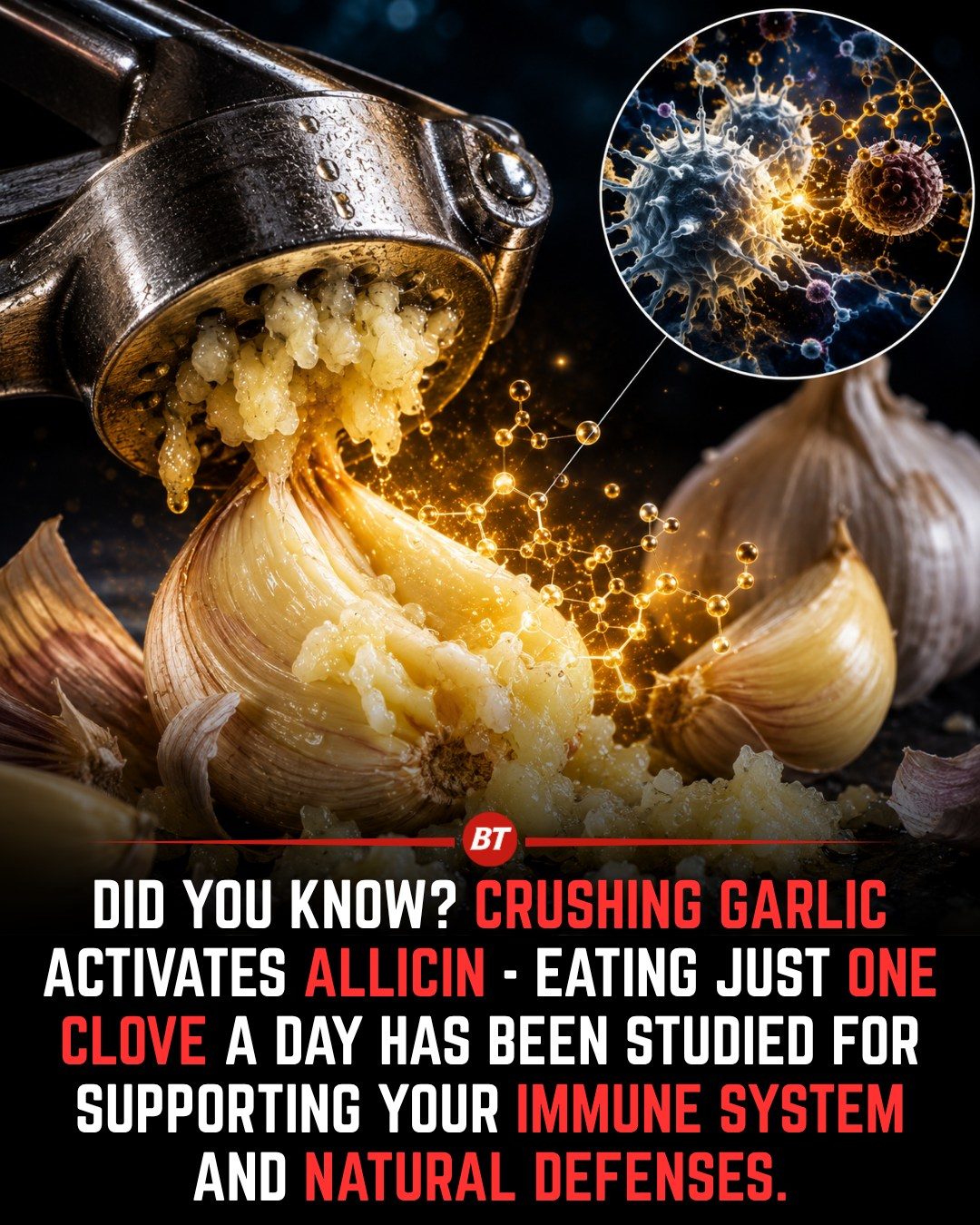
Crushing garlic is more than a culinary technique; it's a key step in unlocking the powerful health benefits hidden within this pungent bulb. For centuries, traditional recipes have emphasized the importance of crushing garlic, and there's a compelling scientific reason behind this practice. Breaking open a garlic clove triggers a chemical reaction that creates allicin, a compound that has been extensively studied for its natural defense properties.
Context / Why this matters
Garlic (Allium sativum) has been a staple in various cuisines worldwide for thousands of years, valued not only for its distinctive flavor but also for its potential health benefits. The process of crushing or chopping garlic is crucial for activating these benefits.
The key to garlic's health properties lies in its chemical composition. An intact garlic clove does not contain significant amounts of allicin. Instead, it houses an enzyme called alliinase and a sulfur-containing compound called alliin. When the cell walls of the garlic clove are damaged through crushing or chopping, alliinase comes into contact with alliin. This interaction swiftly produces allicin, the compound responsible for garlic's characteristic smell and many of its biological effects.
Main discussion
The role of allicin
Allicin is a powerful organic sulfur compound that forms when alliinase breaks down alliin. This reaction occurs rapidly after the garlic clove is crushed or chopped. Allicin is unstable and quickly degrades into other sulfur compounds, so consuming garlic soon after preparation is important for maximizing its benefits.
Garlic's biological effects
Research published in various scientific journals, including Antioxidants, Molecular Nutrition & Food Research, and the Cochrane Database of Systematic Reviews, has explored garlic's antimicrobial, antioxidant, and immune-related properties. Some studies suggest that regular garlic consumption or certain standardized garlic preparations may influence immune responses and potentially reduce the frequency or duration of some upper respiratory infections.
The impact of preparation methods
How you prepare garlic can significantly affect its chemistry. Heat can reduce the enzyme activity needed to form allicin, so it's beneficial to let freshly crushed garlic rest for several minutes before cooking. This allows more allicin to develop, potentially enhancing garlic's health benefits. Allowing garlic to sit after crushing helps preserve the compound. Mixing it into vegetables, sauces, soups, or dressings is an effective way to incorporate garlic's naturally occurring compounds into your diet.
Practical tips
Incorporating crushed garlic into your daily meals is simple and can add a depth of flavor to various dishes. Here are some practical tips for getting the most out of your garlic:
- Crush or finely chop a fresh garlic clove and let it rest for about 10 minutes before adding it to your meal. This allows the allicin to form fully.
- Add crushed garlic to sautés, stir-fries, and soups. The heat will help to mellow out the raw garlic flavor while still retaining some benefits.
- Mix minced garlic into salad dressings or use it as a base for marinades. This can add a zingy flavor to dishes while maximizing allicin production.
- Use a garlic press to ensure even crushing, which can help release more allicin.
Important takeaways
- Crushing or chopping garlic activates the enzyme alliinase, which converts alliin into allicin, a beneficial compound.
- Allicin has been studied for its antimicrobial, antioxidant, and immune-related properties, and some studies indicate that regular garlic consumption may support immune function.
- Allowing crushed garlic to rest before cooking can help preserve more allicin, enhancing garlic's health benefits.
- Garlic should not replace medical treatment. While it may support overall health, it is not a cure-all and should be part of a balanced diet and lifestyle.
Conclusion
Garlic's ability to activate allicin through crushing makes it a valuable ingredient for both flavor enhancement and potential health benefits. Understanding the science behind this process can help maximize the benefits of garlic in your diet. By incorporating crushed garlic into your meals and allowing it to rest before cooking, you can take advantage of its natural defense compounds. Whether added to sauces, soups, or dressings, crushed garlic offers a simple and delicious way to enhance your culinary creations and support your overall well-being.
Watch the Reel
Questions readers ask
What happens when you crush garlic?
Crushing garlic initiates a chemical reaction that combines the enzymes alliinase, found in the garlic's cells, with the compound alliin. This reaction produces allicin, a powerful compound known for its immune-boosting and antibiotic properties.
How does allicin benefit my immune system?
Allicin is known for its natural defense properties. It can help boost your immune system by reducing inflammation, aiding in the prevention of infections, and supporting overall immune function.
Is it better to crush or chop garlic?
Crushing garlic is generally better for maximizing allicin production. Chopping can also work, but crushing provides a more thorough breakdown of the garlic cells, increasing the surface area for the reaction that creates allicin.
Should I let garlic sit after crushing?
Yes, it's beneficial to let crushed garlic sit for about 10 minutes before cooking. This allows the allicin to fully form and develop, increasing the health benefits before the heat from cooking begins to degrade the compound.
Why is allicin not present in whole garlic cloves?
Allicin is not present in whole garlic cloves because it is produced as a result of the enzymatic reaction that occurs when the cells of the garlic are broken open. Inside intact garlic, the enzymes and compounds that create allicin are separated.
Can I use pre-minced garlic for health benefits?
Pre-minced garlic may not provide the same benefits as freshly crushed garlic. The enzymes in pre-minced garlic may have already started to break down, reducing the potential allicin production. Freshly crushing garlic ensures the most effective allicin production.
What is the best way to crush garlic cloves?
To maximize allicin production, use a garlic press or the side of a knife to crush the cloves thoroughly. This method ensures that the garlic cells are fully broken, allowing the enzymes and compounds to mix and react effectively.
Related deep dives
Similar reads based on topic and creator.




Recent articles
Fresh deep dives from the latest Reels we unpacked.




Comments
Be the first to comment.