Comparing Life Expectancy Across the Globe: 2026 to 2100
Life expectancy is a crucial indicator of a country's overall health and quality of life. It reflects advancements in healthcare, lifestyle improvements, and societal well-being. By examining the projected life expectancies for 2026 and 2100, we can gain valuable insights into global trends and regional differences. This article delves into the shifting landscape of life expectancy, highlighting key countries and regions set to lead the way in longevity.
Context / Why This Matters
Life expectancy projections are more than just numbers; they illustrate the effectiveness of healthcare systems, economic stability, and public health initiatives. Understanding these projections helps policymakers, healthcare providers, and researchers allocate resources effectively and implement strategies to improve overall health. The differences in life expectancy between regions and countries also highlight disparities in health outcomes, offering clues to what factors contribute to longevity.
Top Countries with High Life Expectancies
Monaco: The Leader in Longevity
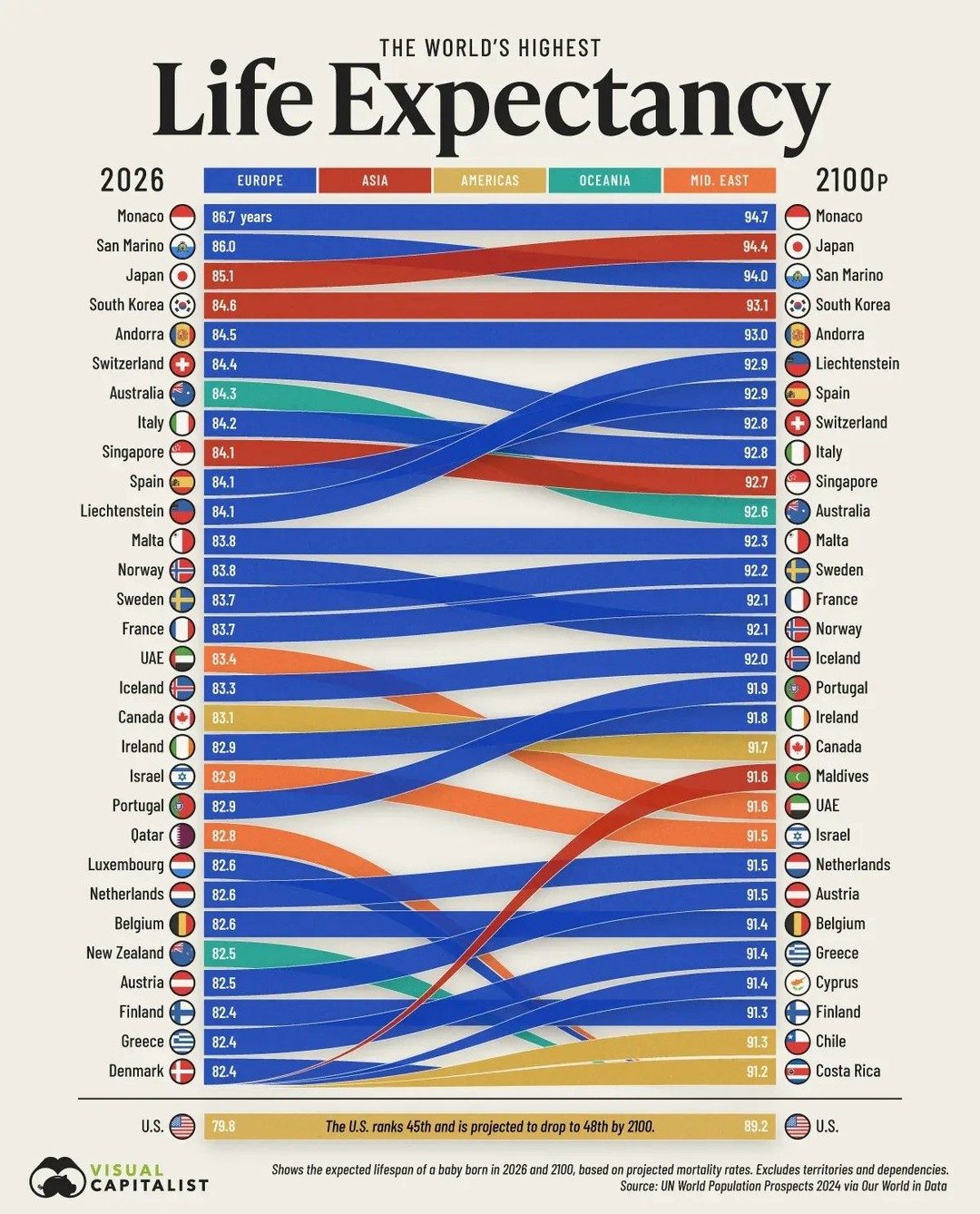
Monaco tops the list with the world's highest life expectancy, currently standing at 86.7 years. This small European nation is projected to maintain its top position through 2100. Monaco's high life expectancy can be attributed to its advanced healthcare system, high standard of living, and focus on public health initiatives. The country's small size and concentrated resources allow for efficient and effective healthcare delivery, contributing to its top ranking in life expectancy.
Other Top Performers
Following Monaco, several other countries are projected to have high life expectancies. San Marino, with a projected life expectancy of 86.0 years in 2026, is not far behind. Japan, known for its healthy diet and advanced healthcare, is expected to have a life expectancy of 85.1 years in 2026. South Korea, Andorra, Switzerland, and Australia are also in the top ranks, with life expectancies ranging from 84.6 to 84.3 years.
The Americas: A Mixed Bag
The Americas display a diverse range of life expectancies. Canada, known for its robust healthcare system, is projected to have a life expectancy of 83.1 years in 2026. The United States, however, ranks significantly lower, with a projected life expectancy of 79.8 years. Despite efforts to improve healthcare and public health initiatives, the U.S. is projected to fall from 45th to 48th in global rankings by 2100.
Rising Life Expectancy Projections
By the end of the century, the world's longest-living countries are projected to have life expectancies approaching 95 years. This significant increase highlights advancements in medical technology, public health awareness, and healthcare accessibility. Countries in Europe and Asia are expected to lead this trend, with regions like the Americas and Oceania also showing notable improvements.
Key Factors Contributing to Life Expectancy
Healthcare Access and Quality
Access to high-quality healthcare is a significant factor in life expectancy. Countries with advanced healthcare systems, comprehensive insurance coverage, and preventive care programs tend to have higher life expectancies. Regions where these services are readily available and affordable see better health outcomes and longer lifespans.
Lifestyle and Diet
Diet and lifestyle choices play a crucial role in determining life expectancy. Countries known for their balanced diets, regular exercise, and low-stress environments generally have higher life expectancies. For instance, Japan's diet, rich in fish, vegetables, and soy, contributes to its high life expectancy. Similarly, Mediterranean countries like Italy and Spain benefit from diets high in fruits, vegetables, olive oil, and moderate wine consumption.
Economic Stability and Public Health
Economic stability and public health initiatives are also vital in promoting longevity. Countries with stable economies can invest more in healthcare, education, and public health programs. These investments lead to better health outcomes and longer lifespans. Public health initiatives, such as vaccination programs, health screenings, and disease prevention campaigns, further enhance life expectancy by reducing the incidence of preventable diseases.
Environmental Factors
The environment, including air and water quality, also impacts life expectancy. Countries with clean environments and stringent environmental regulations tend to have longer life expectancies. Air pollution, for example, is a significant health risk, contributing to respiratory and cardiovascular diseases.
Practical Tips for Individuals and Communities
Promoting Healthy Lifestyles
Individuals can promote longer and healthier lives by adopting healthy lifestyles. Regular exercise, a balanced diet, and stress management techniques can significantly improve overall health. Quitting smoking, limiting alcohol consumption, and maintaining a healthy weight are also essential steps toward longevity.
Public Health Awareness
Communities can play a role in promoting public health awareness. Initiatives such as community health programs, health fairs, and public education campaigns can help raise awareness about healthy lifestyles and disease prevention. Encouraging regular health check-ups, vaccinations, and screenings can also contribute to better health outcomes.
Advocating for Stronger Healthcare Systems
Advocating for stronger healthcare systems is crucial for improving life expectancy. This involves supporting policies that enhance healthcare accessibility, affordability, and quality. Ensuring that all individuals, regardless of socioeconomic status, have access to necessary healthcare services can lead to better health outcomes and longer lifespans.
Important Takeaways
Global Trends
Globally, life expectancy is projected to rise, with some countries approaching 95 years by 2100. Factors such as healthcare quality, lifestyle, economic stability, and environmental conditions are crucial in determining life expectancy. Countries that prioritize these areas are likely to see significant improvements in life expectancy.
Regional Differences
Regional differences in life expectancy highlight the disparities in healthcare systems, lifestyles, and public health initiatives. Europe and Asia are projected to have the highest life expectancies, while regions like the Americas and Oceania show varied but improving trends. The U.S., despite its advancements, faces challenges that affect its life expectancy ranking.
Key Factors
Access to healthcare, lifestyle choices, economic stability, and environmental conditions are key factors in determining life expectancy. Addressing these factors through targeted initiatives and policies can lead to better health outcomes and longer lifespans.
Conclusion
Life expectancy is a multifaceted indicator of a country's health and well-being. By understanding the projected trends and key factors influencing life expectancy, we can better appreciate the global landscape of health and longevity. As countries strive to improve healthcare, promote healthy lifestyles, and enhance public health initiatives, the world is poised to see significant gains in life expectancy.
Watch the Reel
Related deep dives
Similar reads based on topic and creator.

Recent articles
Fresh deep dives from the latest Reels we unpacked.




Comments
Be the first to comment.